敏捷成功案例深度導讀

10 個台灣企業的真實敏捷成功案例——從佳麗果物的農產 Sprint,到第四河川分署的政府服務轉型,從 dentall.ai 的醫療 MVP,到群閎科技的跨國協作。每個案例附多層次分析、敏捷宣言對映、與情境測驗,幫您把敏捷洞見轉化為決策行動。

10 個台灣企業的真實敏捷成功案例——從佳麗果物的農產 Sprint,到第四河川分署的政府服務轉型,從 dentall.ai 的醫療 MVP,到群閎科技的跨國協作。每個案例附多層次分析、敏捷宣言對映、與情境測驗,幫您把敏捷洞見轉化為決策行動。

Ten real Taiwanese case studies — from a fruit factory to a government agency, from a dental AI startup to a multinational pharmaceutical — that show how Scrum and the Agile Manifesto play out far beyond the software industry. Each case comes with a layered analysis, key insights, agile-principle mapping, and a 5-question quiz. Built for international Scrum practitioners and CST peers.

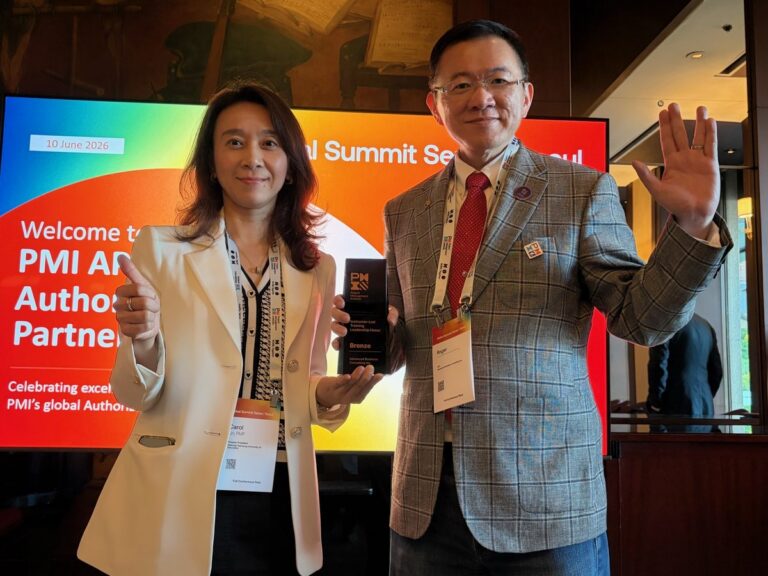
Too many CEOs in Taiwan have been quietly delivering real agile results — with no international stage to show for it. Most people assume agile awards belong to the tech world. The past three editions' winner lists prove otherwise: the president of Pfizer Taiwan, the director of a government water authority, the general manager of the largest construction firm in southern Taiwan. The 4th "Top Agile CEO Award" is officially open, with a deadline of June 15, 2026. Hosted by the Scrum Alliance Taiwan International Agile Ambassador, the award has generated over 300 international media mentions across three editions. It's a lifetime award — by design. Judges don't care how polished your deck is. They care how real your story is.

台灣有太多CEO默默在做敏捷,做出了真實的成果,卻從來沒有一個國際舞台讓他們被看見。多數人以為敏捷獎項是科技業的事,但三屆得獎者的名單,直接推翻了這個假設——輝瑞大藥廠的總裁、水利署的署長、南台灣最大營造廠的總監,都在這個名單裡。第四屆「頂尖敏捷CEO大獎」正式啟動,截止日期2026年6月15日。這個獎由Scrum Alliance台灣國際敏捷大使主辦,三屆累計超過300個國際媒體報導,一生只能得一次,刻意讓每個獎項都有歷史的重量。評審最在意的不是簡報有多漂亮,而是你的故事有多真實。如果你的組織做了敏捷,做出了具體的商業成果,那個故事不應該只留在你的腦袋裡。

CSPO 學員課前預讀指南。以《成功的敏捷產品管理》為藍本,涵蓋 PO 角色與心法、產品規劃、Product Backlog 管理、Scrum 協同合作四大模組。每個模組包含核心摘要、多層次分析、金句、CSPO 核心能力連結與情境測驗,幫助你在正式課程前打好基礎。

CAF 認證課程的成功,奠基於引導師的內在修煉。本課前預習選取《搜尋你內心的關鍵字》(Search Inside Yourself, SIY) 的核心概念,結合 Roger 老師對敏捷引導實踐的洞察,幫助你在正式課程前打好「內功」基礎。五個模組涵蓋從專注力、自我認知、情緒管理、同理心,到引導型領導的完整路徑。
When declining birthrates and AI are simultaneously rewriting the rules of the education industry, the real risk isn’t a shrinking market—it’s companies still using old decision-making models to navigate a new world.
A few weeks ago, I shared on my blog that all 27 core executives of Nani Publishing, including the chairman and two vice presidents, completed CSPO training together.
This signifies one thing: a 70-year-old publisher is beginning to view the education industry through a product-thinking lens. But product thinking is only the first step. The real question is: once a product direction is defined, how does the team work together effectively?
That’s why Nani has taken the next step. The 27 core executives—from the chairman and two vice presidents to the Scrum Team—completed CSM training together.
This isn’t just a class. It’s a key first step in a 360° learning program to start building a shared organizational language.
(This success case has been publicly shared with the consent of the Chairman.)
當少子化與 AI 同時改寫教育產業規則時,真正的風險不是市場萎縮,而是企業仍用舊的決策模式面對新的世界。
幾週前,我在部落格分享南一 27 位核心主管含董事長及兩位副總經理一起完成 CSPO 培訓。
那代表一件事:一家 70 年的出版社,開始用產品思維重新看待教育產業。但產品思維只是第一步,真正的問題是:產品方向確定後,團隊如何一起運作?
因此南一再次展開第二個動作。27 位核心主管從董事長、兩位副總經理到Scrum Team與 一起完成 CSM 培訓。
這不是一堂課。而是學習 360 計畫開始建立共同組織語言的關鍵一步。
(本成功案例經董事長同意公開)
Many senior executives have experienced the same frustration: the strategy is clear, the market direction is visible, the organization has capable people—yet progress still stalls. Meetings are frequent, but real alignment is rare. Departments appear to collaborate, but beneath the surface they are often pulling in different directions. The issue is usually not execution alone; it is that the organization lacks the ability to think together.
This realization has become increasingly clear to me in recent years. If *The Fifth Discipline* describes the capability framework for building a learning organization, then in real companies, the element that actually enables these capabilities to function is a rarely discussed one—**facilitation**. It is not simply a technique for running activities; it is the capability that allows honest conversations to surface, makes mental models visible, and helps teams reach higher-quality collective judgments.
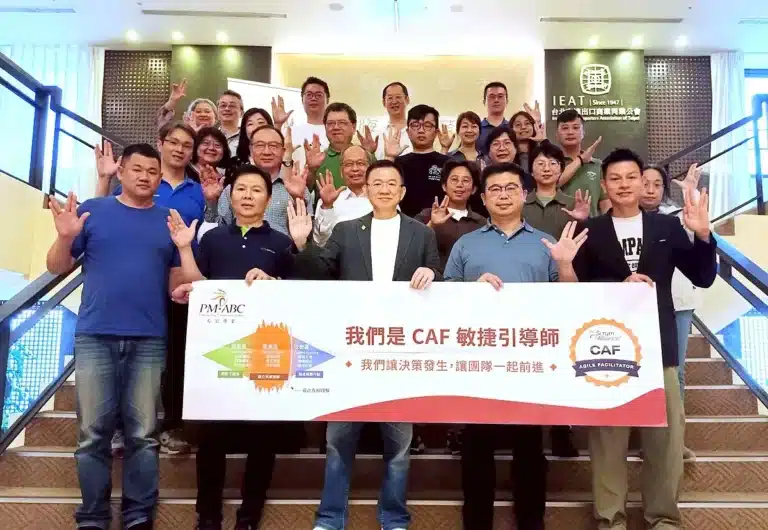
In the age of AI, this becomes even more important. As analysis and execution are increasingly handled by machines, the truly scarce human capability is collective judgment and shared learning. That is precisely why I have committed myself so strongly to CAF. The most competitive leaders of the future will not be those who give the best commands, but those who can design how people think together.
很多高階主管都經歷過同一種痛:策略明明清楚,市場方向也看到了,人才也不差,但事情就是推不動。會議很多,真正的共識卻很少;跨部門看起來在合作,實際上卻在彼此拉扯。問題往往不只是執行,而是組織沒有能力一起思考。這也是我近年越來越深的體會:如果說《第五項修練》描述的是建構學習型組織的能力架構,那麼在真實企業裡,真正讓這些能力運作起來的,其實是一套很少被討論的能力——引導(Facilitation)。它不是帶活動的技巧,而是一種讓真話浮現、讓心智模式被看見、讓團隊形成高品質判斷的關鍵能力。尤其到了 AI 時代,當分析與執行越來越能被機器接手,人類真正稀缺的,反而是集體判斷與共同學習的能力。這也是我為什麼如此堅定投入 CAF:因為未來最有競爭力的領導者,不只是最會下指令的人,而是最能設計集體思考的人。