
Watch in 1 minute:
A group of volunteers who mostly didn’t know each other built an international agile conference in just four weeks — and nobody assigned them the work. This is written for every Product Owner, agile coach, and would-be volunteer wondering how to turn a list of strangers into a team.
What I Saw at the After-Party Wasn’t Exhaustion. It Was Reluctance to Leave.
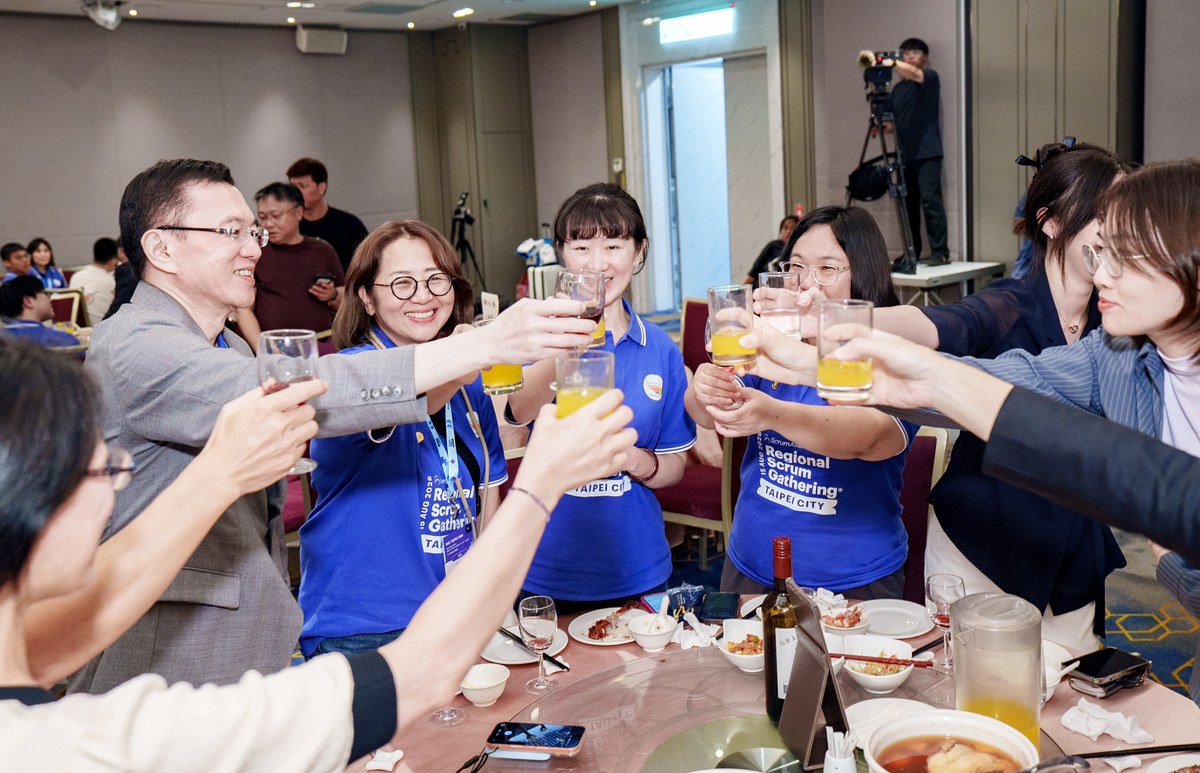
On the night of August 15th, the venue was mostly packed up, and a cluster of people were still standing around, raising their glasses, in no hurry to go home. Four weeks earlier, more than half of them couldn’t have told you each other’s names. That night, nobody was saying “finally, it’s over.” They were asking, “so, next year?”
I stood off to the side and watched for a while without breaking it up. Thirty-one people — two Scrum Teams, a CEO Award crew, an independent PO assistant, and a core group behind the scenes. Before June, most of them had never crossed paths. The one thing they shared was that they’d all seen the same recruitment post.
People often ask me what’s actually hardest about running an international agile conference. Most assume it’s the agenda, the venue, the budget. My answer has always been simpler: how do you take a group of strangers and, in four weeks, turn them into a team that takes ownership on its own and covers for each other without being asked.
There’s no playbook for that. What I can do is make the vision unmistakably clear, then hand over the decisions. This piece is my honest attempt to answer “how,” to walk through — step by step — how a group of people becomes a team, rather than bragging about how well the event went.
If you’re leading a team and you’re scared to actually let go, you probably know that tension — give up too much control and the team falls apart; hold on too tight and nobody takes initiative. I want to be honest with you: that time, we bet on “make the vision clear, then let go.” We won that bet. But it wasn’t a sure thing going in — it was a bet I kept watching closely, half-expecting it to fall apart.
This isn’t a problem unique to volunteer teams. I’ve coached plenty of executives, CEOs included, and they get stuck in exactly the same place — their teams are far bigger than twenty people, but they’re just as afraid to actually hand over the decisions, because handing them over means admitting “I can’t control everything.” This piece is about volunteers, but it’s written for anyone leading a team, regardless of title.
June 22nd: One Post, Twenty Open Spots
The recruitment post for RSG Taipei 2026 didn’t mince words: twenty volunteer spots, split across two Scrum Teams. The vision was one sentence — let the world see Taiwan, with agility starting at the executive level.
There was no oversell. The post led with the cost: a 15-minute daily standup every workday, an NT$1,000 deposit to claim your RSG ticket, and in return — not pay, but a T-shirt, a few meals, and five things worth having: real hands-on agile experience, a contribution worth putting on a resume, a group of people who cared about the same thing, a shot at an international stage, and the specific feeling of watching something you built from nothing come together.
I’ll be honest — at the time I wondered if anyone would sign up under those terms. You’re asking people to pay a deposit and give up their own time, and what they get back isn’t a paycheck, it’s the weight of responsibility. But the twenty spots filled, and once you count the crew, the whole team grew to thirty-one — beyond the two Scrum Teams, we ended up with a CEO Award crew and an independent PO assistant nobody had planned for.
Make the vision clear, and people show up on their own. I’ve seen that play out again and again since, but this time it came with numbers attached. Twenty spots became a team of thirty-one. I didn’t personally recruit a single one of those extra eleven people. The vision did.
July 13th: The Roster Finally Had Faces
At the kickoff meeting, the first thing I did was define my own role. I wasn’t there to hand out assignments. I was there to explain the vision and why it mattered. Everything after that was theirs to walk.
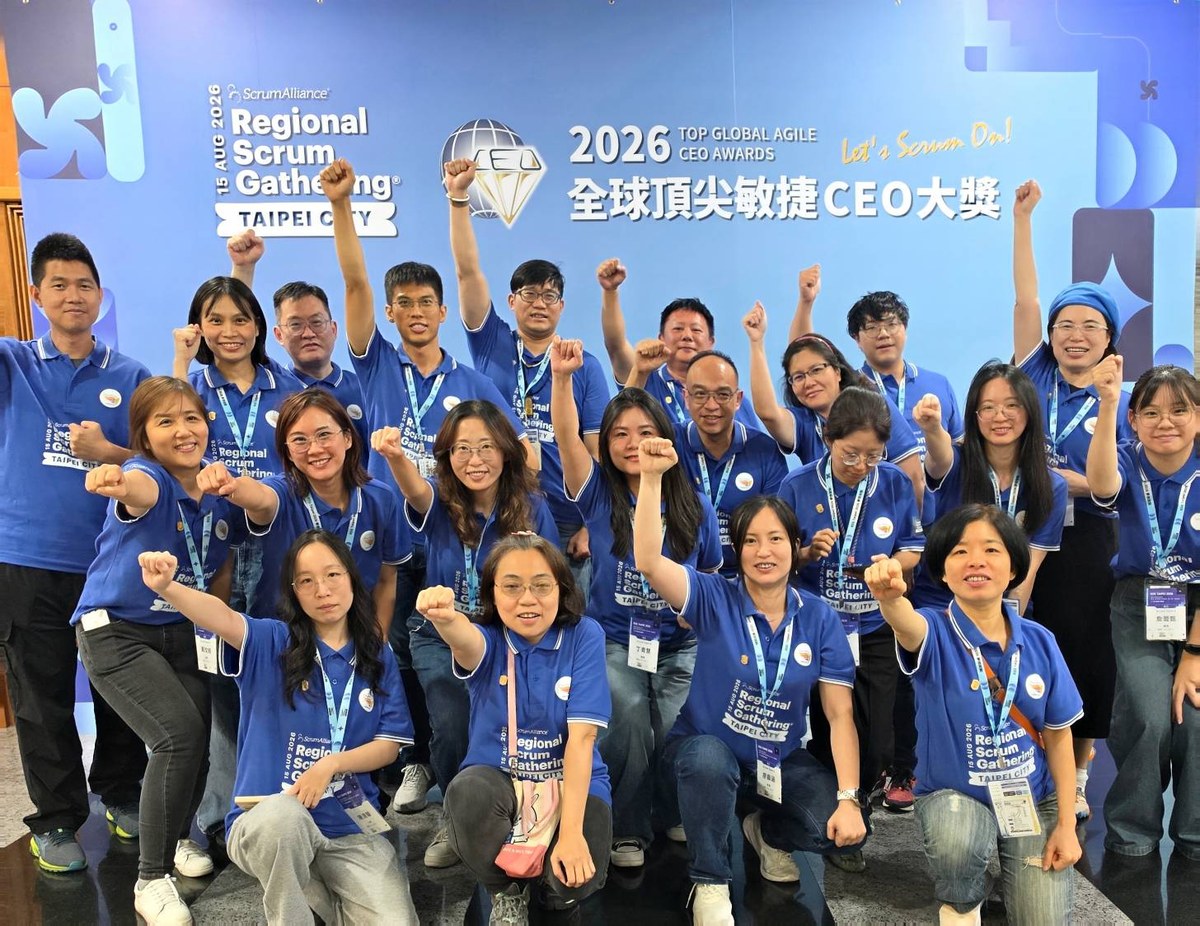
I laid out RSG’s history — past scale, funding structure, the makeup of past attendees — so everyone understood the weight of what they were taking on. This wasn’t some closed-door internal gathering; it was an international-conference-grade undertaking. A dozen-plus people went around introducing themselves — some formal, some casual, but every one of them said something about what they wanted to leave behind.
The specialty survey we’d sent out earlier actually got used — not by me assigning roles off it, but by volunteers looking at each other’s listed skills and claiming the roles that fit. That mattered to me. If a Product Owner makes every decision for the team, the team never learns to decide anything for itself. Leave the choice with them, and they’ll actually treat it as their own.
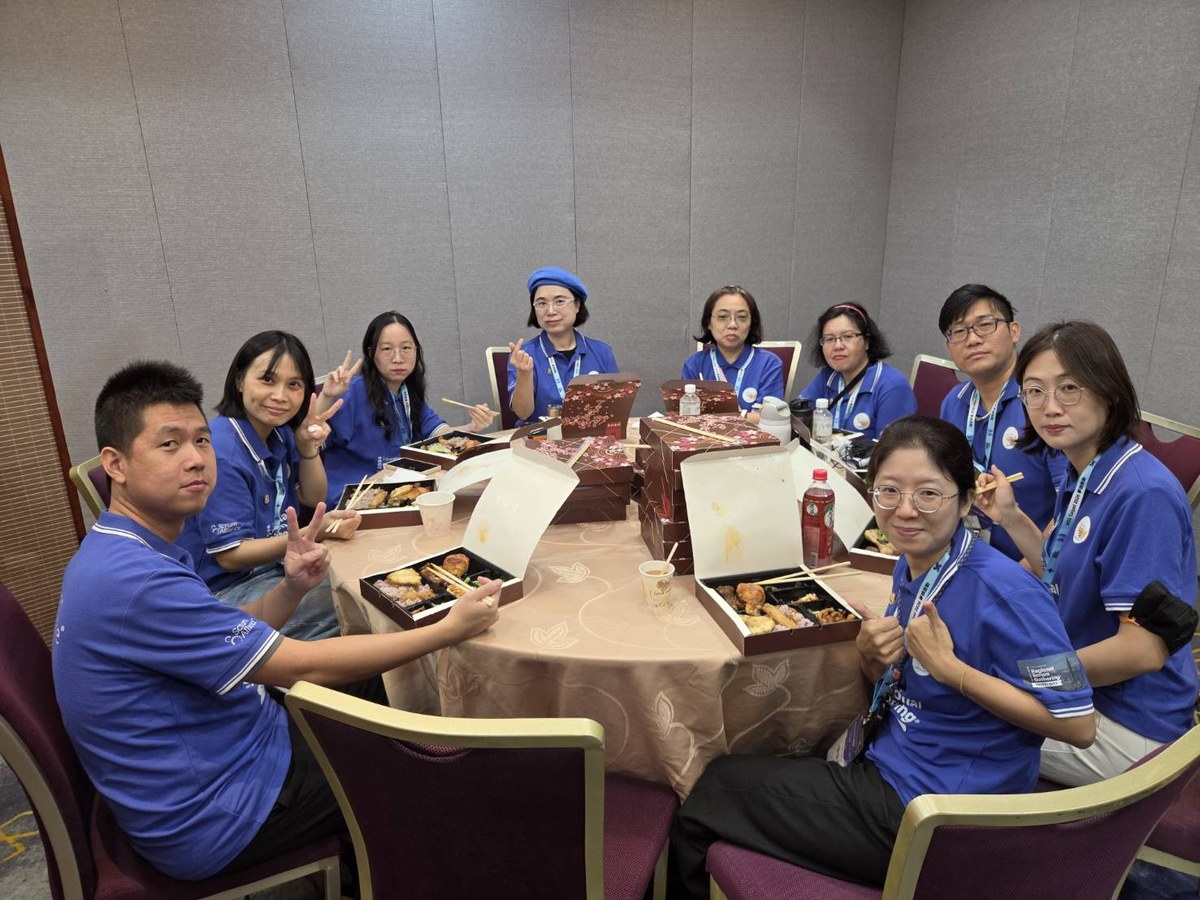
Partway through the kickoff meeting, we took a vote on an “auto-opt-out” rule: if anyone’s attendance during prep dropped below 80% for two consecutive weeks, that counted as an automatic opt-out. Anyone unwilling to accept that rule could leave the meeting right then, no explanation required, no follow-up questions. The point was to make sure the people who stayed, stayed because they meant it — not because they didn’t want to lose face. Nobody left.
Another vote — should Sprint Planning fall on Thursday or Friday, a scheduling call that would normally be the organizer’s to make — also got handed to the group. I put that kind of decision in their hands on purpose, not because I didn’t have an opinion, but because what mattered more to me was whether this team was willing to start owning its own decisions. From that day on, this wasn’t a roster anymore. It was a team that had started forming opinions of its own.
Four Weeks: What You Could See Was the Prep Work. What You Couldn’t See Was the Backfilling.
Over the next four weeks, an outsider would have seen little more than a few progress trackers. What actually carried the event was a string of things nobody assigned — things people simply picked up.
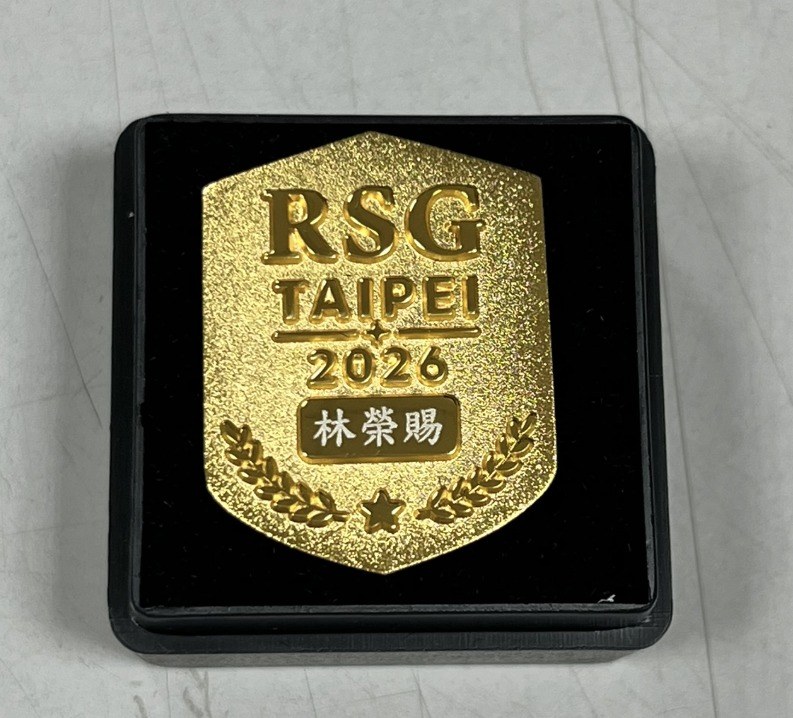
Chloe (Zhang Ya-chun), our treasurer, floated the idea of a custom badge in the group chat. What started as a small suggestion turned into a full project — coordinating design, managing quantities, tracking cost. The badges ended up at 118 pieces, each priced at NT$333, every unit price double-checked by her before she signed off on the order. Nobody assigned her that job. She claimed it herself, and carried it from a single suggestion all the way to a finished physical product.
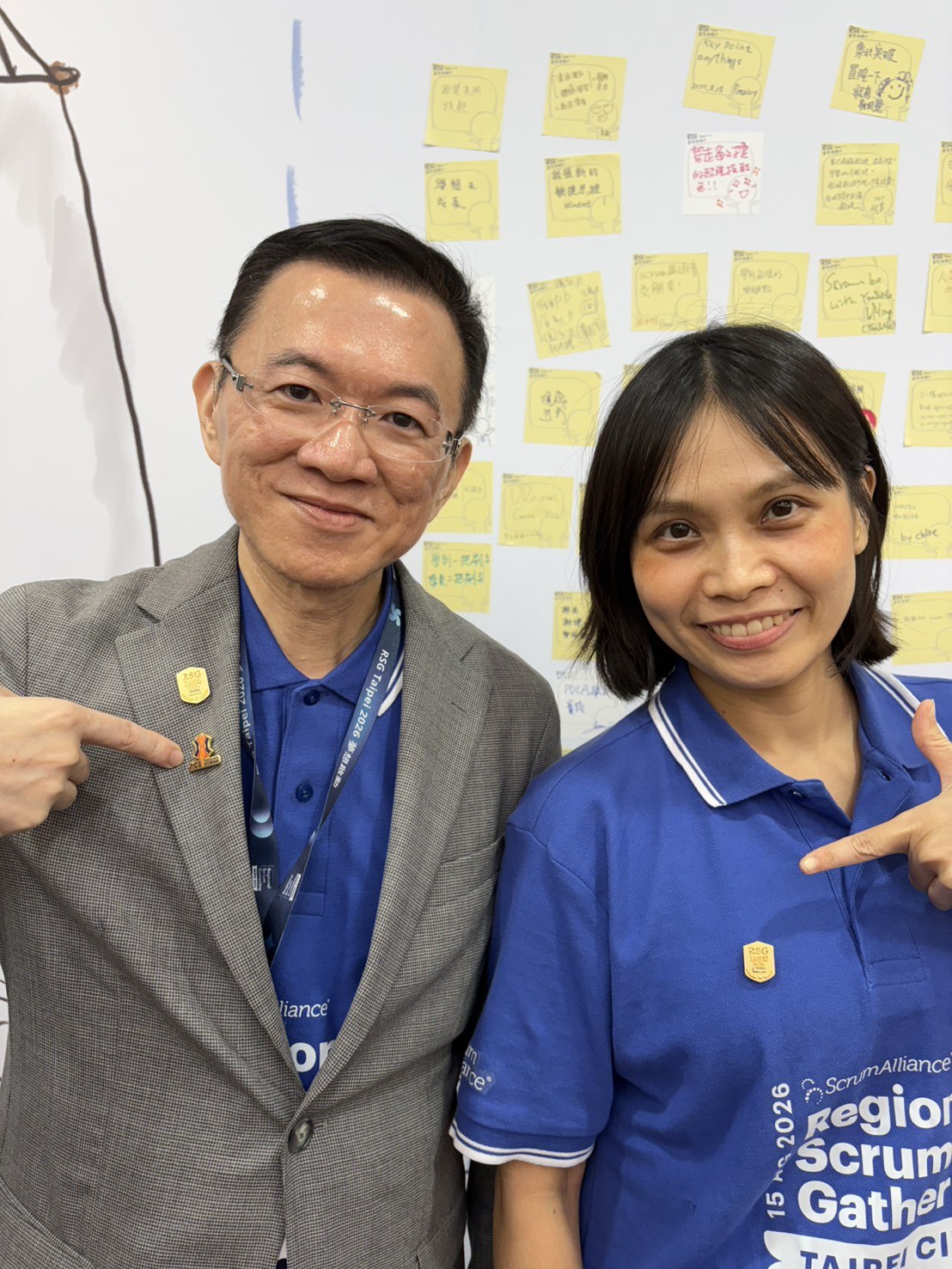
Lei Chia-jung — everyone calls him “Dragon Lei” — served as the independent PO assistant. He carries an old leg injury that flares up when he’s on his feet too long. He never missed a single day of prep. When the pain hit, he’d find a corner, sit for two or three minutes, and get back up. When he talks about it himself, he laughs it off — this isn’t me fishing for sympathy, it’s me wanting people to see how this team thinks about the responsibility they’ve taken on.
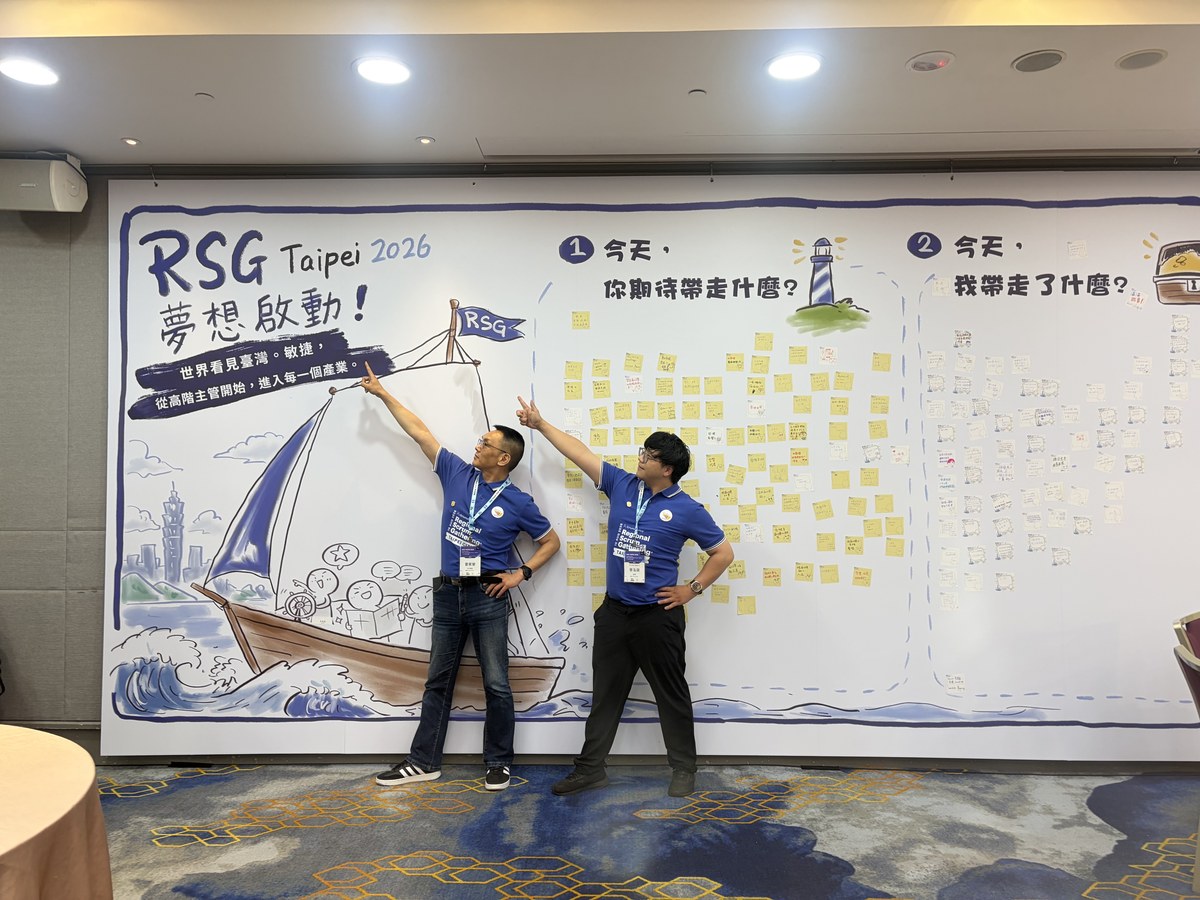
The design of the co-creation wall was pieced together, scrap of time by scrap of time, by another group of people — the layout, the copy, revised over and over until it became what you saw on-site. And the two Scrum Teams didn’t just run their own lanes — when one side was short-handed, the other stepped in without waiting for me to coordinate it. Chen Pei-chun handled media relations on Scrum Team B; Yen Pei-fan was deputy lead on the CEO Award crew. Two people, two teams, two entirely different scopes — but by late prep, whichever side got squeezed, the other backed them up as a matter of course, not an exception.
That kind of backfilling sounds easy to describe and is genuinely hard to do — it costs real time and real effort. I’ve coached plenty of companies through agile transformations, and the thing I dread most isn’t a team making mistakes — it’s a team that only does the piece it was assigned and looks past everything else. This team never had that problem. Deep into the night, the group chat would still have people online, confirming the next day’s details. Nobody told them to. They just felt it needed doing.
August 15th: The People on Stage, and the People Behind It
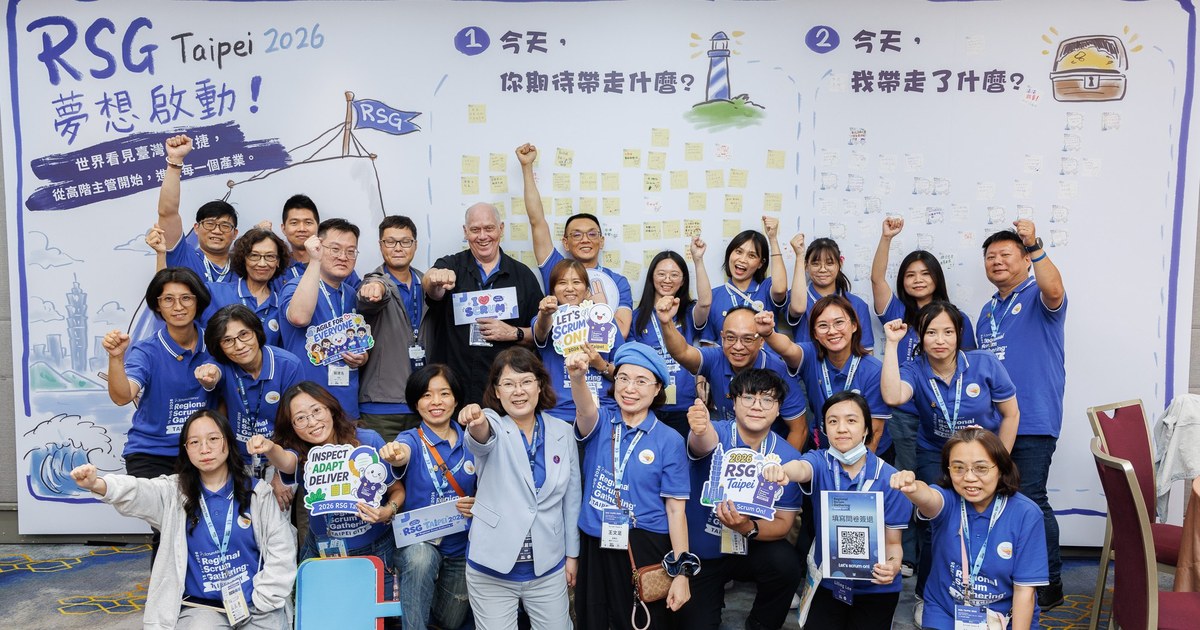
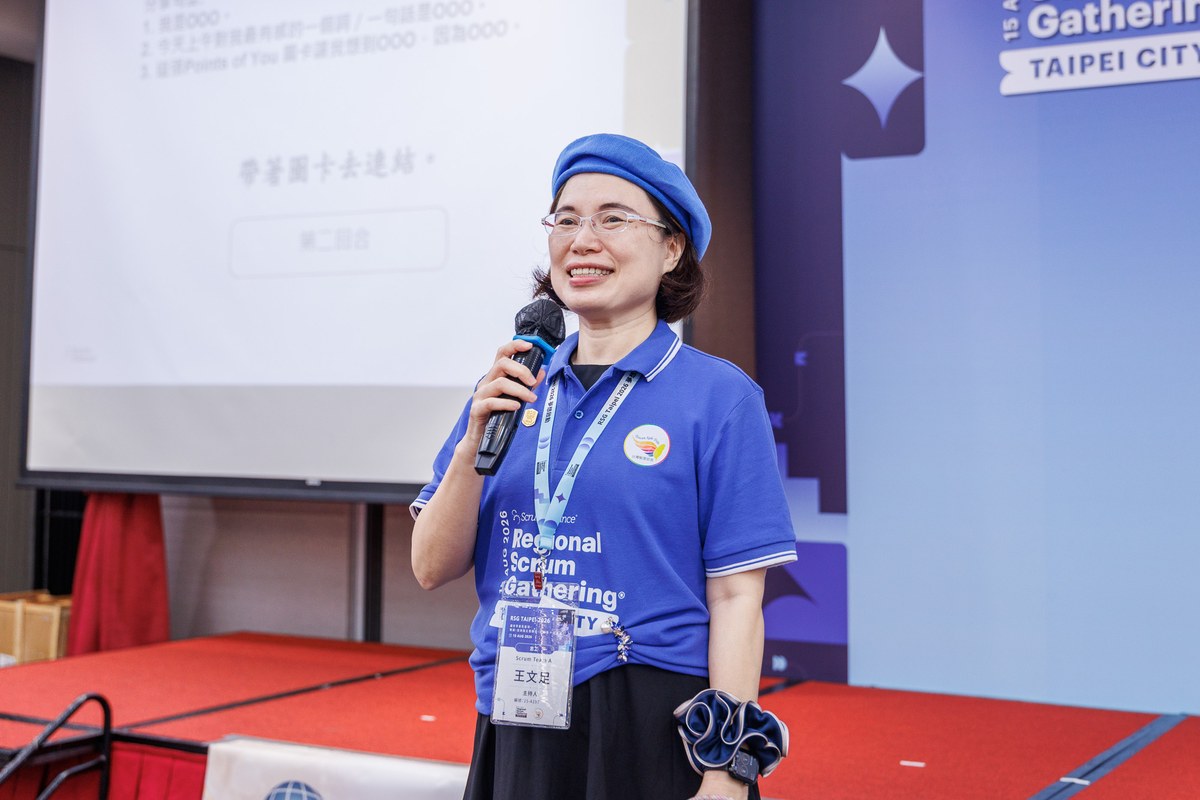
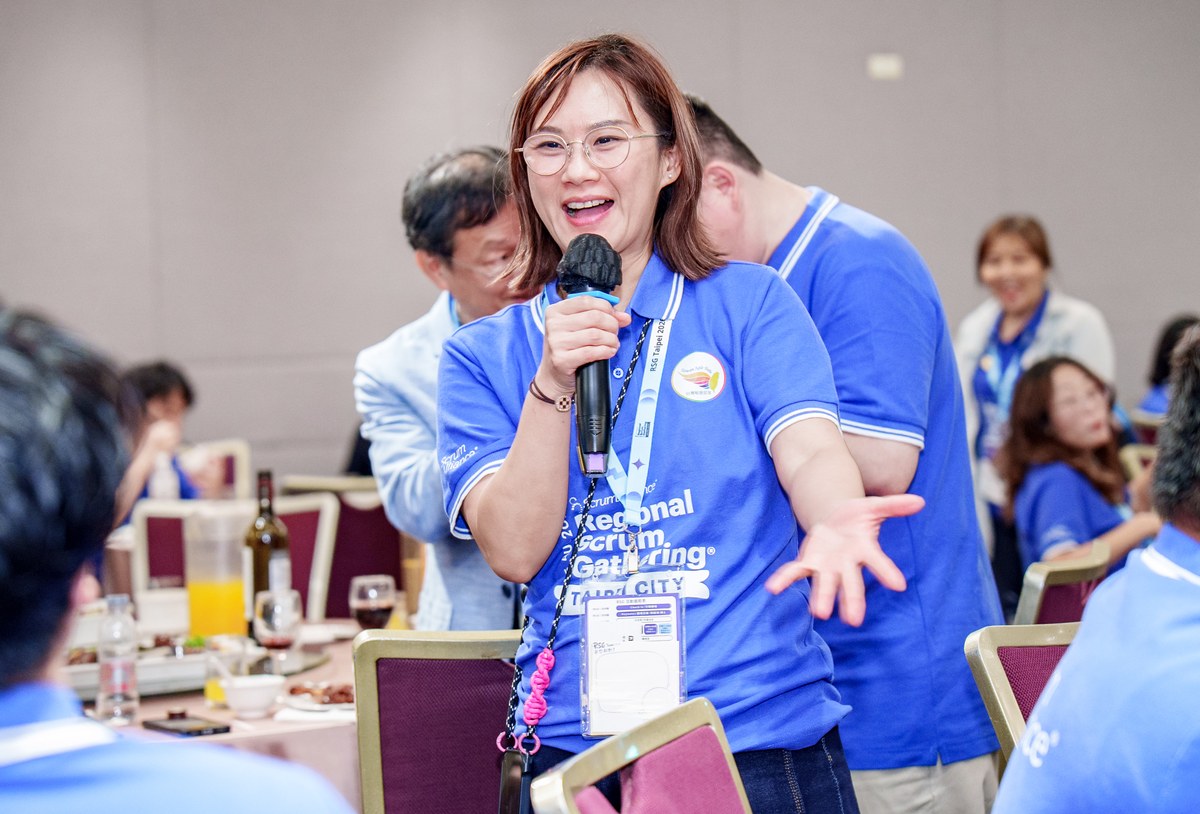
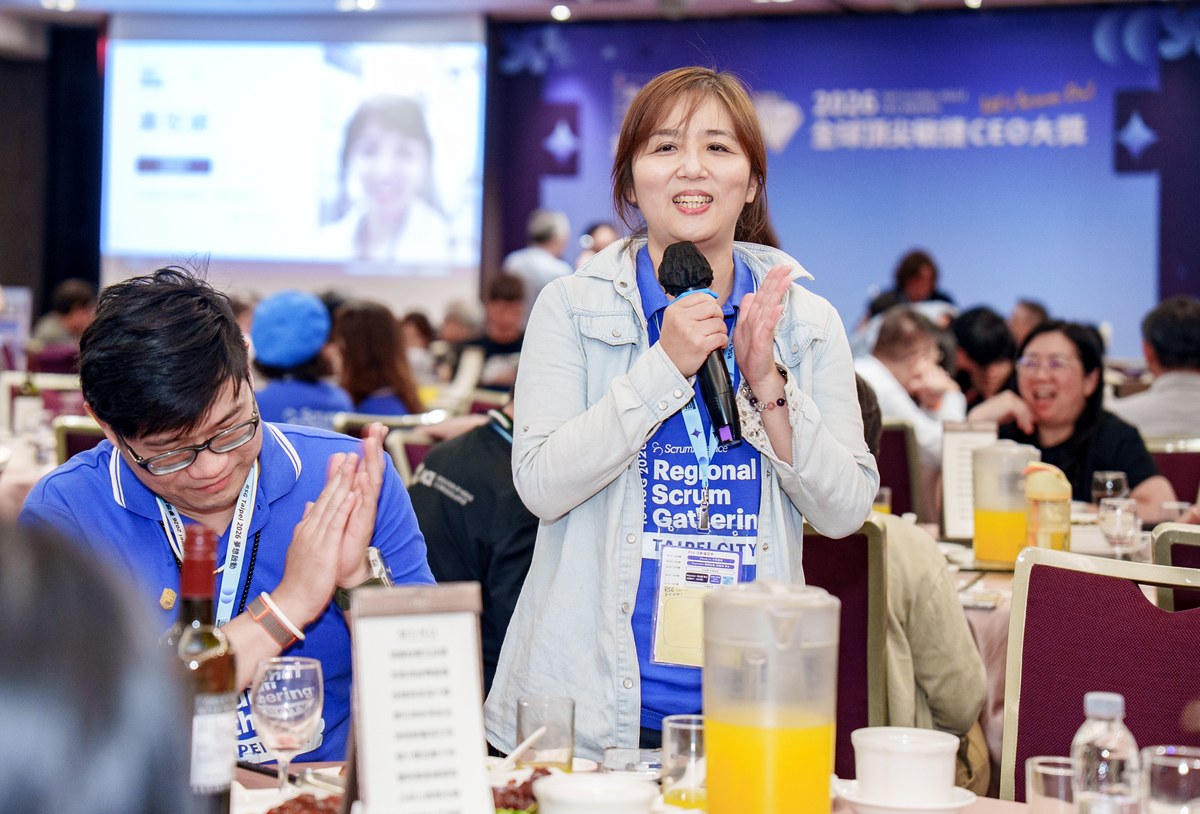
On event day, our host, Wang Wen-tsu, was on stage, keeping the whole program moving at a steady pace. But what actually kept the event running was everyone off-stage, backstage, in every corner handling logistics — guiding traffic flow, checking equipment, watching the clock. In front of the co-creation wall, the entire crowd interacted and left their mark — and in that photo, nobody’s the main character, because everybody is.
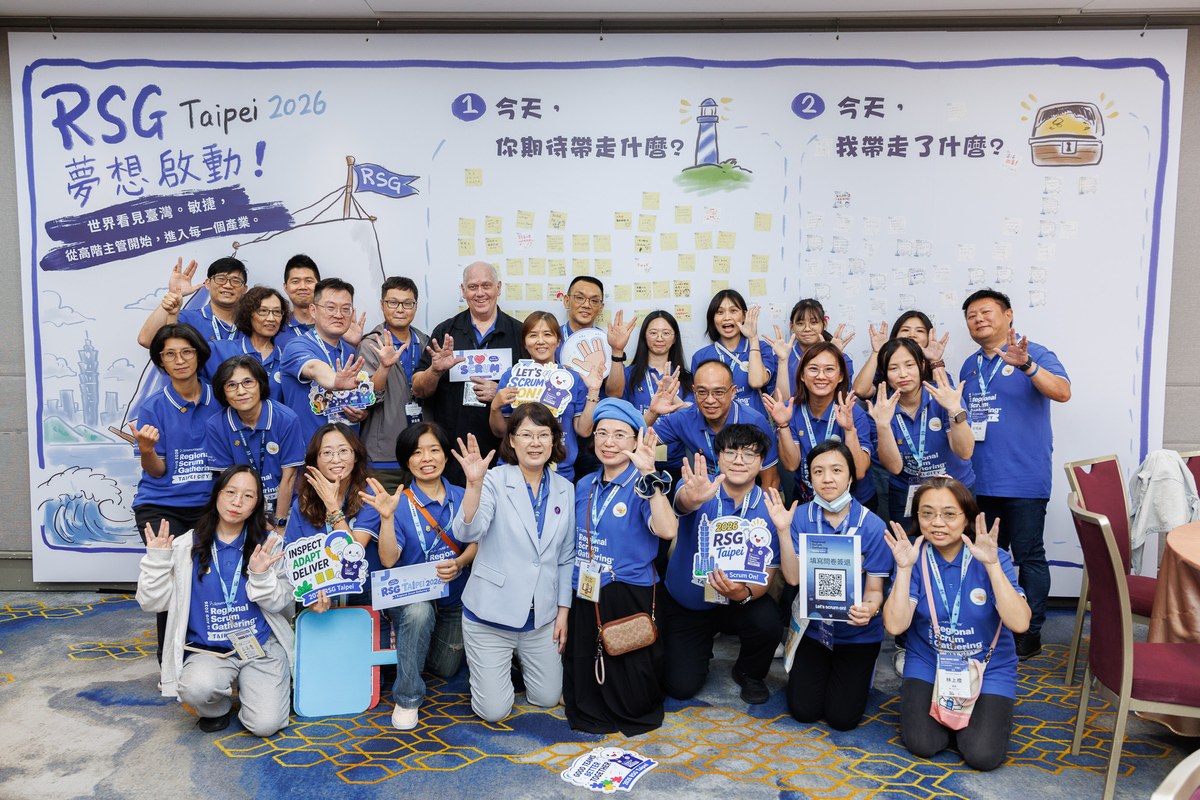
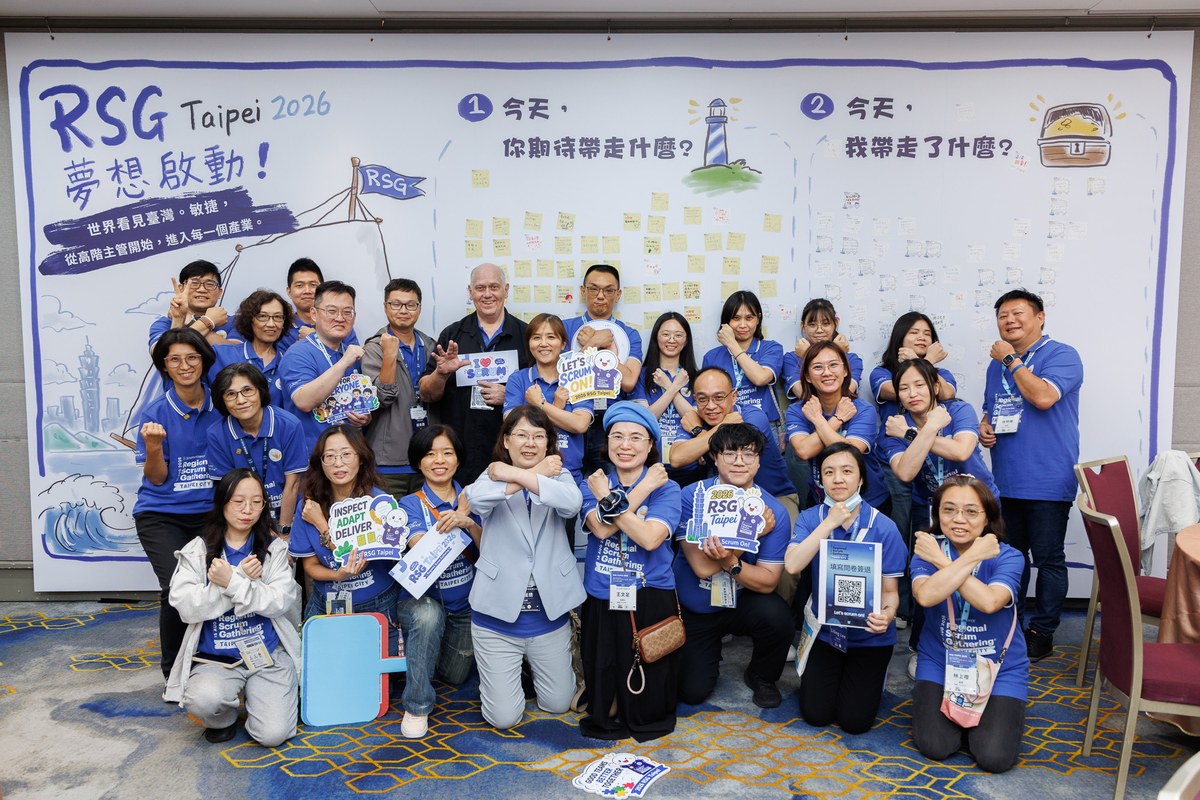
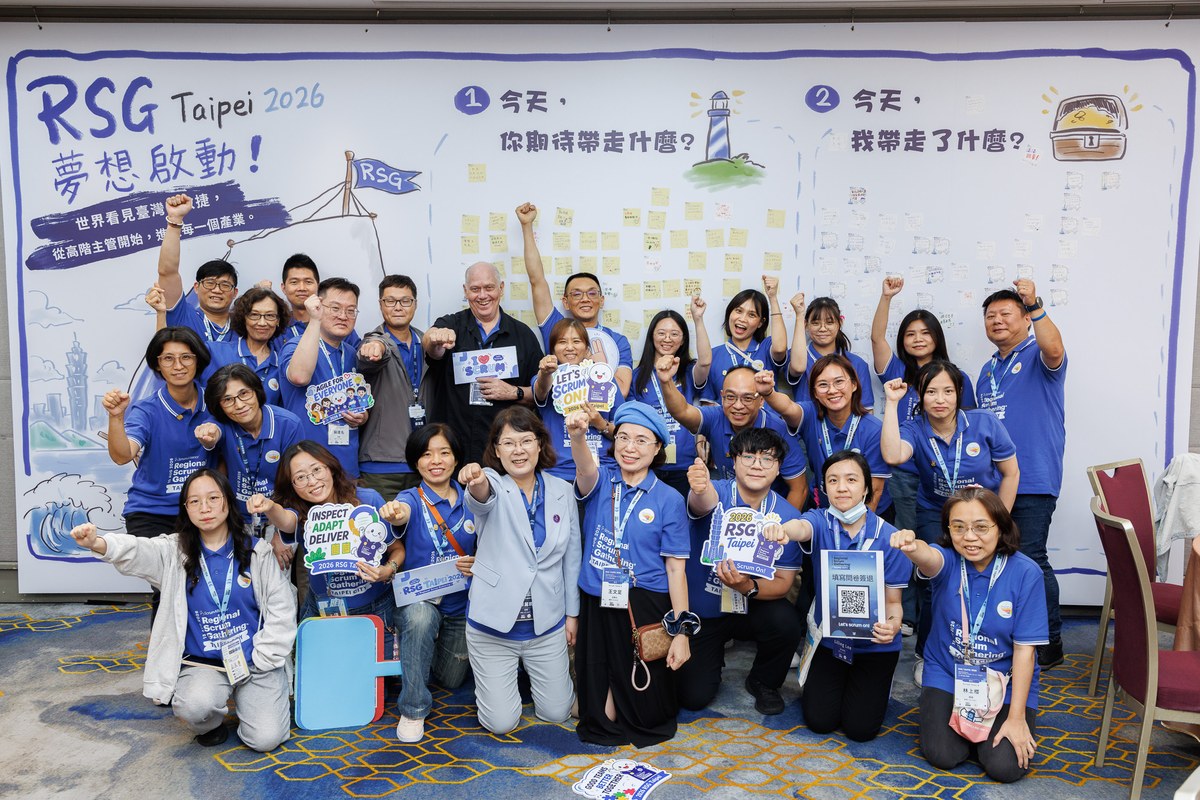
Whenever the flow needed adjusting or hands were short on the spot, it was mostly the volunteers themselves calling it out and handling it on the ground. Nothing waited for a command from me.
The event ultimately got described as a rare-scale collective-learning record, but for me the number was never the point. The point is that all thirty-one people knew exactly what they were supposed to do that day — and knew what the person next to them was doing too. That’s not something a schedule accomplishes. That’s four weeks of getting in sync with each other.
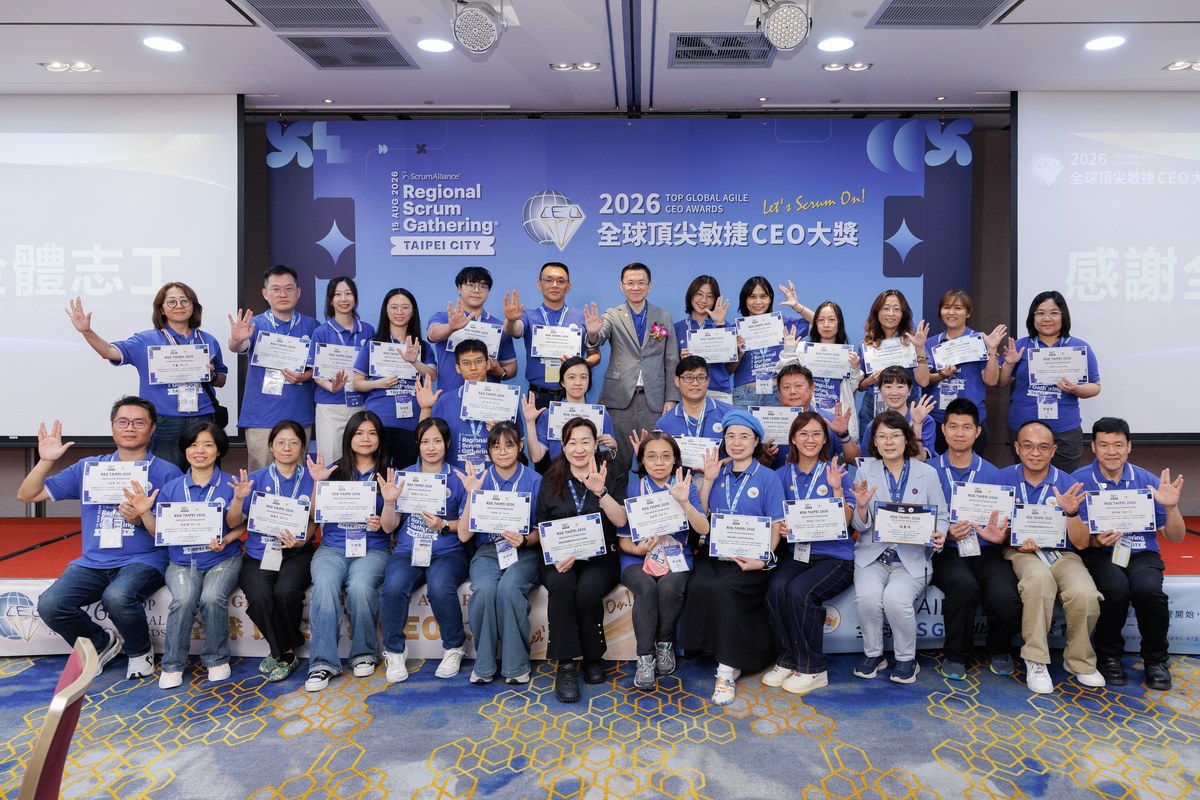
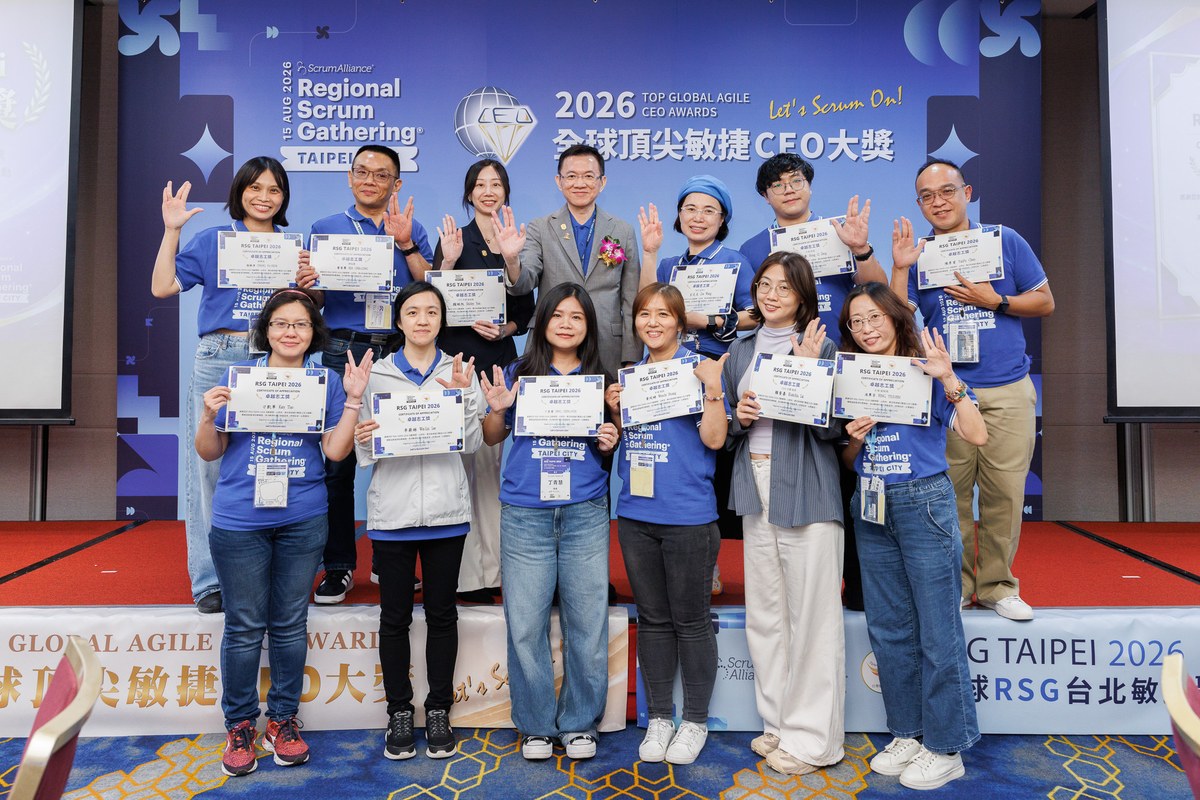
At the moment everyone gathered for the group photo with their certificates, the widest smiles usually weren’t on the people in the middle — they were on the people off to the side, the ones who quietly get things finished. Their names won’t show up on any agenda. But without them, nothing on that agenda would have run. That’s not a nice thing to say for effect. It’s the conclusion I reached standing there, checking it off item by item.
August 20th’s Retro: We Didn’t Just Celebrate
Five days after the event, we ran an honest retrospective. Using a Miro board, split into three groups, we ran an exercise called “Where the Real Talk Surfaces” and “The Mirror” — dot-voting on the things people actually wanted to say but don’t usually say out loud.
The numbers looked good: satisfaction NPS climbed to 71 after the event (Net Promoter Score, scored from -100 to 100). Media coverage came in well above expectations too — 376 mentions in total: 27 domestic and 161 international for RSG Taipei 2026 itself, and 28 domestic and 160 international for the concurrent Top Global Agile CEO Awards. Attendance and satisfaction stats all landed on the good end too. But we also laid the ugly numbers on the table — the event ended with a roughly NT$38,000 budget shortfall. I wasn’t interested in hiding that number. If anything, I think the willingness to put a shortfall on the table, outside of the celebration, is exactly what shows this team has actually matured. A team that only reports good news doesn’t go far.
The notes each of the three groups left on the Miro board got compiled into a clear list — what processes to simplify next year, what communication needs to happen earlier, what roles need filling. “The Mirror” exercise exists precisely to stop people from writing only nice things — where prep actually got stuck, where communication only got patched up after the fact, all of it had to go honestly onto a sticky note, not stay as a private complaint in the hallway outside the meeting room.
That retro confirmed something for me: the finish line for this event was never the after-party. It’s whether this year’s experience becomes an asset next year’s team can actually use. Whether an event goes well is a question you answer by looking at the day itself. Whether a team is built to last is a question you answer by watching whether they’re willing to sit back down after the celebration and lay the imperfect parts out on the table.
A Letter to Next Year’s Cohort of Volunteers
If you’re weighing whether to join next year’s RSG Taipei, I want you to know what you’re actually signing up for isn’t a task list. It’s a position that requires your own judgment, your own willingness to cover for someone else. I’m not going to tell you exactly how to do each step. I’ll only make the vision clear — let the world see Taiwan, with agility starting at the executive level and reaching into every industry. The rest of the path is yours to walk, together with the people around you who start out as strangers and end up as teammates.
This year’s thirty-one people proved one thing in four weeks: when the vision is clear enough, people step up on their own. They chose to put their time and their expertise into a list that had nothing to do with them, and turned it into a real team. Nobody made a cent off this. What they got instead was an experience they claimed, backfilled, and finished with their own hands, start to finish.
Next year, the list opens again. If you’re on the fence, here’s what I’d tell you: you don’t need to be sure you can do everything. You just need to be sure this vision is worth four weeks of your time.
> When the vision is clear enough, people step up on their own. That’s the line I want to leave for next year’s cohort — for you.
—