
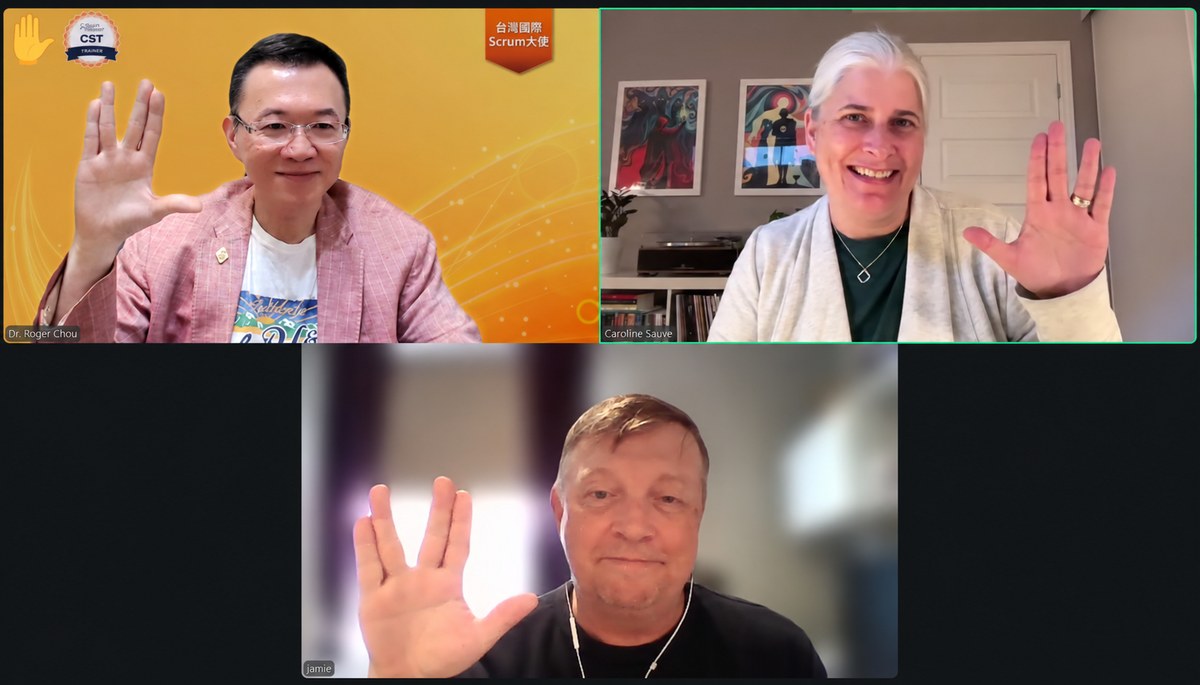
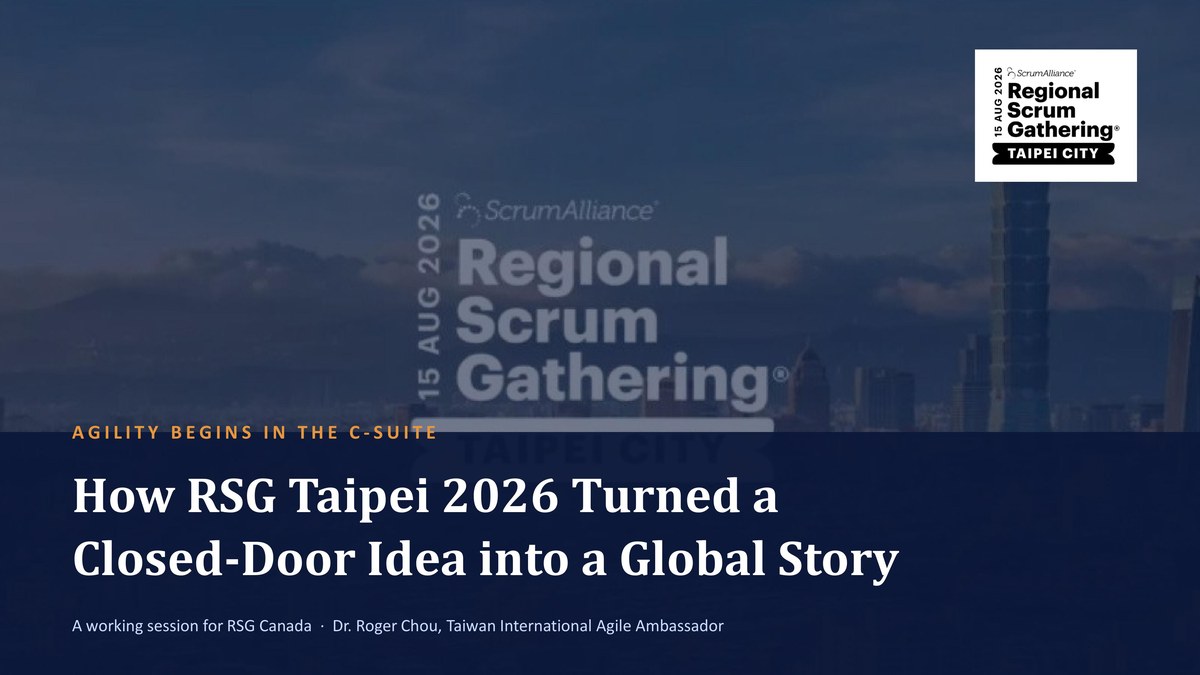
One evening in September, I sat in front of my screen and walked the organizers of Canada’s Ottawa-Gatineau Agile Tour through RSG Taipei 2026 (deck download). On the other end, Jamie and Caroline didn’t just compliment the energy in the room — they pressed me with real questions: How did you get senior executives to actually show up? How did you organize the volunteers? How did you get leaders to say out loud what they were really struggling with?
It reminded me of something I’d said back in January: “Let the world see Taiwan. Agile, starting with senior executives, reaching every industry.” Back then it was just a vision. Eight months later, someone on the other side of the planet was asking us how we’d pulled it off.
Bringing Agile to the People Who Actually Decide
Regional Scrum Gathering (RSG) is a community forum backed by Scrum Alliance. In past events, I used to care whether we could set a new attendance record. This time I asked myself a different question: if a thousand people showed up and the big decisions back at their companies stayed exactly the same, what would the event have actually changed?
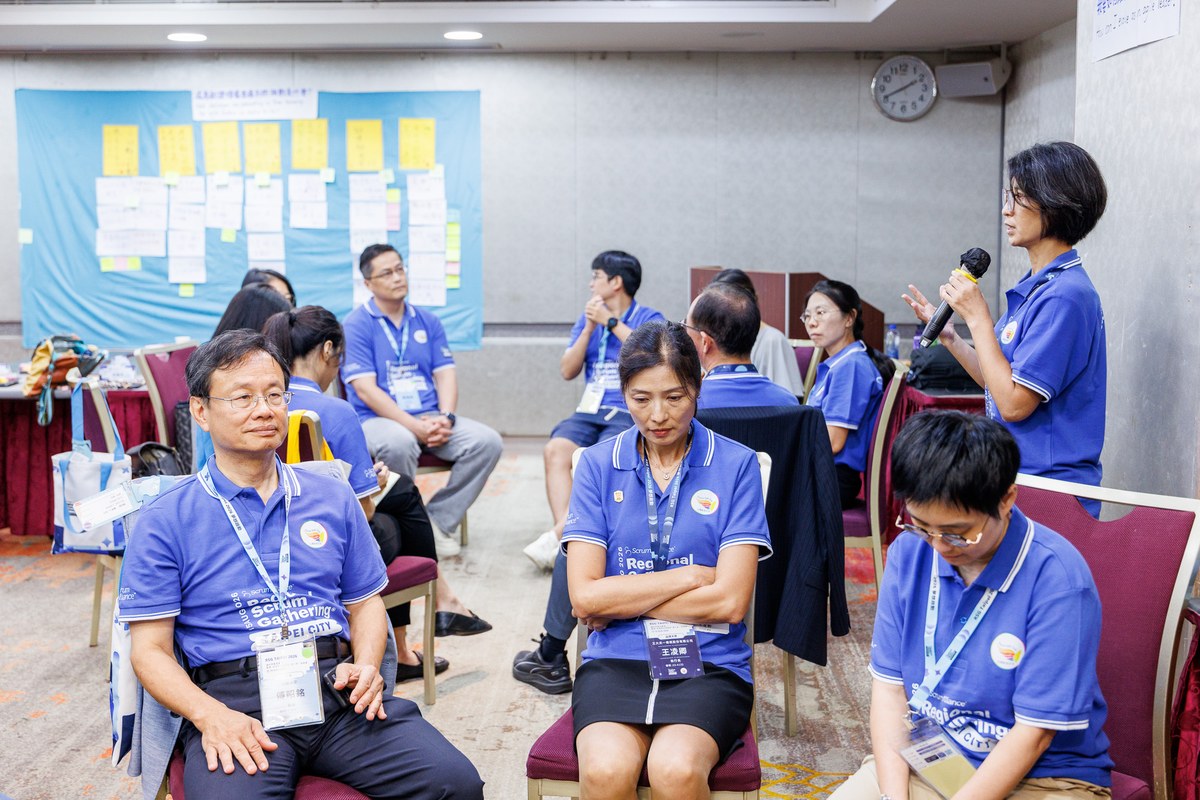
So I decided to design RSG Taipei 2026 for chairmen, general managers, and senior executives. My thinking was simple: to get agile out of a handful of teams and into construction, telecom, finance, education, and beyond, you need the people who actually hold the resources and the decision-making power to experience it themselves. The room wasn’t built for listening to keynotes — it was built for leaders from different industries to name real problems, work through them together, and walk away with a next step.
I’ve stood in CSM and CSPO classrooms and watched senior executives realize, often for the first time, that agile isn’t about pushing the front line to move faster. It’s about the leader relearning who the customer actually is, reordering what matters most, and giving the team room to experiment and learn under uncertainty. So this time, I deliberately kept the guest list small enough for a real conversation, instead of chasing a number that would look good on a headline. Let the people who actually want to change their organizations meet each other first — everything else follows from that.
On August 15th, 233 people requested tickets and 221 showed up — a roughly 95% attendance rate, with about seventy percent of the room at management level or above, based on registration data. 174 valid surveys gave us an overall satisfaction score of 9.27 out of 10 and an NPS of 71 (-100 to +100). Those numbers made me happy, but what I still remember most is the people who make the decisions back at their own companies choosing, for one day, to set their titles down and sit at a table of strangers, talking honestly about what their organizations are up against.
31 People Built a World-Class Event
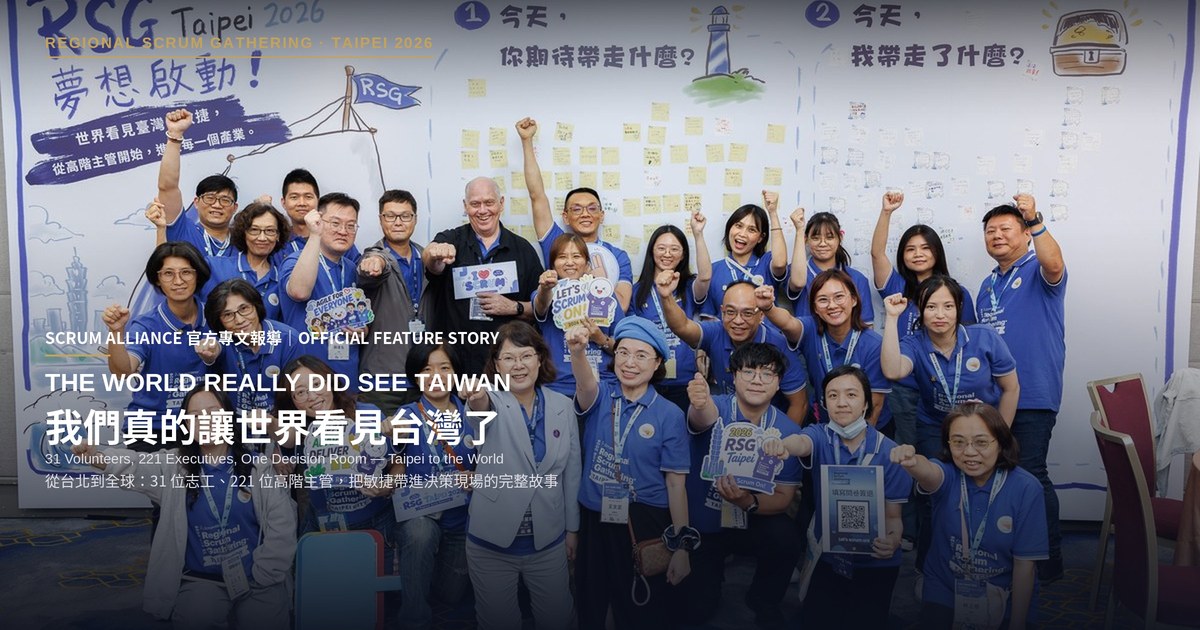
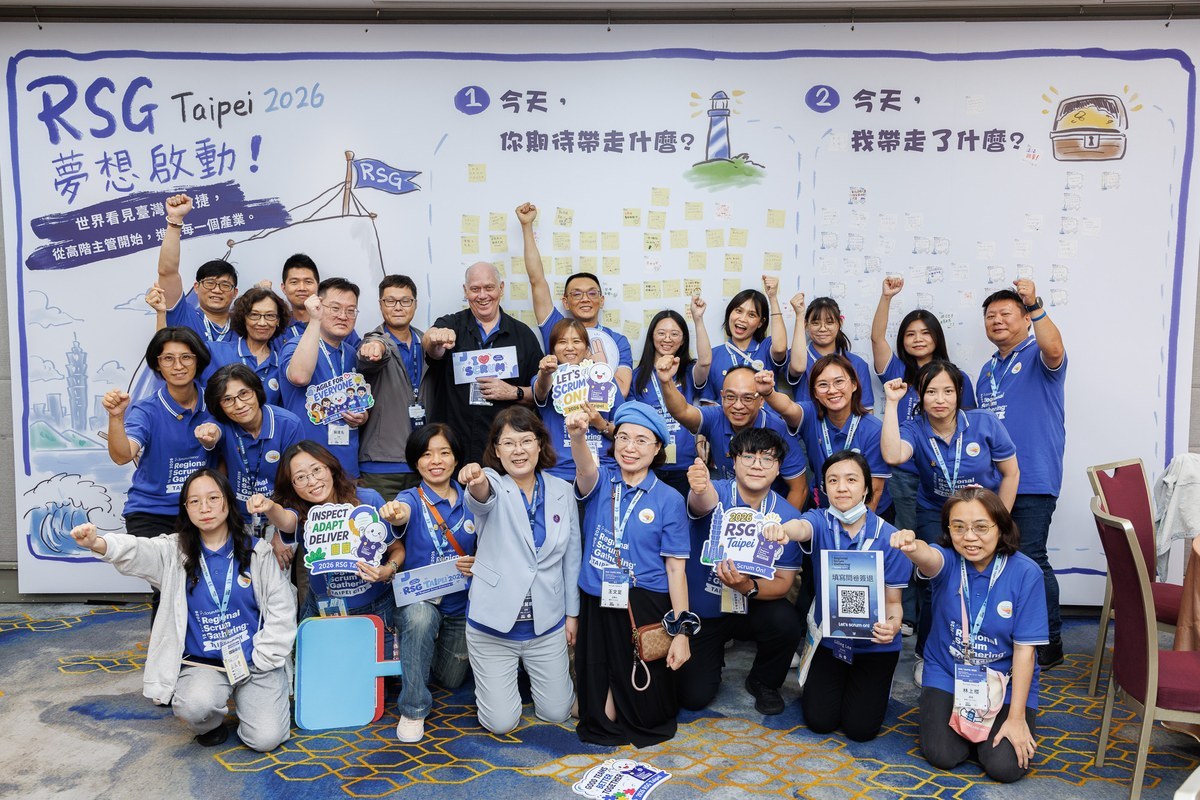
We opened 20 volunteer spots. They filled in 22 hours and 36 minutes. By the end, 31 people had pulled the event off together. Nobody personally recruited the extra 11 — they heard the vision and stepped up on their own.
Many of them had only known each other online before this. During preparation, the team worked in short cycles — plan, show, review — with each sub-team claiming its own tasks and jumping in to cover gaps wherever they appeared. One volunteer, Chloe, proposed replacing the usual paper certificate — the kind nobody ever actually uses — with an engraved badge that proves “I was an RSG volunteer.” We ended up making 118 of them. Another volunteer, Liling, pulled together four teammates to record the bilingual — Chinese and English — narration for the event, finishing both language versions in three days; the opening credits carry all five of their names. Honestly, not one of these ideas was mine. Every one of them came from the volunteers themselves. By the time the event wrapped, this group of people who’d started out as strangers didn’t want to leave.
Another group deserves to be remembered for making the whole thing possible in the first place: twenty business leaders backed the event as brand ambassadors before there was anything to show for it yet, committing roughly NT$400,000 combined. That wasn’t buying ad space. It was a bet that Taiwan deserved a stage senior executives would actually walk into themselves. When sponsors are willing to trust first and volunteers are willing to step up on their own, a single sentence of a vision slowly grows into an actual room full of people.
As Product Owner, my most important job was to keep the vision and the weekly goals clear, and to own the hard calls when trade-offs had to be made. When the direction is clear, a team can create without hesitation; when you hand over the power, ideas grow in places you never would have thought of yourself. Whatever shone on stage that day, behind it was a volunteer team that kept stepping in to cover for each other, again and again.
When Headquarters Wrote an Article About Taiwan
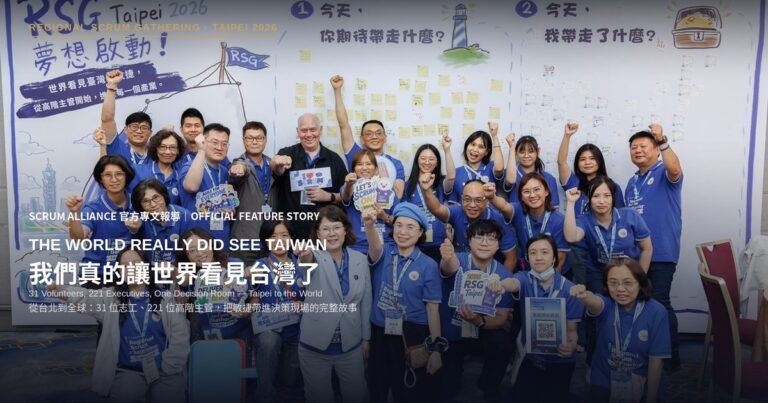
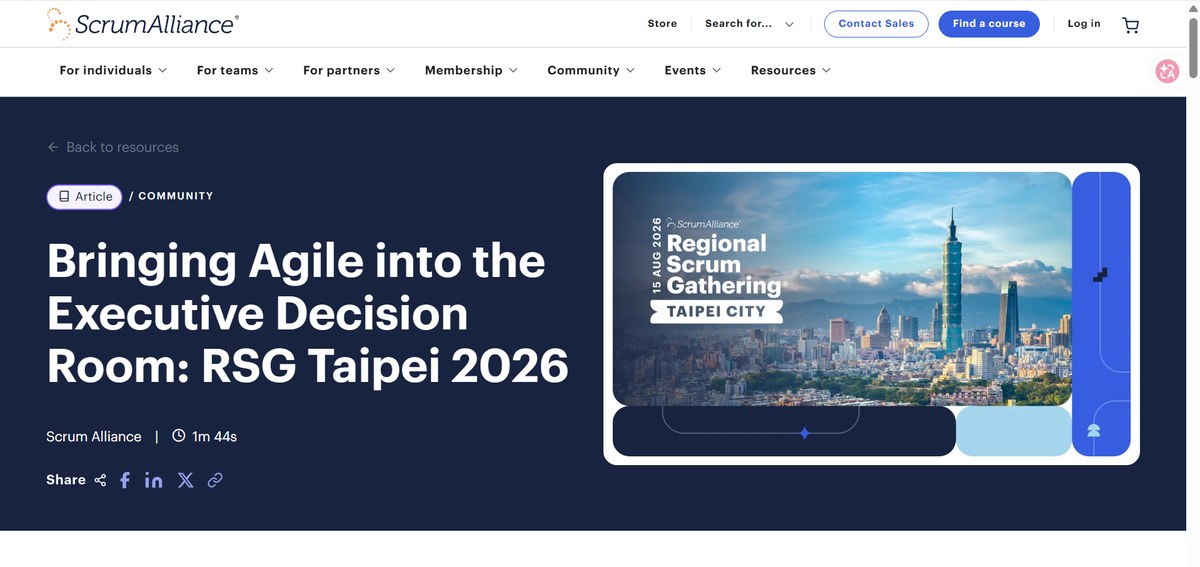
After the event, Scrum Alliance published a full feature on Taiwan’s story titled Bringing Agile into the Executive Decision Room: RSG Taipei 2026 on its official site. What they saw wasn’t just a beautiful venue and strong survey scores — it was a forum that brought agile into the executive decision room, and volunteers who turned self-management into delivered results.
What makes me proudest isn’t seeing my own name on an international site. It’s that Taiwan’s approach became a case study other places can read, discuss, and borrow from. The official article also noted 14 winners of the Top Global Agile CEO Award and 10 companies recognized for agile talent development — when leaders are willing to invest in learning and companies are willing to back that growth, agile finally gets a chance to move from the classroom into daily organizational life.
From Taipei to the Next Conversation in Canada
Jamie and Caroline of Canada’s Gatineau Ottawa Agile Tour (GOAT) read our results report and deck and reached out to me directly. They’re building their own forum, and they’re wrestling with the exact same question: how do you move the agile conversation up from team delivery to leadership and decision-making?
We talked about how an invitation-only model shapes the quality of conversation, how brand ambassadors can back a vision before the event even takes shape, how volunteers organize themselves, and what facilitation and post-event reflection look like in practice. Jamie said he was struck by how many business leaders we’d managed to bring into the room. Caroline said the conversation inspired her, and she offered to bring their own results back to share with us once their event wraps.
This is the “let the world see Taiwan” I was hoping for all along: Taiwan shares one real, honest account of how we did it, and another city comes back with their own experience to add to it. Not exporting a single standard answer to the world — starting a conversation where international communities actually learn from each other.
Even the Imperfect Parts Are Worth Saying Out Loud
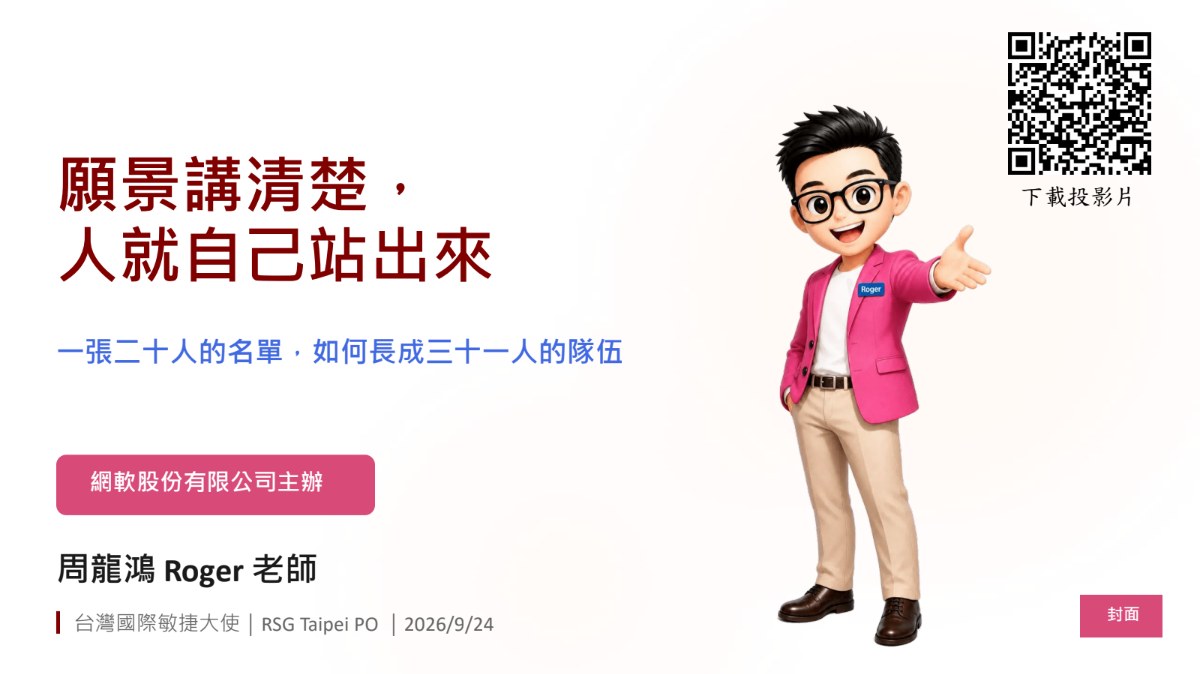
Earlier that same day, I’d also turned the RSG story into a deck (deck download) and shared it with about a hundred nonprofit partners, in person and online.
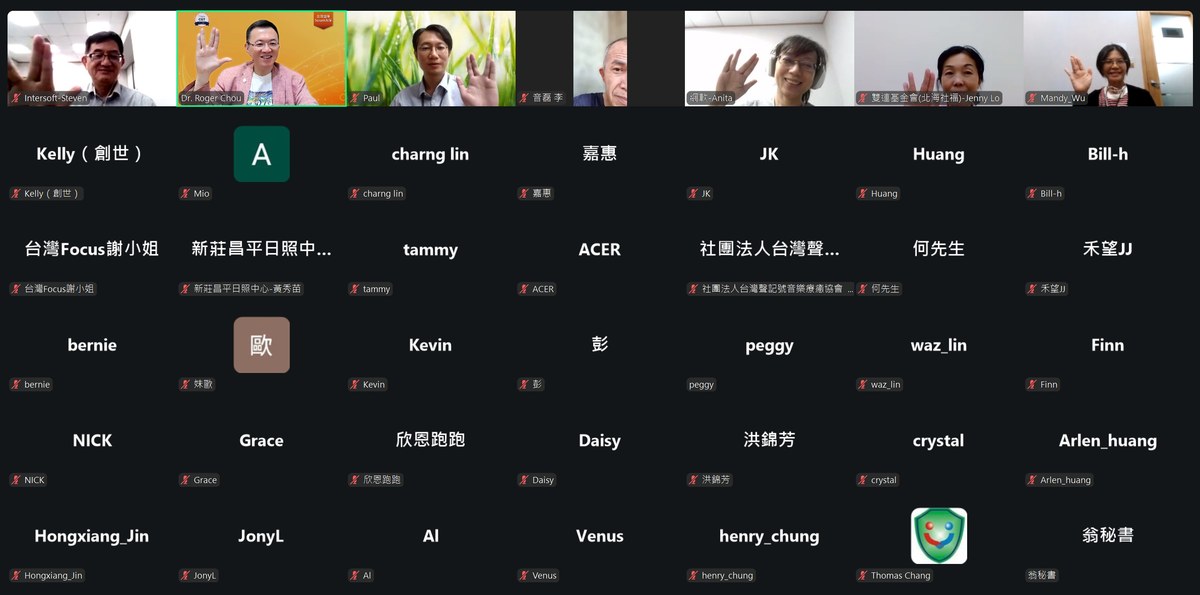
After the highlight reel played, the chat filled up with comments — “amazing, what incredible cohesion,” “so much energy, Taiwan’s spirit on full display,” “you can see the trust and passion.” Reading those words, I thought of the 31 volunteers, and every business leader who chose to back and take part in this.
We weren’t perfect either — the event closed with a financial shortfall. I chose to lay that out plainly, right alongside the results. Because what’s actually worth replicating was never just the applause on stage — it’s how a team faces its limits, adjusts its approach, and keeps moving forward.
Now, take seven minutes and watch the footage. You’ll see the energy in the room, the leaders leaning in — and you might just find yourself in one of the shots.
RSG Taipei has wrapped, but the story didn’t stay in Taipei. Now that the international community has written down our experience, and Canadian partners have reached out with their own questions, I can finally say this to everyone who put in the work: we really did let the world see Taiwan. Honestly, eight months ago, when I first wrote that vision down, I wasn’t sure we’d ever get here. The next step is getting more senior executives at more companies to bring this kind of agile back into their own organizations — and if you’re wondering where your own team should start, that’s exactly what I do every day, in CSM and CSPO classrooms and out in the field working alongside companies.
We really did let the world see Taiwan.