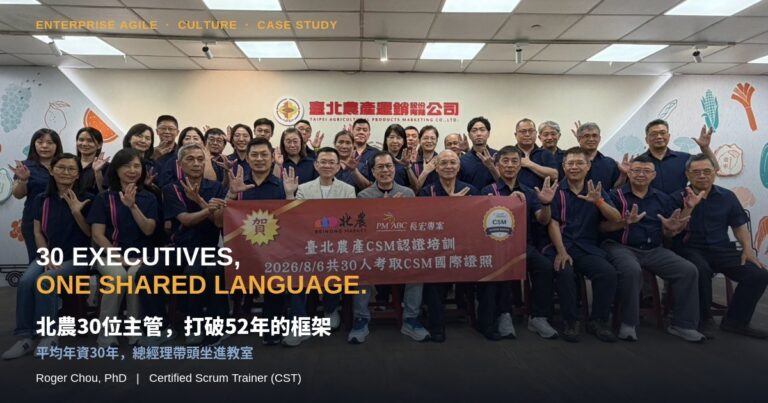
Thirty executives, average tenure over 30 years — when I said that sentence out loud in North Farm’s classroom, the room froze for a second, then broke into laughter. Taipei Agricultural Products Marketing Co., a company that has carried Taipei City’s entire produce supply for more than half a century, saw its General Manager, Wu Fang-Ming, do something most companies wouldn’t dare this year: first bring three section chiefs into a CSM classroom, then two months later send all 30 senior executives into that same room. The tenure of this group of executives was supposed to be North Farm’s deepest asset — instead, Wu Fang-Ming laid it out himself in the classroom and treated it as the biggest homework assignment of all. This isn’t just a certification course. It’s a 52-year-old company choosing to operate on its own most senior people first.
A 52-Year-Old Company Whose Deepest Asset Is Also Its Deepest Frame
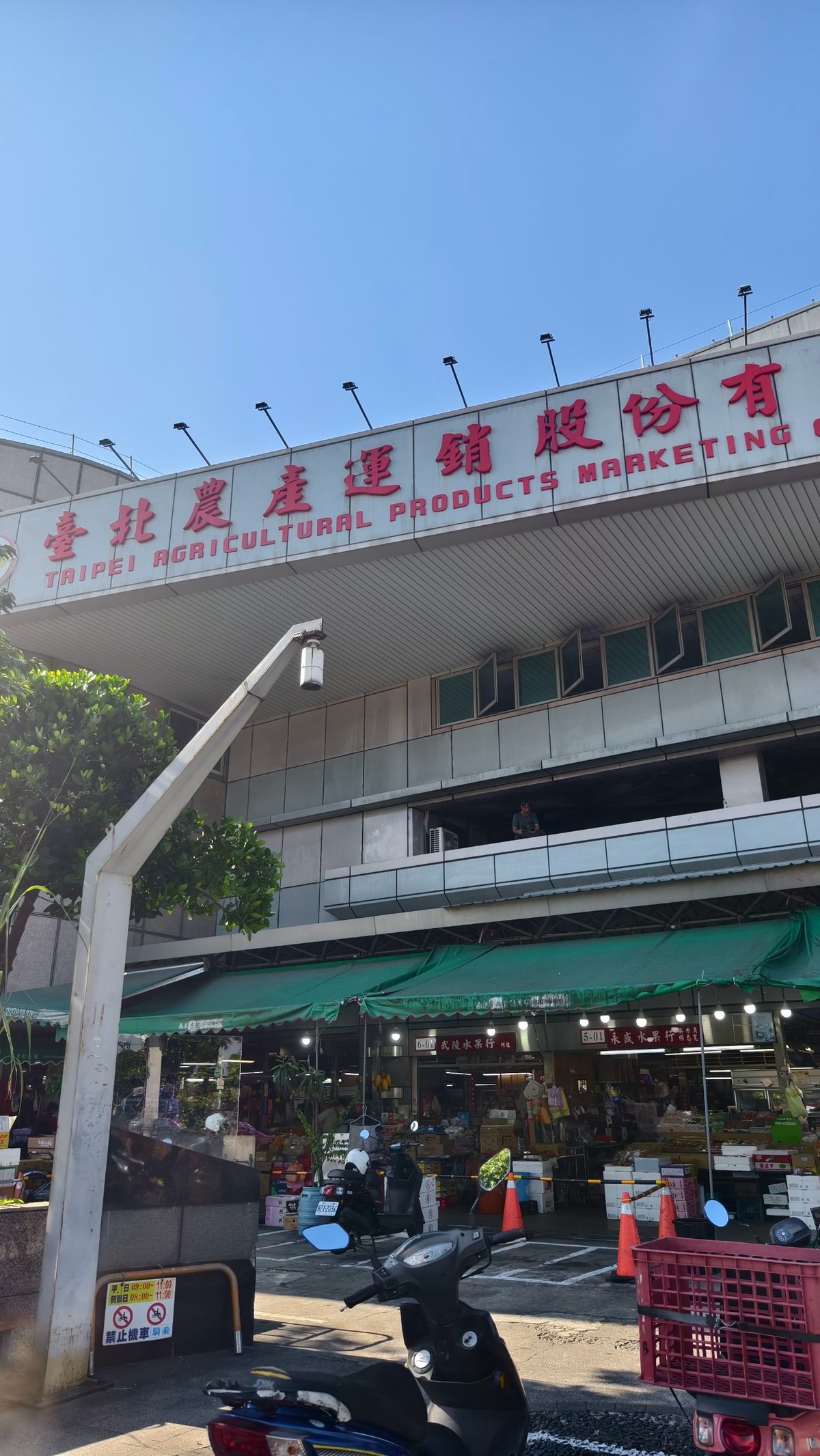
Taipei Agricultural Products Marketing Co. was founded in 1974, and this year marks its 52nd year. That pedigree has always been North Farm’s calling card — an established name that knows the market and can carry the weight of supplying produce to all of Taipei City.
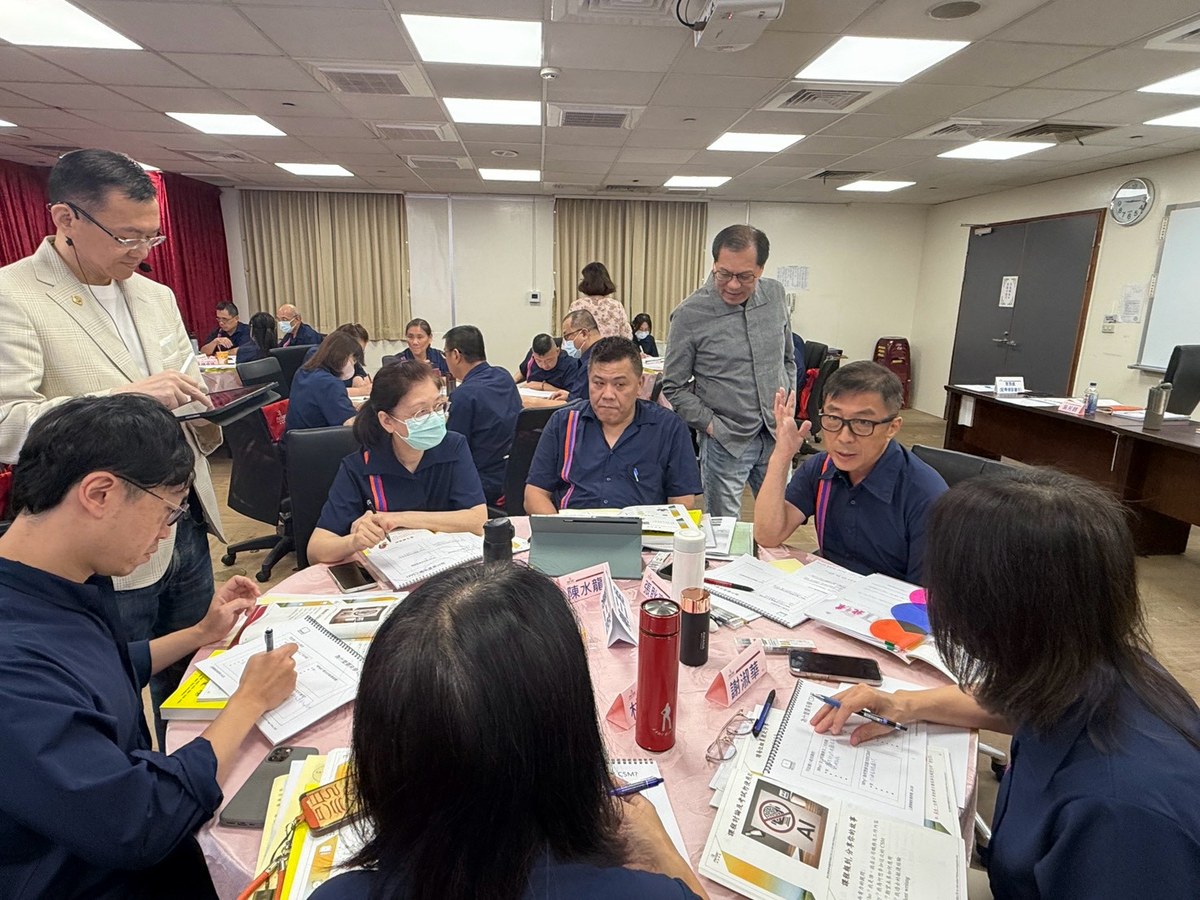
But on August 5 and 6, the 30 senior executives who sat down in that classroom had an average tenure of over 30 years. In other words, most of them joined North Farm when the company already had two or three decades of history behind it — and then spent another thirty years walking alongside it.
Deep tenure means knowing the market, knowing the relationships, knowing what this market is doing at three in the morning. That’s not a bad thing — honestly, it’s exactly why North Farm has been able to hold Taipei’s produce supply together so steadily. But that same tenure can quietly turn into an unspoken sentence: “I’ve worked here for 30 years. I know how this should be done.”
That sentence is the thing North Farm actually needs to loosen.
In June, the GM Brought 3 Section Chiefs Into the Classroom. In August, He Brought In 30 Executives.
On June 13 and 14 this year, GM Wu Fang-Ming did something first: he enrolled himself in the two-day official CSM (Certified ScrumMaster®) certification course, bringing along three section chiefs — Hsu O-Mo, Lin O-Hsu, and Chen O-Lin (acting). He didn’t send someone else to scope it out first. He gave up two days himself, first.
Wu previously served as Deputy Magistrate of Chiayi County, holding a civil-service rank near the top of the system — theoretically, he had nothing left to prove by sitting through a two-day course. But he personally brought three of his officers to attend. That was movement one.
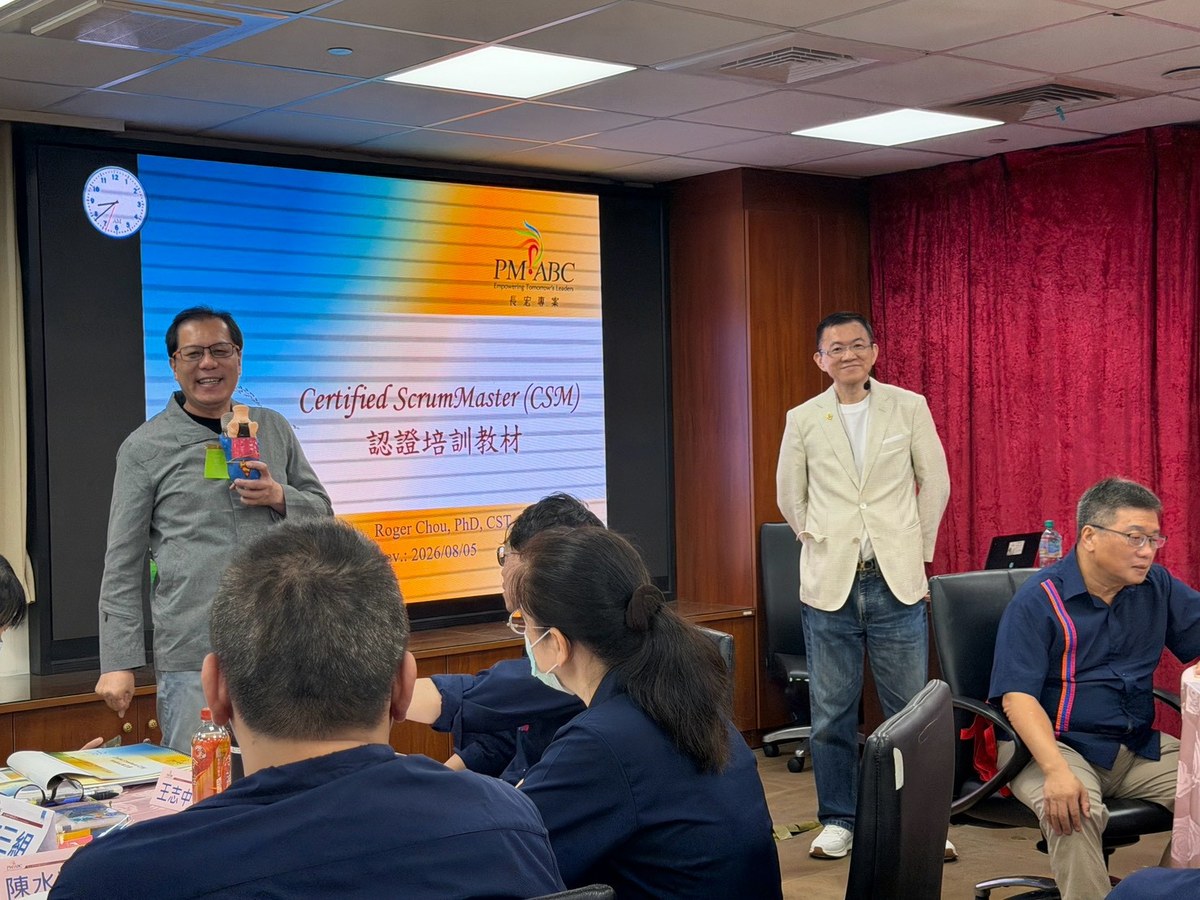
Two months later, on August 5 and 6, he scaled it up by an order of magnitude: all 30 of the company’s senior executives enrolled in the same two-day CSM class. This time he wasn’t sending representatives — he sat through both full days himself, from 8:30 a.m. to 5:30 p.m.
“North Farm’s Average Tenure Is Over 30” — That Sentence Pinned the Whole Room
On the second afternoon, I asked the whole class a question: “As North Farm people, what’s our average tenure?”
Someone in the room froze for a second: “30 years? You mean average age, right?”
“Average tenure.”
“30? Then everyone here must be in their sixties.” The whole room laughed.
I didn’t. Because that was exactly the effect I wanted. I told them: we’re all held hostage by some kind of frame — “that’s just how we’ve always done it at North Farm” is one frame, and Scrum has its own frame too. But don’t Scrum for the sake of Scrum. Scrum to achieve a purpose, Scrum to create value.
A group of executives with an average tenure of 30 years is best at knowing “we’ve always handled this a certain way.” That instinct is exactly what lets them run the market fast and steady. But that same instinct can also kill a good idea before it’s even finished being said — “won’t work, we’ve tried that.”
What the two-day CSM class needed to loosen was never their expertise. It was the timing of that instinct.
Two Days Weren’t About Listening. They Were About Building an App Pitch Worth Investing In.
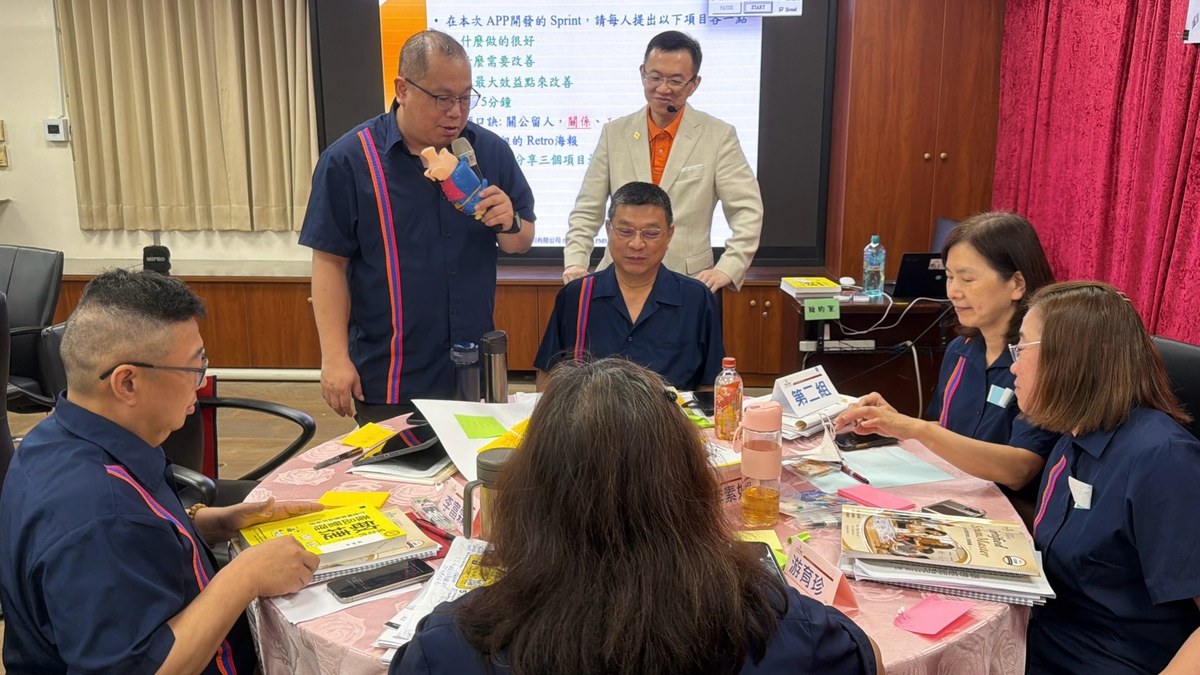
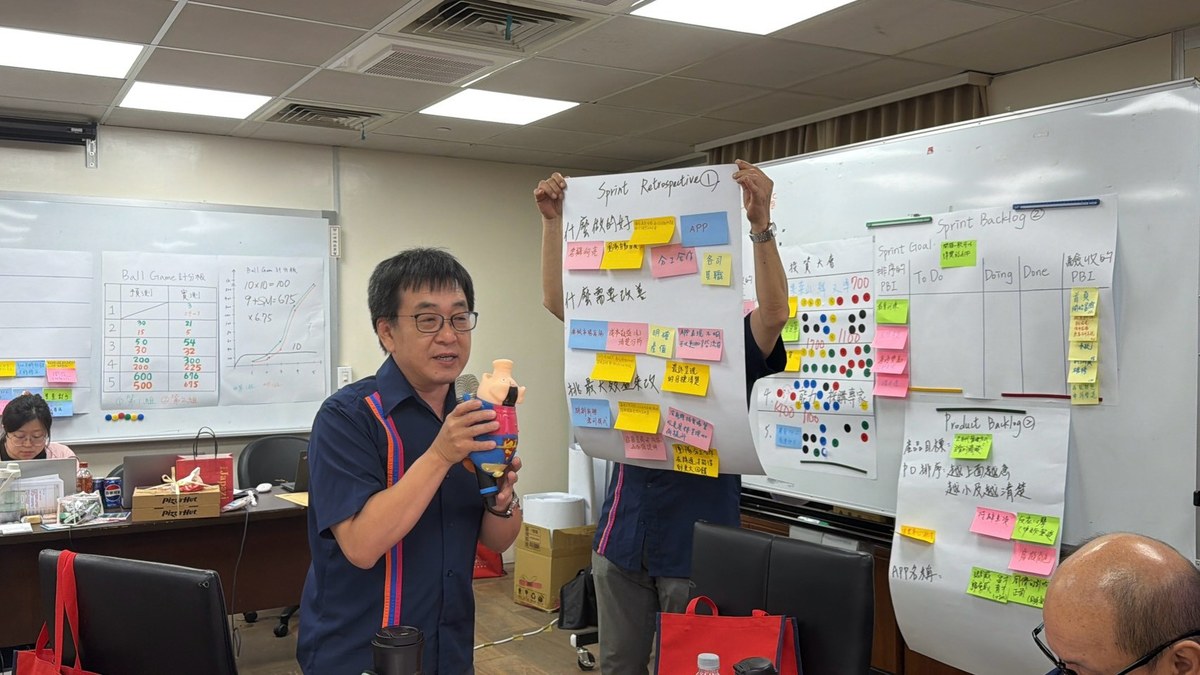
I didn’t let them just sit and listen for two days. In the afternoons, they split into five teams, each choosing a real North Farm pain point — procurement cost, auction revenue, retention, cross-department coordination — and used the Scrum way to build, within two days, an app proposal ready to “pitch for funding.”
Wu Fang-Ming put himself in the game too. One team wrote him into their user story as the lead character: “As North Farm’s Deputy General Manager joining a video meeting from home, I want an automatic AI meeting summary, because I want to be able to make a fast decision before the meeting ends.” During another team’s pitch, he grinned and upped the ante on the spot. The whole room erupted — this wasn’t a GM doing an inspection. This was a GM playing investor, playing for real, alongside his own executives.
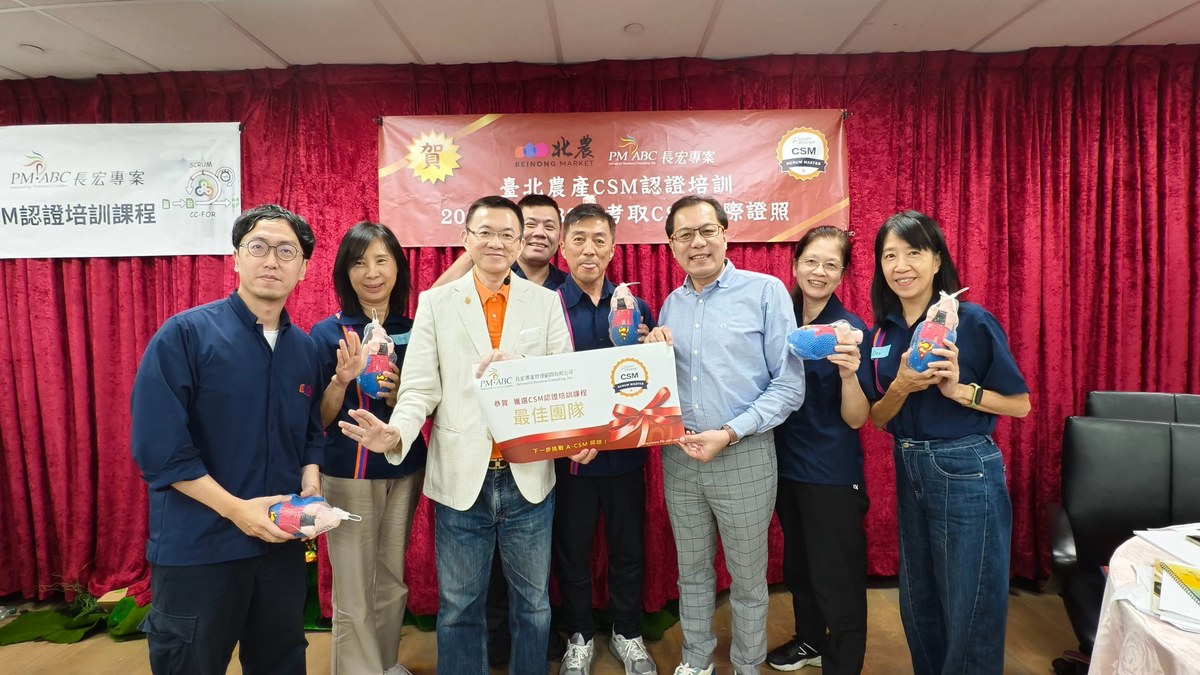
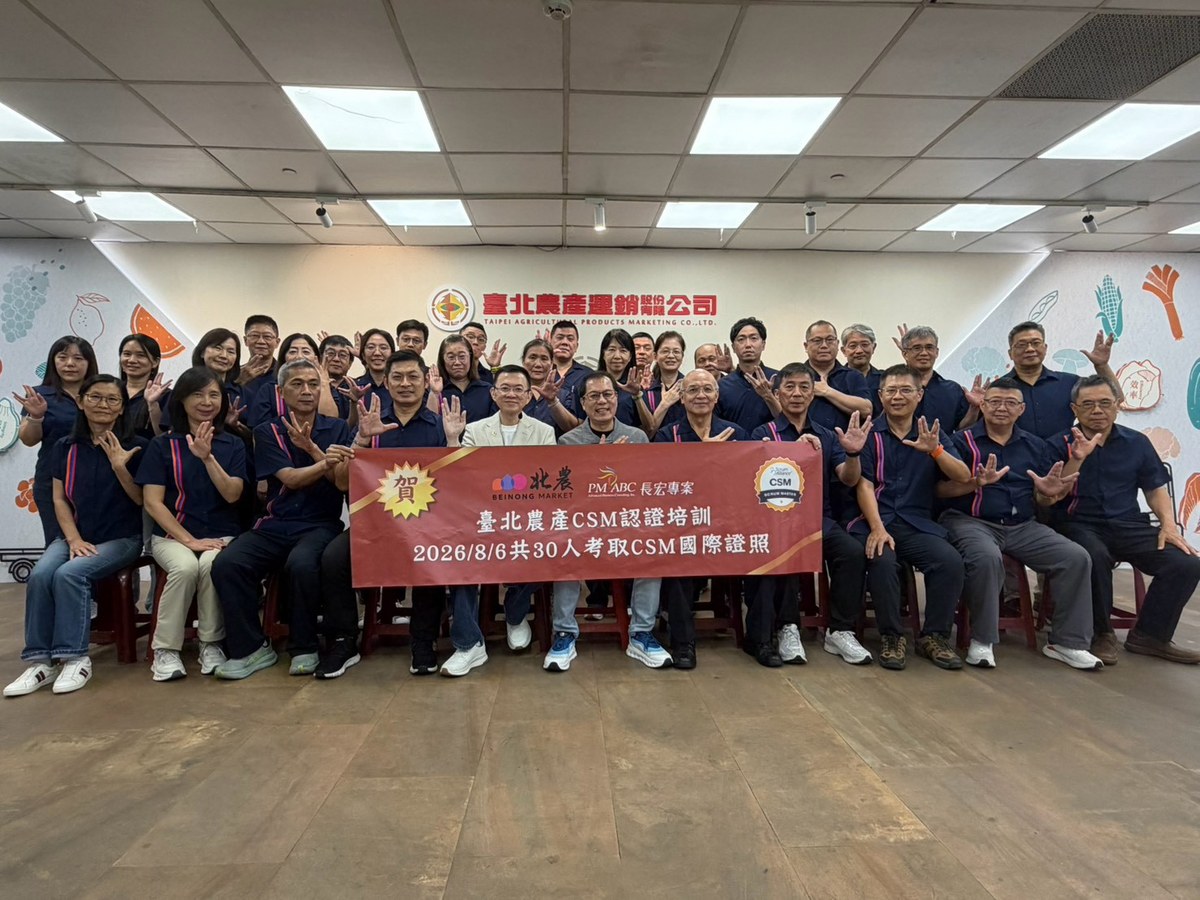
In the end, the five teams voted on each other, and Team 3 won “Best Team” with 1,700 votes. At the award ceremony, Wu Fang-Ming personally walked up on stage, took a photo with the winning team, and the two of them held a banner reading “Taipei Agricultural Products CSM Certification Training Program” — grinning wider than anyone else in the room.
Certification Was Never the Point. Loosening “I’ve Done This for 30 Years” Was.
Whether the same frame is still there once everyone’s back at their desks — that’s the real thing these two days need to be graded on. 30 CSM certificates will get issued over the coming weeks, but that’s just a souvenir.
Hsieh O-Hua, Manager of the Administration Department, wrote after the course: “Agile isn’t something you fully grasp in a two-day course — it’s a working culture that requires ongoing practice and reflection.” Ting O-Ching, Deputy Manager of the Sales Department, said the course made him rethink daily stand-ups: “It’s not just reporting progress — it’s a critical mechanism for helping the team catch problems early and build shared understanding.”
These aren’t things they said for my benefit. These are 30 executives testing themselves: once they’re back in their own departments, will they actually use words like “stand-up,” “retrospective,” and “shared language” in daily work — or will these two days get filed away as a memory, waiting for the next moment someone reflexively says “I’ve done this for 30 years”?
A certificate can’t decide that. What decides it is the next three months of biweekly Scrum Buddy coaching.
From a Bullet Point in a Proposal to the Award Stage
This past May, Hongsheng Consulting wrote a single line into a proposal: CSM certification counts as one qualifying criterion for the “Global Top Agile CEO Award.” Every year, this award selects a group of CEOs worldwide who have demonstrated outstanding achievement in agile thinking and practice.
Later this month, on August 15, Wu Fang-Ming’s name will appear on the winners list for the 2026 4th edition of the award.
I’ve coached companies for years, and I’ve seen plenty of proposals dress up a “qualifying criterion” beautifully — and then nobody ever actually delivers on it. Wu Fang-Ming didn’t treat it as a PR line. He lived up to the standard first. The award is just proof that happened to pass by.
From 3 People in June to 30 in August — What’s Next?
In June, the GM led 3 section chiefs to carve out the first stretch of the road for North Farm. In August, 30 senior executives walked into the same classroom together and widened it.
North Farm’s challenge was never a shortage of systems. It’s whether this 52-year-old company — as cross-department work keeps increasing — can get its most senior executives, the ones most likely to be held hostage by their own tenure, to loosen their grip first: to trade “I’ve done this for 30 years” for “let’s take a look together — can we find a better way this time?”
Wu Fang-Ming chose to sit down himself, twice. That choice, on its own, already is the decision. Whether a company changes is rarely about what’s written in its policy manual. It’s about whether its General Manager is willing to be the first one to raise his hand.
Whether the next step is 60 people or the whole company, I don’t know yet. But if you’re leading a group of executives who’ve “been in this business for over 20 years” and you’re wrestling with the same question — how do you turn their seniority back into an advantage instead of a ceiling — come ask me. I run CSM and CSPO cohorts every month, and I coach organizations through it myself. Let’s find out where your organization is ready to loosen its grip first.
What the Executives Said, In Their Own Words
Beyond the certificates and the numbers, I want you to see what these 30 executives wrote in their own words once they were back at their desks.
Ting O-Ching / Deputy Manager, Sales Department
This course gave me a great deal, and it lived up to the sense of “expecting to gain something” I had going in. Over the two days, I didn’t just pick up new working methods — I rethought how to actually put these ideas into daily practice. We don’t produce a physical product every day, but in a software-development environment, every sprint has clear goals and tasks, and the work itself often has to shift quickly as requirements change. That’s exactly why improving team communication and work rhythm matters so much.
The agile thinking and team collaboration methods covered in the course helped me understand that daily stand-ups aren’t just about reporting progress — they’re a key mechanism for helping the team catch problems early and build shared understanding. Short, focused discussions don’t just raise communication efficiency; they let the team adjust faster and keep improving how work flows. The biggest takeaway wasn’t just learning new tools or methods — it was building a mindset of continuous improvement and the courage to change. Going forward, I want to actually apply what I learned, accumulating small daily improvements, raising how well the team works together, and creating greater value for our projects and products.
Lee O-Lin / Director, Audit Office
This study session gave me a tremendous amount, and it was a truly memorable learning experience. I’ve attended plenty of courses before, but between the content, the way we learned, and the exchange with my classmates, this felt like the biggest takeaway of any of them. The course didn’t just teach me practical knowledge and methods — more importantly, it made me rethink my own role on the team and how to apply what I learned to real work, leading the team toward continued growth.
What stuck with me most was the test. I went in for the first time genuinely trying to gauge my own ability, only to find the questions couldn’t be answered from memory alone — you had to actually understand the concepts and apply them flexibly. That made me realize the point of learning isn’t to pass a test, it’s to build the right way of thinking and be able to apply it at work. Going forward, I want to put what I learned into daily practice, keep building my own professional ability, and think about how to lead my team forward — creating a more collaborative atmosphere where everyone can contribute their strengths, work toward shared goals, and create greater value for the team and the company.
Wang O-Chung / Auditor, Secretariat
My biggest takeaway from this Scrum course is that real learning comes from understanding and practice, not just memorizing theory. To prepare for the test, I worked through question after question — starting out needing to think carefully through every option, and eventually being able to judge the answer quickly on sight. That’s not just familiarity with the material, it’s a fully-formed agile mindset. But I also felt strongly that the core of Scrum was never about passing a test — it was about how you apply these ideas to real work.
Since most of us work on the front lines day to day, the more theoretical material felt abstract and hard to absorb at first. But through the hands-on exercises and case simulations the instructor built into the course, we got to understand the spirit of Scrum by actually doing it — team collaboration, fast feedback, continuous improvement, and a value-driven way of working. Compared to just reading theory, hands-on practice does a much better job of building the right working mindset, and makes it far easier to picture how it applies to daily work. This course didn’t just deepen my professional knowledge — it gave me more confidence to apply agile methods to future projects, and to keep sharpening both my own efficiency and how I work with my team. It was a rare and genuinely rewarding learning experience.
Chen O-Chih / Specialist, Secretariat
This Scrum course gave me a great deal, and it made me rethink how project management and teamwork should work. The management concepts I’d been exposed to before centered mostly on PDCA — plan ahead, execute step by step, and treat “mission accomplished, no matter what” as the goal. But as the market keeps shifting faster, traditional management models can no longer fully keep up. The agile thinking, fast feedback, and continuous adjustment that Scrum champions showed me a more flexible way of working that actually fits how modern companies operate.
Rolling Scrum out fully across an existing organization isn’t easy — everyone already has fixed responsibilities and ways of working — but I found the team already had a lot of agile instincts. In the Secretariat, or in cross-department projects, the moment a new task comes in, people divide the work quickly and pull different areas of expertise together to hit the goal, with real collaborative efficiency. This course helped me understand that Scrum isn’t just a process or a tool — it’s a working culture built on communication, collaboration, and continuous improvement. Going forward, I hope to gradually work these ideas into daily practice, build a shared language across the team, and improve cross-department collaboration, so that when the team faces fast-moving challenges, it can meet its goals more nimbly and efficiently — and keep creating greater value for the organization.
Tu O-Chi / Director, No. 1 Market Reconstruction Office
This Scrum course gave me a completely new understanding of agile management, and it sparked a lot of new thinking. The Scrum framework taught in the course emphasizes cross-department, cross-functional teamwork, driving projects forward through highly efficient communication and continuous iteration — a way of thinking that’s genuinely different from traditional management models. I’d encountered methods like management by objectives and zero-defect planning before, but they mostly stayed at the level of theory. What was different this time was that the instructor, through step-by-step hands-on exercises, walked us through actually experiencing how Scrum operates, turning an abstract concept into something concrete and much easier to grasp at its core.
As I was learning, I kept reflecting on the reconstruction project I’m currently responsible for, thinking about whether Scrum could apply to engineering management. Scrum was built for software development, but through the instructor’s explanation I came to understand it fits just as well into requirements analysis, planning and design, and cross-department collaboration. Especially on large projects, reviewing progress in short cycles, responding quickly to changing requirements, and encouraging collaboration across different specialist teams can lower communication costs and raise execution efficiency. Going forward, I want to gradually work the agile thinking from this course into my job — not just improving how I manage projects, but building a more efficient culture of teamwork, so the organization can keep creating value in a more flexible, adaptable way as the environment keeps changing quickly.
Hsieh O-Hua / Manager, Administration Department
These two days of Scrum training gave me a great deal, and changed how I see project management and teamwork. Going in, it was exactly like a teammate put it — “equal parts excited and nervous” — because this was a field I’d never touched before. I was genuinely curious about this unfamiliar agile way of thinking, but also worried I wouldn’t be able to follow the pace of the course. But with Roger’s step-by-step guidance, paired with interactive games and hands-on exercises, what started as an abstract idea became something I could actually grasp — and let us experience the spirit of agile work firsthand.
I came away with a real appreciation that agile isn’t something you fully grasp in a two-day course — it’s a working culture that requires ongoing practice and reflection. So I’m hoping to start with small projects in my day-to-day work, gradually applying what I learned — reviewing in short cycles, collaborating as a team, and continuously improving — building up experience and results over time. What made this round especially valuable was that managers from every department took the course together, giving all of us a shared management language and way of thinking, which lays a solid foundation for pushing agile ways of working going forward. I believe that with the team pulling together and management support, we’ll be better equipped to handle a changing environment, and we’ll keep raising both how well we work together and how well we execute our projects — creating greater value for the organization.