
By Roger Chou (周龍鴻) | Taiwan’s International Agile Ambassador
One Day, the Titles Will Fade
I used to wonder: when the day comes that I can no longer step onto a stage, answer a student’s message, or tell my own story in my own voice, what will keep speaking for me? Eventually I realized the answer was already there, in the blog posts I’d written one at a time.
Some of them are fired up. Some are a mess. Some mark a result worth celebrating, and some are just a reminder to myself not to forget a failure. Put together, they come closer to the real me.

Over my career I’ve collected a few certifications and titles. For anyone who has worked at something for years, they carry real weight, because behind each one are hours of preparation and a lot of choices. But I also know that job titles change hands, awards go to new winners, and even other people’s memories of me will blur someday.
If all that’s left is a résumé, people may learn what I did. I’d rather they learn why I did it, and how many turns nobody saw sit behind the results that look glamorous.
A résumé proves where I ended up. Writing shows how I got there.
Companies work the same way. The day a senior leader walks out, what leaves with them is rarely the title on the business card. It’s twenty years of accumulated judgment, and the reasons behind why decisions were made the way they were. What never got written down leaves with the person. How many of those reasons in your organization live only inside one person’s head? That loss never shows up on a financial statement, but it is real.
Years from now, a stranger may be searching for an answer late at night, stumble on something I wrote, and save themselves a detour, or decide to try one more time right when they’re ready to quit. They don’t need to know who I am. Just knowing my words might help at that moment is enough to tell me that writing was never wasted effort.
Christmas 2014: Back in the Student’s Seat
At Christmas in 2014, I took my first Scrum class. I already held my PgMP and had come a good way in project management. What I didn’t expect was that the most valuable thing I’d take from that class wasn’t one more method. It was remembering what it feels like to be a student.
I sat in Bill’s classroom with everyone else, discussing, practicing, trying to answer questions. I discovered that learning doesn’t have to mean a teacher talking up front while students listen. A group of people can find the answers themselves through interaction. I still remember how fresh that felt.
When the class ended and I earned my CSM, a thought took hold: someday I wanted to do for others what Bill had done for me, and help more people experience this way of learning. I had no idea that thought would send me on more than eight years of preparation and pursuit.

Since then I’ve put my time into hands-on projects, teaching, coach training, and volunteer work, and I’ve helped translate professional books and promote knowledge exchange. At the time it all looked like one thing after another. Reading back through my posts, I saw that every step had been laying the same road.
What I Want to Leave Behind Isn’t Only the Success Story
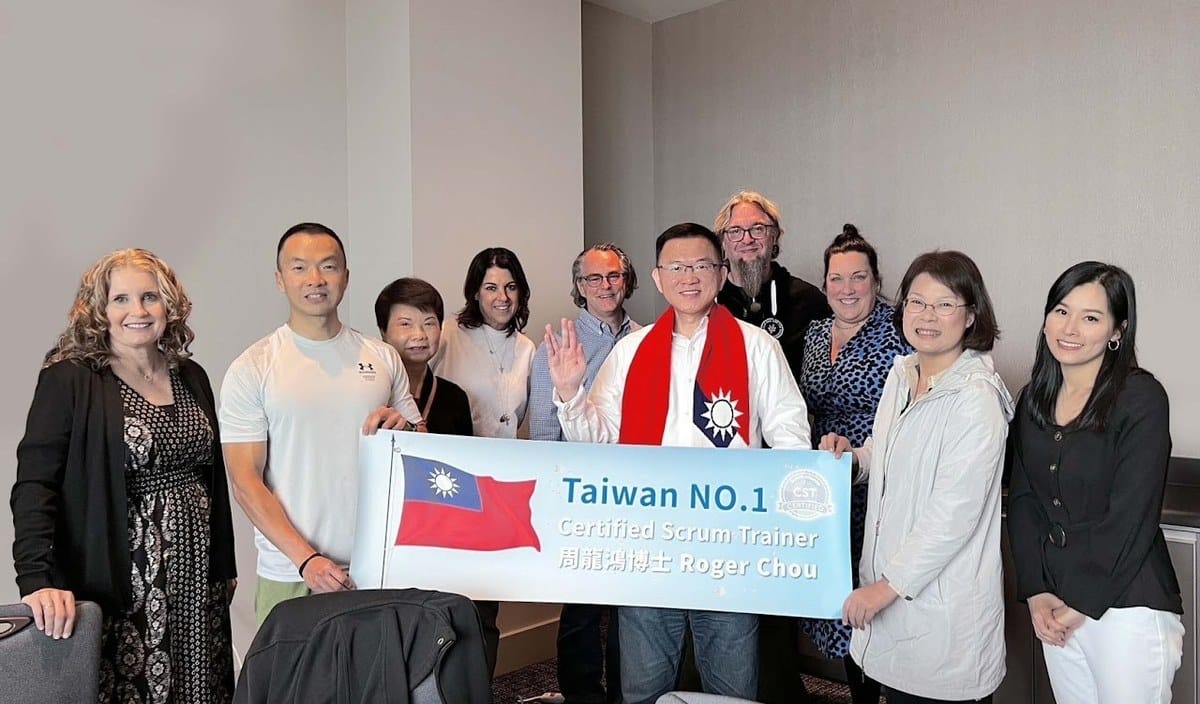
These days people know me as “Taiwan’s first CST,” one of only 244 in the world. But if that’s all anyone sees, it’s a very incomplete story.
The road to becoming a CST wasn’t smooth. I had documents sent back. I failed an interview. The hardest part was working as hard as I could and still having to admit I wasn’t good enough yet. Nothing anyone said to me stung as much. For someone used to being the teacher, the one with the answers, admitting I was still learning took courage.
I went back through my materials, took a hard look at my own teaching, and changed how I prepared. There was no glamour in it, just reflection and revision. I used to ask myself whether I should even try again. Looking back, I’m glad I didn’t treat the failure as the last page.

That’s why I’m willing to write about setbacks. I don’t want my life to read like a report card with nothing but good news. For readers preparing for the PMP, going after a new role, or stuck in a low point at work, what they need most may be knowing that the person at the front of the room stumbled his way here, too, rather than meeting an instructor who never fails.
May 5, 2023: The Day the Tears Finally Came
On May 5, 2023, Scrum Alliance officially approved me as a CST. My family was right beside me. When the reviewer said congratulations, I cried.
It wasn’t because a certification proves I’m better than anyone. In that instant, every round of preparation, every setback, and every person who stood by me along the way seemed to cross the finish line together. In that one tear there was relief, and there was gratitude.
If someone reads this story years from now, I hope what they remember isn’t “Roger finally got his CST.” I hope it’s “a person can be knocked down and still give themselves another chance.” To me, that’s the part most worth keeping.
One Hundred CEOs: My Story Starts to Carry Other People’s Names
After I became a CST, I asked myself what this certification could do for Taiwan beyond my own accomplishment. My answer was clear: I wanted agile to move beyond the IT industry and into more companies, so leaders and teams could find the capacity to change.
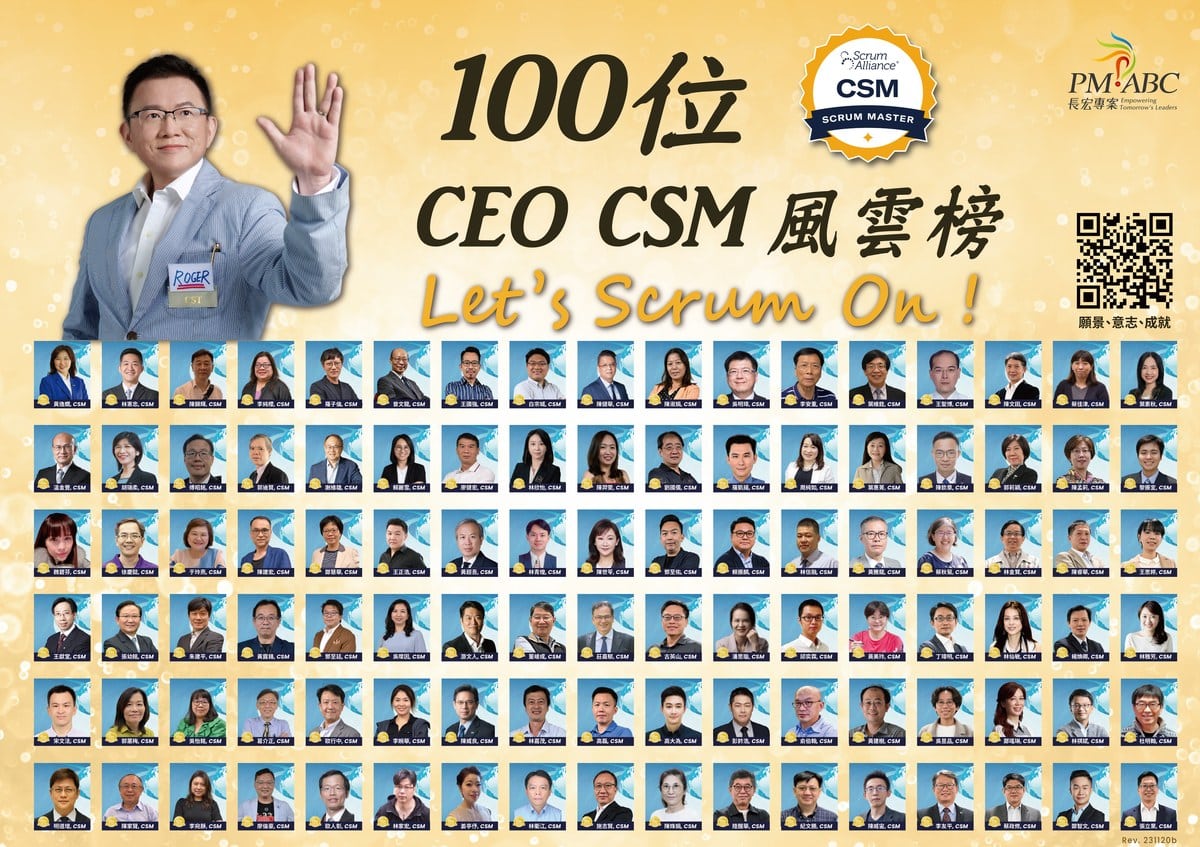
So I publicly committed to a mission: training one hundred CEOs as CSMs, free of charge. The first CEO CSM class kicked off on June 10, 2023, and we reached that first hundred on November 19 of the same year. The number is exciting, but what I really care about is whether people go back to their companies after class and give it a try.
Over time, more and more company stories started showing up on the blog, from Nan I Publishing to Chunghwa Telecom. Every company is different, but I kept seeing the same thing: change can begin only when a team is willing to put its problems on the table and let different opinions be heard. These posts stopped recording only what I taught. They record what we changed together.
At that point, the blog went from my personal diary to a shared memory.
I Get Tired, I Get Homesick, I Make Mistakes
Besides teaching and coaching, I also write about losing weight, traveling, getting hurt, family, and daily life. Not every post teaches a big lesson, but I want to keep these pieces. A person with nothing but his work self would be awfully thin.
I want readers to see a whole person: someone who gets excited about a goal and gets discouraged when things go badly, who can energize an entire classroom from the stage and also sits down quietly to sort himself out. I have moments I’m proud of. Then, of course, there are the days when I’m the one who needs reminding and support, and those come more often.
Writing about life keeps me from forgetting that I’m not just somebody’s teacher, some institution’s instructor, or the holder of a certain certification. I’m also part of a family, and an ordinary person still learning how to live well.

In the AI Era, the Road You Walked Can’t Be Copied
Of course I know the blog has practical value. Some people have gotten to know my ideas through my articles, and some companies have come to understand my teaching and coaching more easily after reading the cases. But I don’t want it to be just a recruiting tool. When a blog is nothing but results and promotion, the most precious part tends to disappear.
In the future, AI can help organize my old articles, search them, translate them, even turn them into training materials and services. I welcome all of that. But no matter how good AI gets, it can’t live through the days my applications were sent back. It can’t sit in that 2014 classroom for me. It can’t feel what I felt in 2023.
Tools can amplify content. They can’t stand in for a life. What builds lasting trust isn’t how beautifully the words are written. It’s that behind every passage, a real person lived it and chose it.
Giving Late-Night Searchers a Way Through
A while back I did something very unromantic: I reorganized the blog’s categories. The reason was practical. The more I wrote, the more I was the one getting lost. Honestly, even I had to rely on search, and a little luck, to find an old post about CSPO coaching.
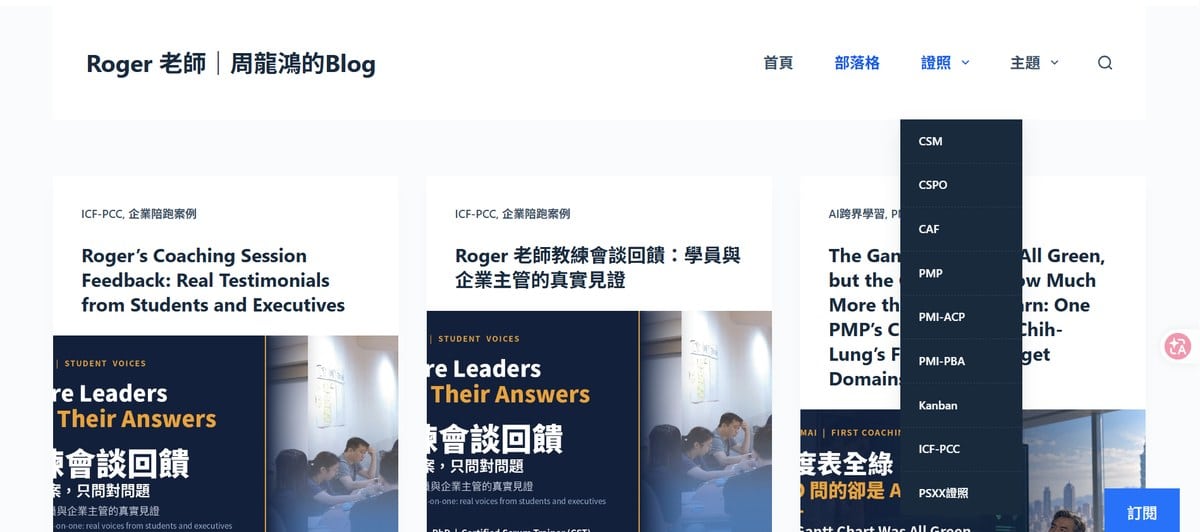
The navigation bar now has two new menus. The Certifications menu (證照) is organized by the credential you’re working toward or trying to understand: CSM, CSPO, CAF, PMP, PMI-ACP, PMI-PBA, Kanban, ICF-PCC, plus the Scrum.org PSXX family. Click in and you won’t find an exam outline. You’ll find a road my students and I actually walked.
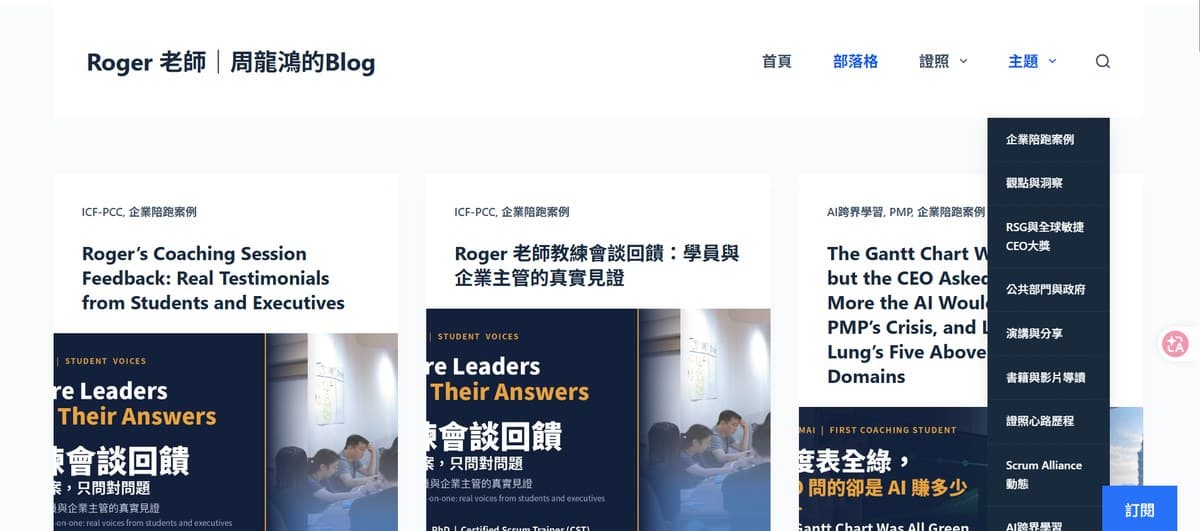
The Topics menu (主題) is organized by the question on your mind. If you want to know how other companies brought what they learned in class back to the workplace, there’s Corporate Coaching Cases. If you want to see how I think about something, there’s Perspectives and Insights. RSG and the Global Agile CEO Award, Public Sector and Government, Talks and Sharing, Book and Video Guides, Scrum Alliance Updates, and AI Cross-Disciplinary Learning each have their place, and even the small pieces of daily life get their own section, Casual Essays.
The section I hesitated over most was Certification Journeys (證照心路歷程). Rejections, setbacks, starting over. I’ve been through that myself, so should it sit in such a prominent spot? Does a story about failure belong at the front door? Then it came to me. Someone searching at midnight for “what if I fail the exam” isn’t looking for a polished result. They’re looking for a person who fell down, and how he got back up.
If you’re a manager, start with Corporate Coaching Cases. If you’re stuck on a particular certification, pick that one under Certifications. And if you still have questions after browsing, message me directly. I’ll tell you which post to read first and, if you want a class, which one to take.
Closing: Some Words Written Today Will Be Needed Tomorrow
Life is short, and there’s still a lot I want to do: keep developing leaders, help more non-IT companies see the value of agile, and coach teams until what they learned in class actually works in practice. I don’t know how much I’ll finish, and I can’t be sure what new challenges are coming.
But at least I can write down the road I’ve walked, one post at a time. They won’t make a life longer, but they may let parts of it last a little longer.
Maybe one day I won’t be able to tell my students in person, “Try one more time.” But if someone still reads my writing then, and in a moment of discouragement finds the will to hang in a little longer; if a manager reads those company stories and decides to go back and trust their team; or if a young person happens to land on the post about the rejection and learns that the person on that stage fell down too, then the words I left behind will have a life of their own.
I don’t know whether my name will still be remembered someday.
But if, years from now, someone facing failure reads my story and decides to try again, then everything I’ve written in my life will have been worth it.
So I’ll keep writing. Not because every post earns applause, but because I believe some words, written now, will be needed later.
Some words, written now, will be needed later.