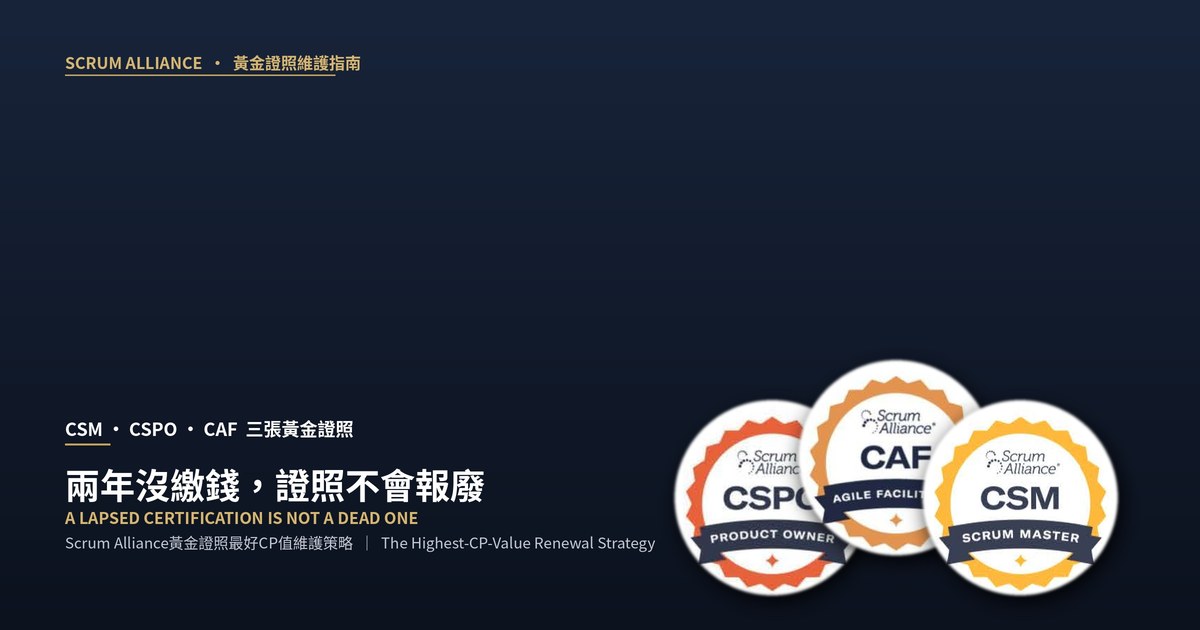

It’s Not About Letting It Expire — It’s About Confusing “Inactive” with “Gone”
Before people sign up for CSM, CSPO, or CAF, they almost always ask me the same thing: do I have to pay again every two years? And if I don’t renew, does the certification just become worthless?
HR teams ask this even more often — they’re not deciding for one person’s wallet, they’re deciding for an entire cohort’s.
Honestly, the confusion isn’t really about the cost. It’s that most people treat “two years without renewal” and “certification gone for good” as the same thing — and panic accordingly.
That’s not how it works. Once you earn your CSM, it stays Active for two years. After that, if you haven’t renewed, it goes Inactive — but Scrum Alliance is explicit about this: the certification itself is never revoked, and it can be reactivated at any time, with a fresh two-year clock starting the day you do.
A more accurate way to put it: skipping renewal doesn’t erase the certification. It just goes quiet, waiting for you to come back.
20 SEUs and $100: What Renewal Actually Costs
CSM is a Foundational-level certification, and renewing it every two years requires 20 SEUs plus $100. An SEU — a Scrum Education Unit — is roughly one hour of qualifying continued learning. Reading, attending a conference, joining community events, writing articles, volunteering — all of it counts. If you’re actually practicing Scrum day to day, hitting 20 hours isn’t hard.
If you hold both CSM and CSPO, the $100 renewal fee is based on your highest-level certification and only gets charged once. But the SEU requirement isn’t waived entirely — your top certification still needs the full 20, while the additional one only needs 10. It’s a discount, not a free ride.
Holding more certifications doesn’t mean paying more every two years — it just means one more line item to track, not one more bill.
No Matter How Long It’s Been, This Door Never Closes
What people are really afraid of is this: if I wait too long, will even the basic renewal path shut me out?
The answer is no.
Scrum Alliance counts your SEUs based on learning activity from the 2.5 years immediately before you renew — not from whenever your certification originally expired. Which means even if your CSM has been Inactive for eight years, as long as you’ve logged 20 hours of qualifying learning in the last 2.5 years, you can pay the $100 renewal fee and go straight back to Active.
How long it’s been lapsed was never the real issue. The only question that matters is whether you have those 20 hours now.
Their Certificates All Carry the Same Line: An Expiration Date
That two-year clock doesn’t make exceptions for rank.
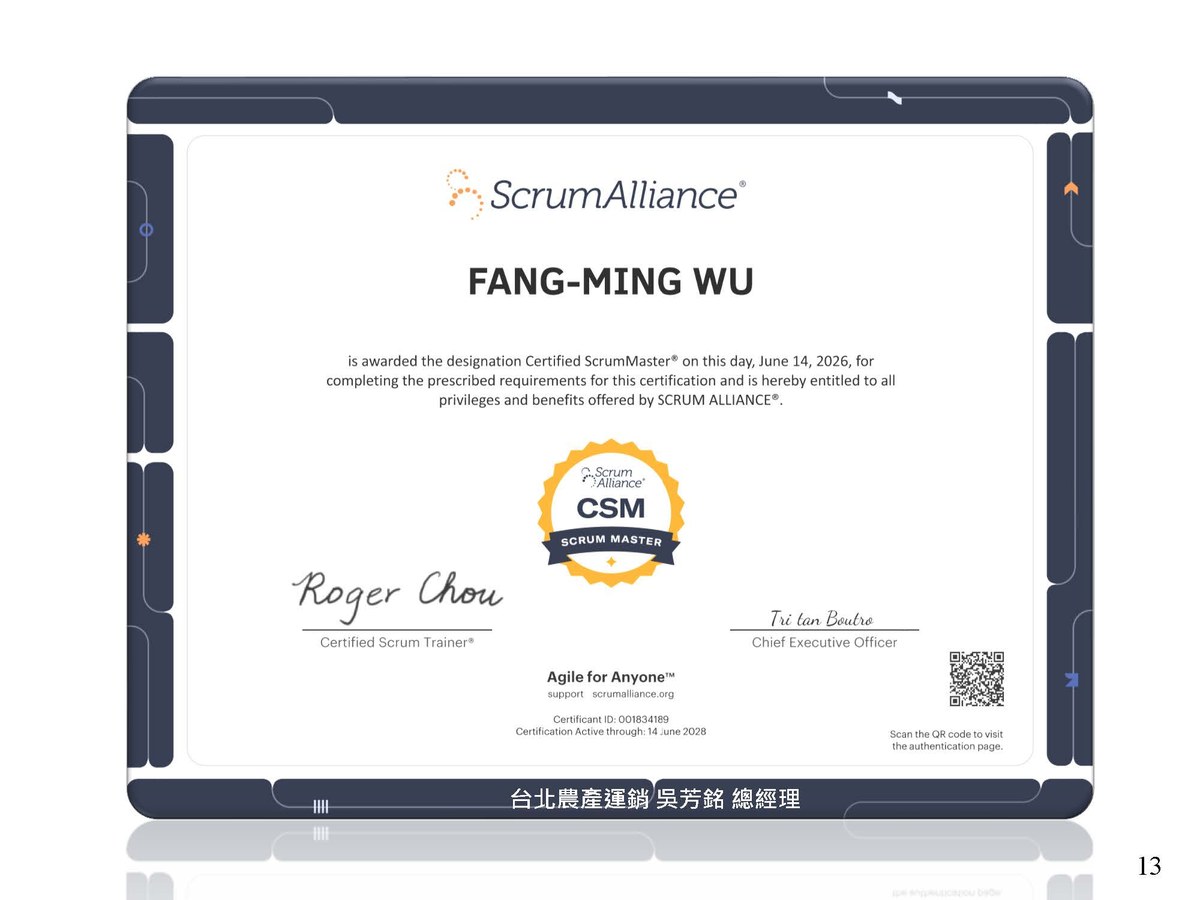
This is Fang-Ming Wu, General Manager of the Taipei Agricultural Products Marketing Corporation, who earned his CSM in June 2026. His certificate reads: “Certification Active through: 14 June 2028.”
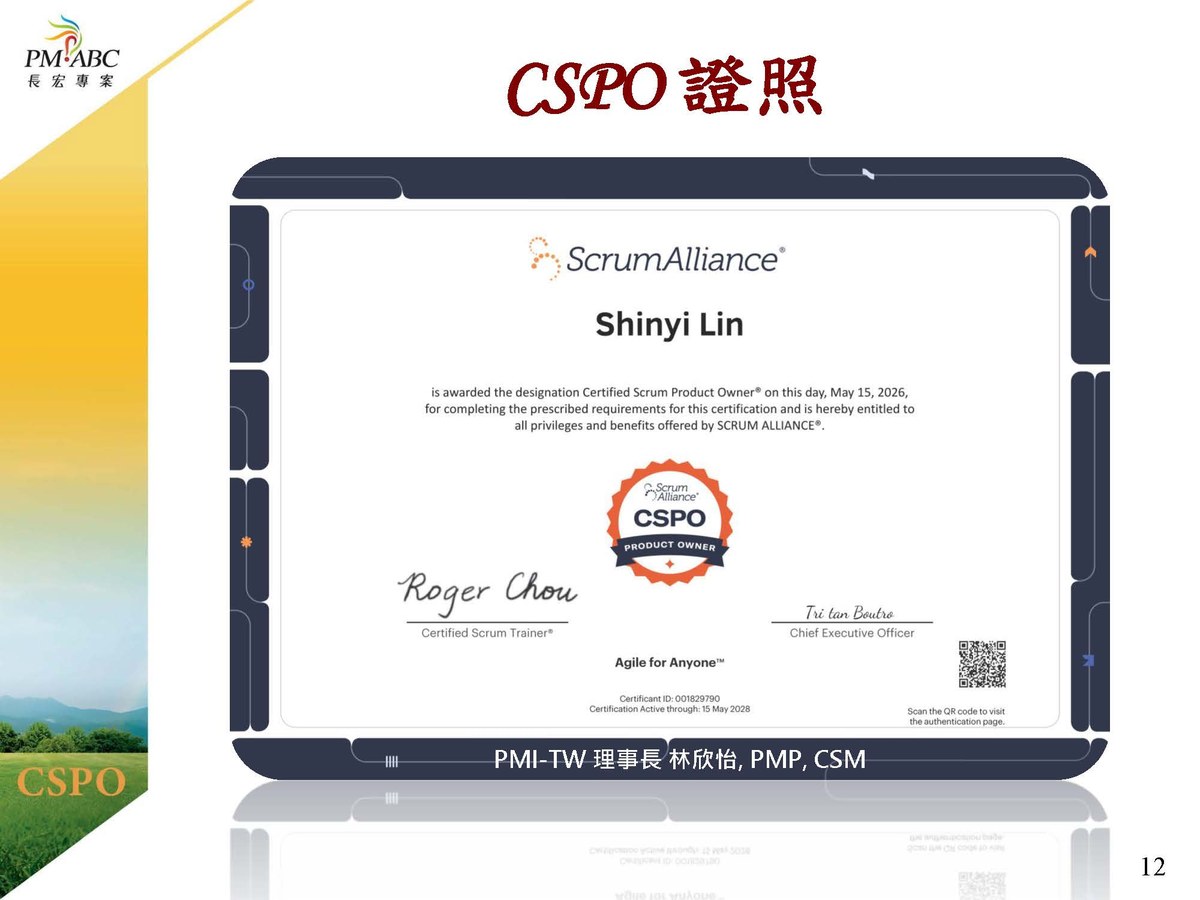
This is Shinyi Lin, Chair of PMI Taiwan, whose CSPO expiration date reads “15 May 2028.”
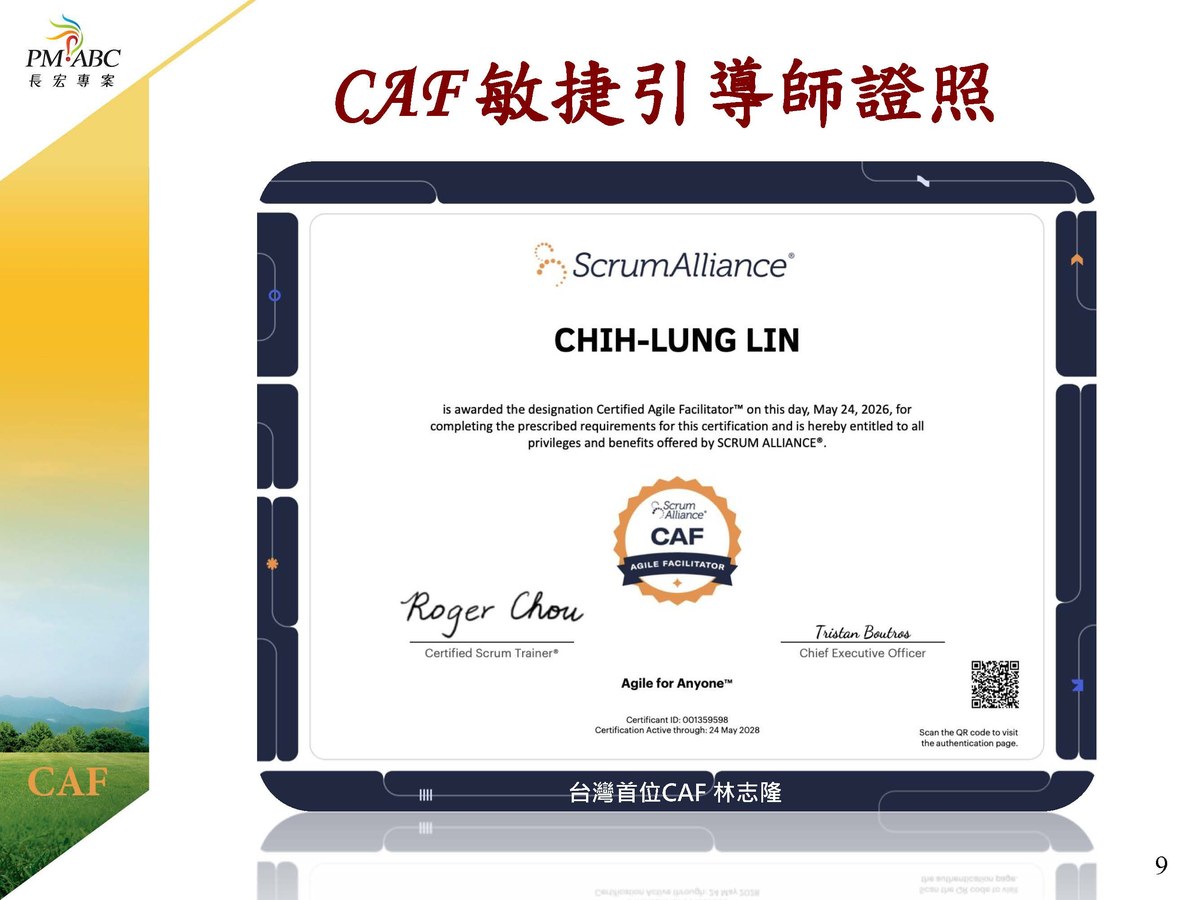
This is Chih-Lung Lin, Taiwan’s first Certified Agile Facilitator, with an expiration date of “24 May 2028.”
None of these people need a certificate to prove their competence — one runs Taipei’s agricultural distribution system, another chairs PMI’s Taiwan chapter. But Scrum Alliance makes no exceptions for title. It doesn’t ask who you are. It only asks whether you’ve stayed active.
A CSM from Ten Years Ago, Resurfacing in a Headhunter’s Call
I use this scenario a lot when explaining to corporate HR why this matters.
Manager Wang earned his CSM at 40 and let it lapse for eight years. In year ten, at 50, a headhunter calls — a company driving a digital transformation wants him as VP. During background verification, HR asks: have you ever held an international Scrum certification?
Yes, he has. And bringing it back is simple: as long as he’s attended a handful of agile-related conferences in the past two and a half years and logged 20 hours, paying $100 puts his CSM right back to Active. No eight years of back payments. No penalty of any kind.
Two Paths, Both Open: Renew Directly, or Earn a New Certification and Revive Everything
The first path is what we just covered: renew directly. 20 hours plus $100, regardless of how long it’s been lapsed.
The second path is, in my opinion, the most elegant part of the entire system: if you happen to want to learn something new, earn a CSPO or CAF instead, and Scrum Alliance will automatically extend every other lapsed certification on your account to match the new one’s expiration date — no extra SEUs, no extra fees. CSM, CSPO, and CAF are all linked this way. The one exception is micro-credentials, which only grant credit hours and don’t revive anything else.
So here’s what I tell my students: neither path is objectively better. The only difference is whether you want to learn something new along the way. Start with CSM to understand how a Scrum Team actually operates, add CSPO later for product judgment, then CAF for facilitation skills. Maintaining a certification isn’t just upkeep — it can grow alongside your career.
These three learning maps are the actual materials I use in my classes:
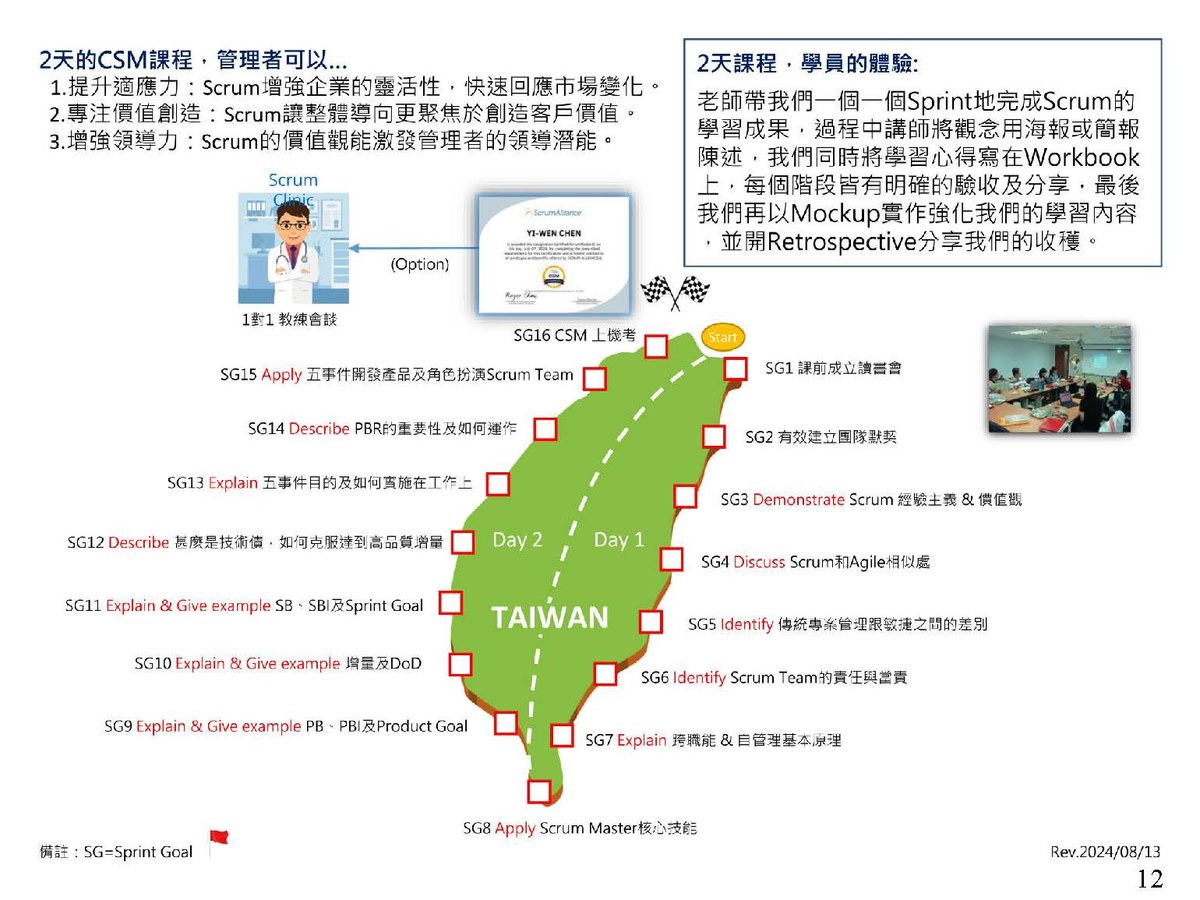
The learning map for the two-day CSM course. The upper-right photo is from one of my actual classroom sessions.
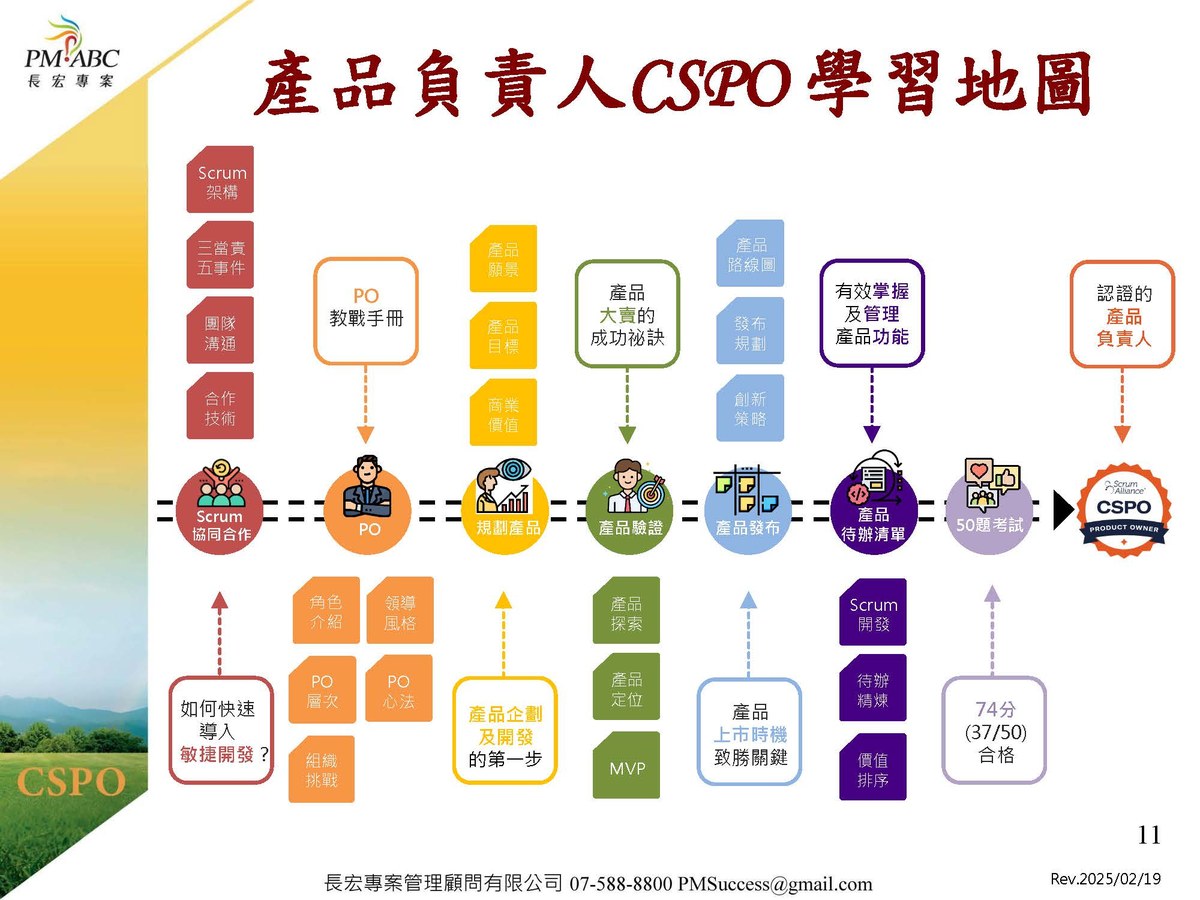
The CSPO learning map. The exam requires a passing score of 74% (37 out of 50).
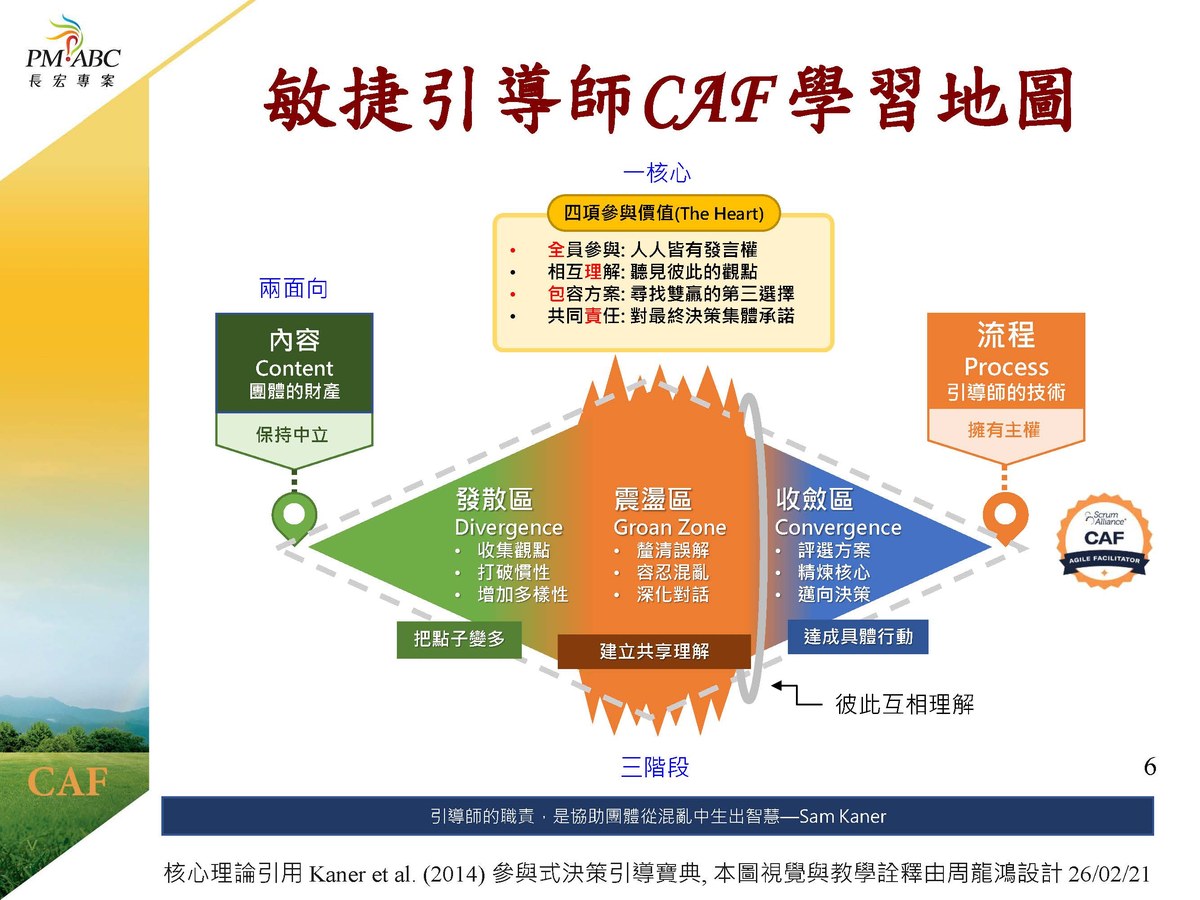
The CAF learning map, centered on how a facilitator guides a group through divergence, the groan zone, and convergence.
“No Record Found”: The Phrase That Terrifies Every Background Check
Scrum Alliance’s Member Search only displays Active members — go Inactive, and you disappear from the public lookup. There is an official verification process for companies that want to check formally, but in practice, most HR staff never get that far. Your resume says you hold the certification; the public system shows no record. Those three words — “no record found” — do more damage than any explanation could undo, not because you lied, but because the person checking doesn’t have time to tell the difference between “fake” and “lapsed.”
If your resume still lists this certification, be upfront about its current status. If a company requires Active status, revive it before anyone asks — 20 hours and $100 is all it ever takes, no matter when you get around to it.
Closing Thought: What Matters Isn’t the Expiration Date — It’s When You’ll Need It
So if you haven’t earned your CSM yet, should the renewal fee give you pause? Not at all.
This certification carries no expiration pressure and no hidden penalties. Need it Active? 20 hours and $100 brings it back, any time. Don’t need it right now? Let it sleep. Want to learn something new anyway? Earn a CSPO or CAF, and the old one wakes up automatically.
CSM, CSPO, and CAF aren’t fees you’re locked into paying forever once you sign up. They’re international professional assets you’ve already earned — ones you can reactivate whenever you need to. The real question was never whether the money is worth it. It’s whether you’re ready to give your career one more way in, starting now.
What really matters about a certification was never when it expires. It’s when you’ll need it.