The Double Pressure of Declining Birthrates and AI on Educational Publishing
The traditional textbook industry operates on a long cycle. From planning to publication, a single textbook often takes more than a year to complete.
Digital learning products move at a completely different pace. Products must be continuously updated, market needs shift quickly, and AI technology is transforming educational tools almost every month.
In this environment, companies that continue to develop products with a traditional publishing timeline will struggle to keep up with the market.
The creation of Learning 360 is Nani’s response to this challenge.
But the real issue isn’t technology—it’s how the organization works.
Why Traditional Publishing Cycles Struggle to Keep Up
During internal discussions, a key question began to surface.
Publishing processes are typically designed to deliver a finished product all at once. Digital products, however, require continuous iteration.
One department head proposed an interesting idea:
If a manuscript traditionally takes a full month to complete, could the team finish it in two weeks instead?
The remaining two weeks could then be used as a Sprint.
Within a single month, the team could complete the full cycle:
planning → development → review → retrospective.
In essence, this mirrors the working rhythm of Scrum.
When an organization begins thinking this way, product thinking is already taking shape. The real challenge isn’t understanding Scrum—it’s enabling the entire team to collaborate using the same language.
From CSPO’s Product Thinking to a CSM‘s Team Collaboration Language
Nani’s agile learning journey has followed a clear progression.
The first step was building product thinking. Twenty-seven core executives completed CSPO training and began discussing products through concepts like vision, product backlog, and product roadmap.
But the team quickly realized something important:
Without a new way of collaborating, even the best product strategy is difficult to execute.
That realization led to the second step—CSM training.
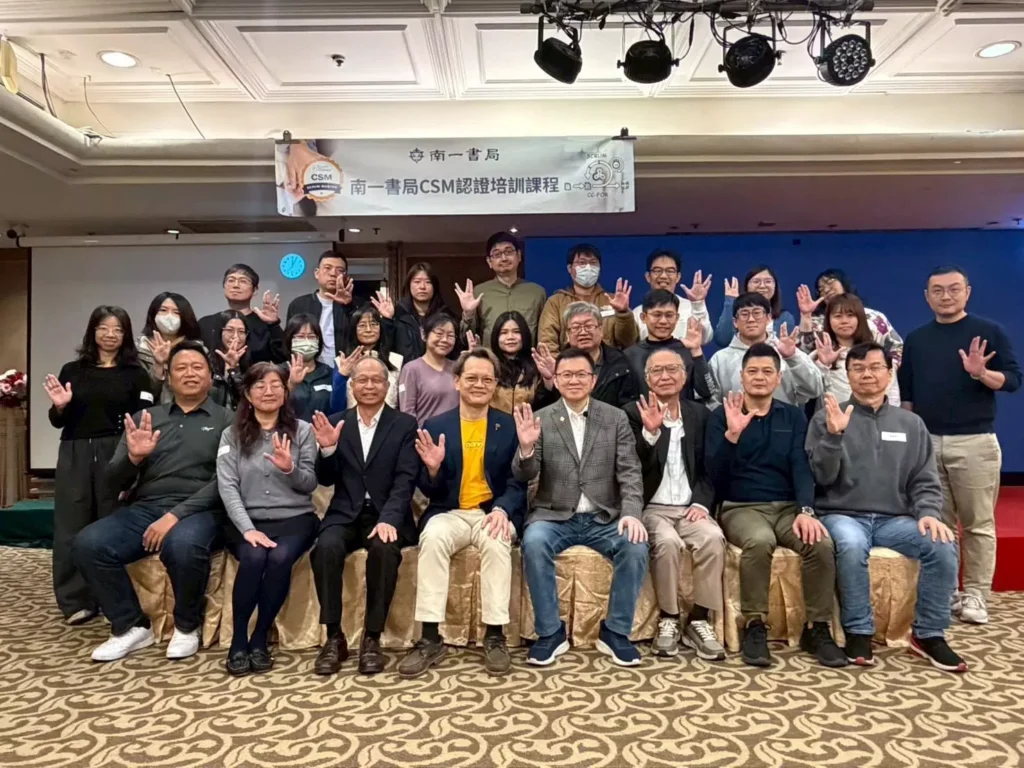
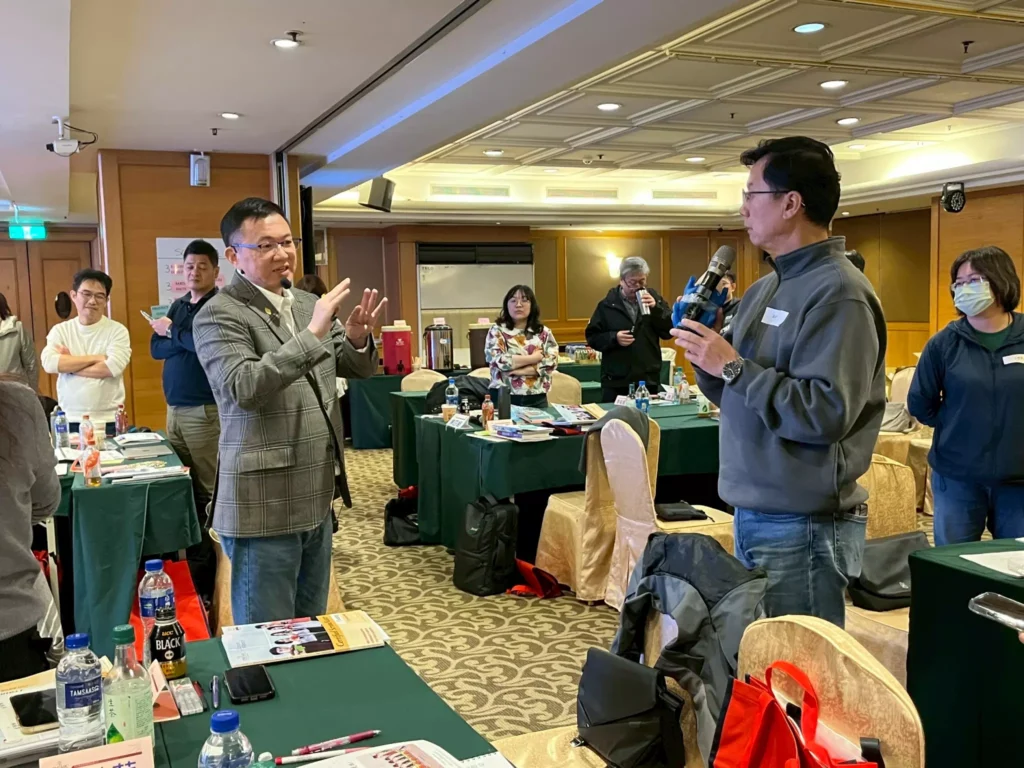
This special CSM cohort included 27 participants. What made it particularly noteworthy was that the chairman and two vice presidents participated personally.
Many companies train middle managers in Scrum. Nani made a different decision: to have the entire decision-making layer learn together and build a shared language.
Agile Isn’t Really About Speed
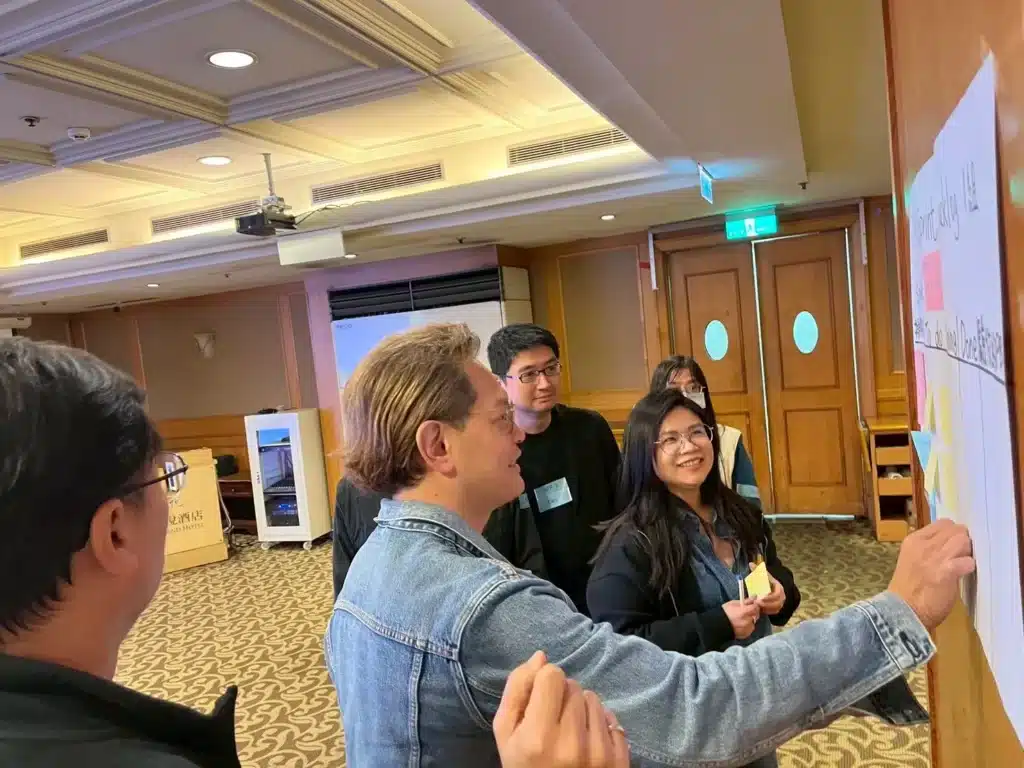
At the start of the CSM course, Chairman Su shared a candid observation.
Many people assume the purpose of agile is to make things faster. But he reminded the team that if Learning 360 were pushed forward using purely traditional methods, progress might actually appear faster in the short term.
Why? Because agile requires more discussion, communication, and consensus-building. During the early stages of transformation, teams may even feel that progress is slowing down.
But the chairman emphasized something critical:
Agile isn’t primarily about speed—it’s about reducing risk.
He summed it up with a line that captured the reality of product development in uncertain markets:
“I’m confident the direction is right. But I can’t guarantee the first step will be.”
Starting with a Small Market
Learning 360 won’t begin as a massive, all-encompassing system.
Instead, the chairman proposed an important strategy: start with a small market.
One of the segments under discussion is entrance exam preparation.
This market has three clear characteristics: Clear and well-defined demand, a focused market scope and manageable product scale.
In many ways, this reflects the concept of an MVP—start with a small product to validate the market, then expand gradually.
In uncertain markets, small experiments are often safer than bold assumptions.
How Scrum Strengthens Cross-Department Collaboration
During post-class discussions, Vice President Wu Chun-tsai shared an interesting observation.
Nani has long operated with a workflow that combines editing, production, and manufacturing simultaneously, which means cross-department collaboration has always been part of daily operations.
By introducing Scrum’s structured rhythm, communication between responsible editors and other departments could actually become smoother and more efficient.
He also noted that Scrum doesn’t only apply to developing entirely new products—it can also be used to extend existing product lines.
In other words, Scrum isn’t about replacing Nani’s existing ways of working. It’s about giving those collaboration patterns better rhythm and clarity.
Vice President Wu also observed a deeper shift.
In the past, when problems arose, many employees would first express frustration. Through Scrum learning, however, the team has started to approach issues differently: instead of looking for someone to blame, they focus on finding solutions together.
He described the change with a simple metaphor.
A company is like a ship.
If everyone only complains, the ship won’t move forward.
Only by working together can the ship advance.
For many companies adopting agile, the real transformation isn’t the process—it’s the team culture.
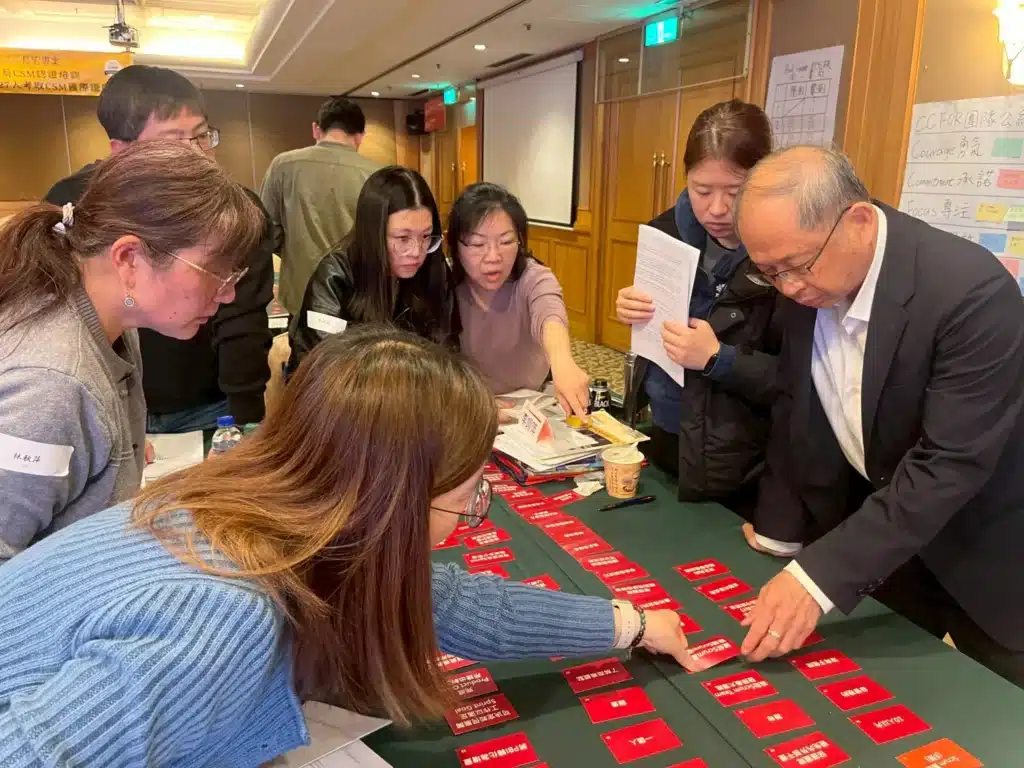
Executives Experience Self-Managing Teams Firsthand
During one team simulation exercise in the CSM course, Nani’s executives experienced firsthand how a self-managing team operates.
Several consistent observations emerged across groups.
1. A clear shared goal is the starting point.
When team members understand they are working toward the same objective, motivation and ownership naturally increase.
2. Clear accountability improves collaboration.
When everyone shares the same understanding of responsibilities, tasks, and value, collaboration becomes smoother without constant instructions.
3. Trust and empowerment are essential.
Many participants noted that when leaders provide clear goals and a Definition of Done (DoD)—and allow the team to decide how the work should be done—team members often become more proactive.
4. Open discussion drives progress.
When everyone can freely share ideas and synchronize daily progress, teams often generate more creative solutions.
For many executives, the exercise led to an important realization:
Self-management doesn’t mean “no management.”
Instead, it means creating clear goals, granting meaningful autonomy, and maintaining ongoing communication—allowing the team to function naturally.
That is precisely the culture Scrum aims to build.
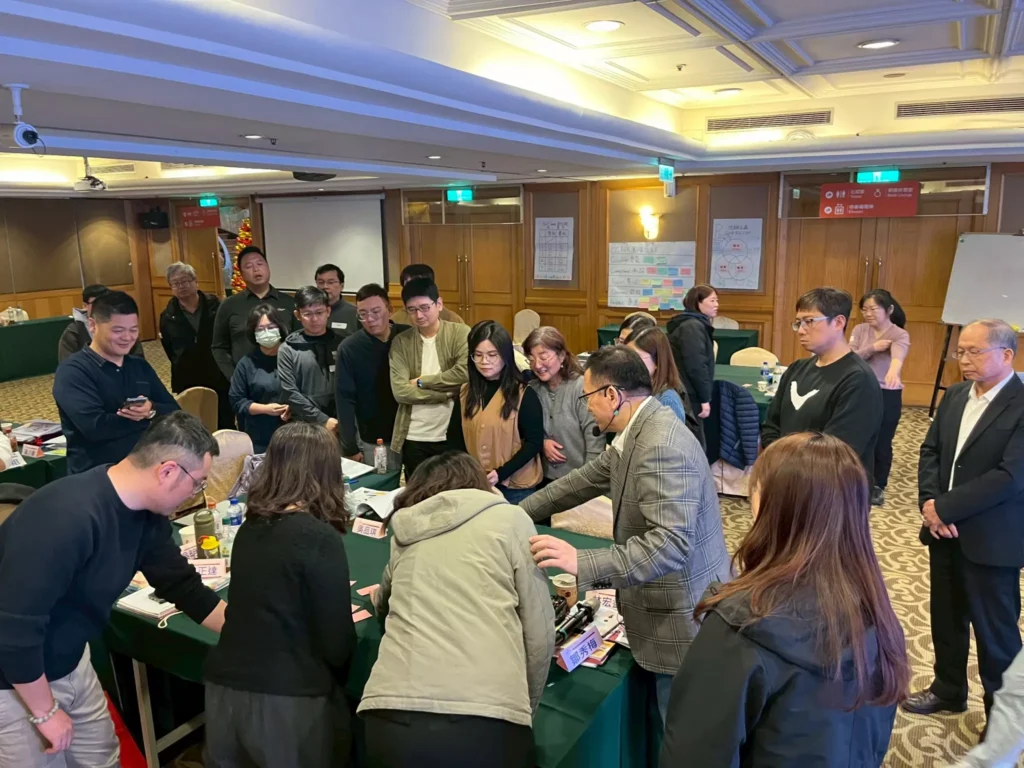
The Role of a CST: Enabling Dialogue and Experimentation
Throughout this process, I consistently reminded the team of one key idea:
Agile is not a process—it’s a way of learning.
A CST isn’t there to make decisions for a company. The role is to create a space where teams can have meaningful conversations and run experiments.
When teams begin asking questions like:
Can we get market feedback earlier?
Can we shorten our product development cycles?
then agile transformation has already begun.
Building Transformation into Nani’s DNA
To many observers, the CSM program may appear to be just a two-day Scrum course.
But what I see is a 70-year-old publisher standing at a pivotal historical moment.
As the publishing industry rapidly digitizes—while AI accelerates change and birthrates decline—companies that cling to past success models risk being left behind.
Nani has already reached its 70th year.
If it aims to become a company that thrives for 100 years, now is precisely the time to transform.
The sight of the chairman, two vice presidents, and 27 core executives sitting together in a Scrum classroom represents something far greater than a training session.
It signals a company beginning to rebuild its core capabilities in a new way.
Through the exploration of Learning 360, Nani has chosen Scrum as a key tool for both organizational learning and product development.
The real challenge ahead is not simply adopting a framework, but allowing agile thinking and rhythm to gradually become part of Nani’s organizational DNA.
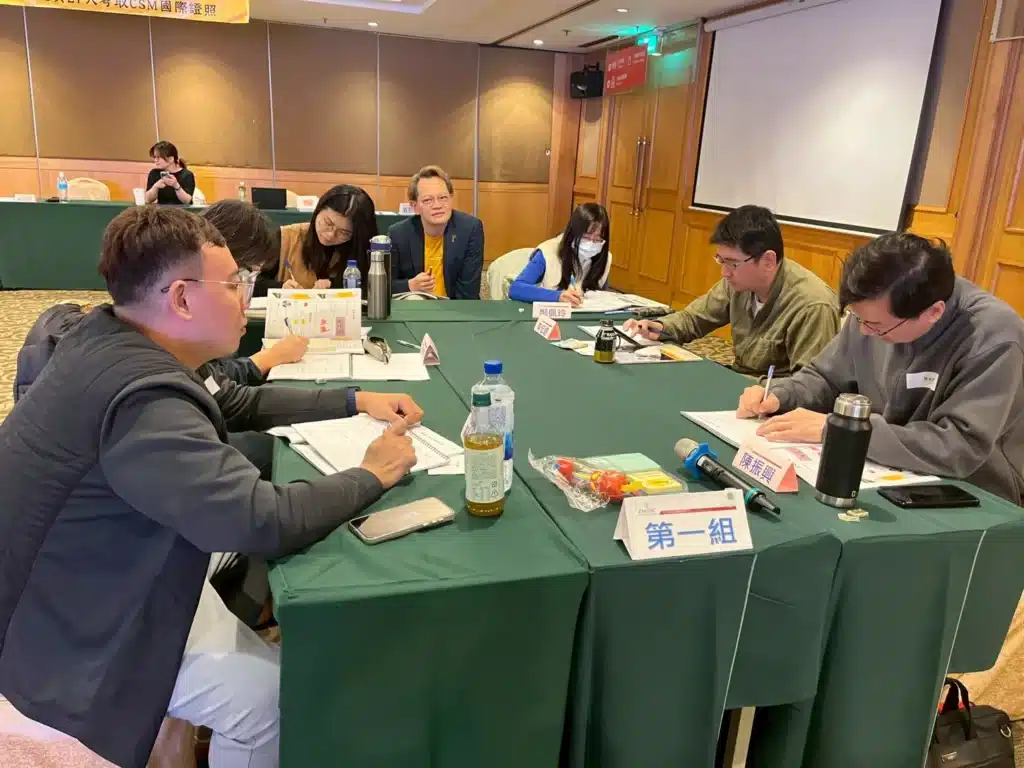
Reflections from Senior Executives After the CSM Program
Group 1 — Su O-Chuan, Chairman
If I had to summarize agile in one sentence, I would say this: the most important thing is execution.
Most people are familiar with Scrum’s five values, but the real challenge is how to bring those values into everyday work.
This training wasn’t about earning a certificate. The goal is for everyone to bring the agile mindset back to the company and turn it into the way we work and collaborate.
I believe that if we move forward step by step and truly put these ideas into practice, Learning 360 has a real chance to succeed—and it can also help Nani go even further in the future of the education industry.
Group 1 — Chen O-Hsing, Director
From CSPO to this CSM course, the biggest change for me is that our thinking has started to shift. Once the mindset begins to change, actions can follow.
One key takeaway from this program is the importance of clearly defining each role. When everyone understands their responsibilities, the team can move forward with much greater momentum.
During the class, the instructor walked us through a full product development cycle. Whether it was a POC or an MVP, the experience showed me that many things aren’t as difficult as we imagine. Once we actually start doing the work and keep communication open, consensus often forms faster than expected.
I hope that when everyone returns to work, we’ll truly apply what we learned—and do something that lives up to the certification we earned.
Group 1 — Li O-Yuan
This CSM course helped me see more clearly the value Scrum brings to technical teams.
As a manager, I’m always thinking about how to help the team complete work more efficiently while also building better products.
In reality, we’ve already been practicing many agile-related ideas—transparency, continuous iteration, automation, and CI/CD. What we lacked was a shared language across the organization.
This course helped me realize that when we communicate using Scrum concepts like User Stories and Sprints, teams can understand direction and priorities much more easily.
For me, this isn’t just about learning a framework—it’s about helping our technical teams align more effectively with the company’s broader goals.
Group 1 — Ding O-Hui
I took the CSPO course before attending CSM, and this time the biggest gain for me was understanding the difference between the two roles much more clearly.
CSPO feels like looking at the product from a higher perspective—thinking about the market, value, target users, and features.
CSM, on the other hand, focuses on how the team actually delivers the product once the direction is set.
Another realization I had is that many questions raised in meetings are not personal critiques. They’re simply part of the process of making the product better.
If everyone understands the relationship between User Stories, Goals, and the Product Backlog, discussions become much more focused.
Going forward, I hope our team can work in a more open and respectful environment, where we focus on solving problems and building better products together.
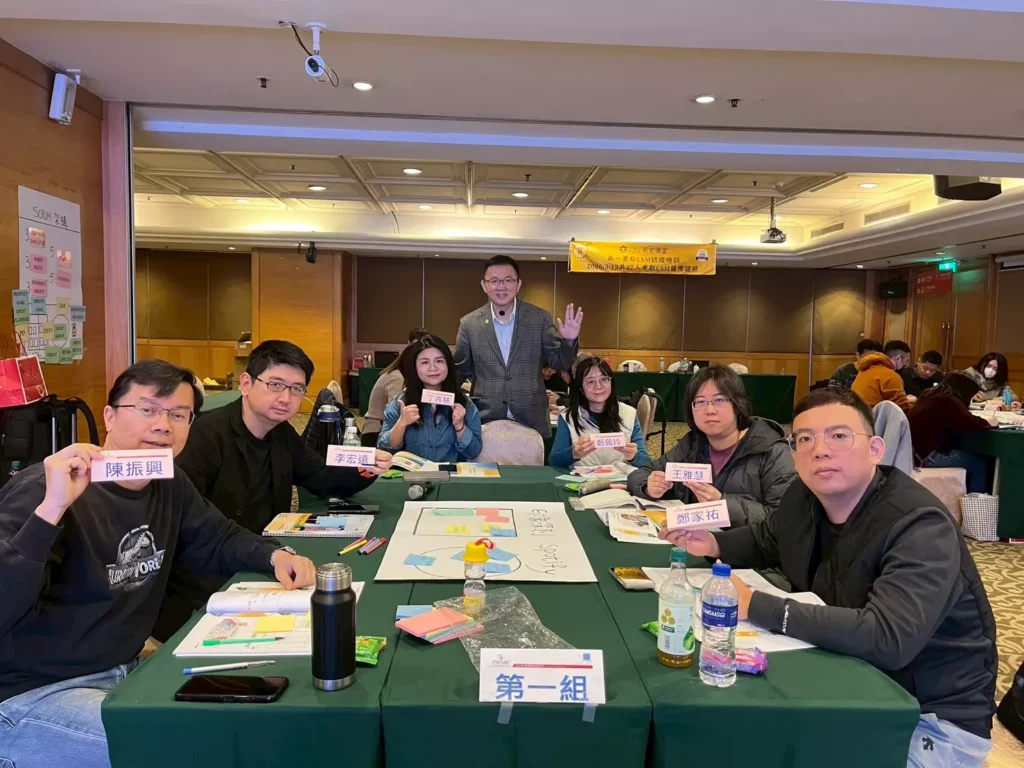
Group 2 — Wu O-Tsai, Vice President
I’ve always believed that the most important part of learning isn’t the input, but the outcome.
Publishing is a complete process—it’s impossible for one person to accomplish everything alone. It requires a team working together.
This course reinforced for me that when teams are given clear goals and genuine trust, they can often perform better than we expect.
During the group exercises, I noticed that many colleagues proposed ideas that were even more creative than what I had initially thought of.
That experience made me believe even more strongly that the real key going forward isn’t just learning Scrum—it’s applying these methods to real teamwork and product development.
Group 2 — Lin O-Ping, Director
I’m very grateful that the company arranged this training program, and it was a privilege to learn directly from Roger.
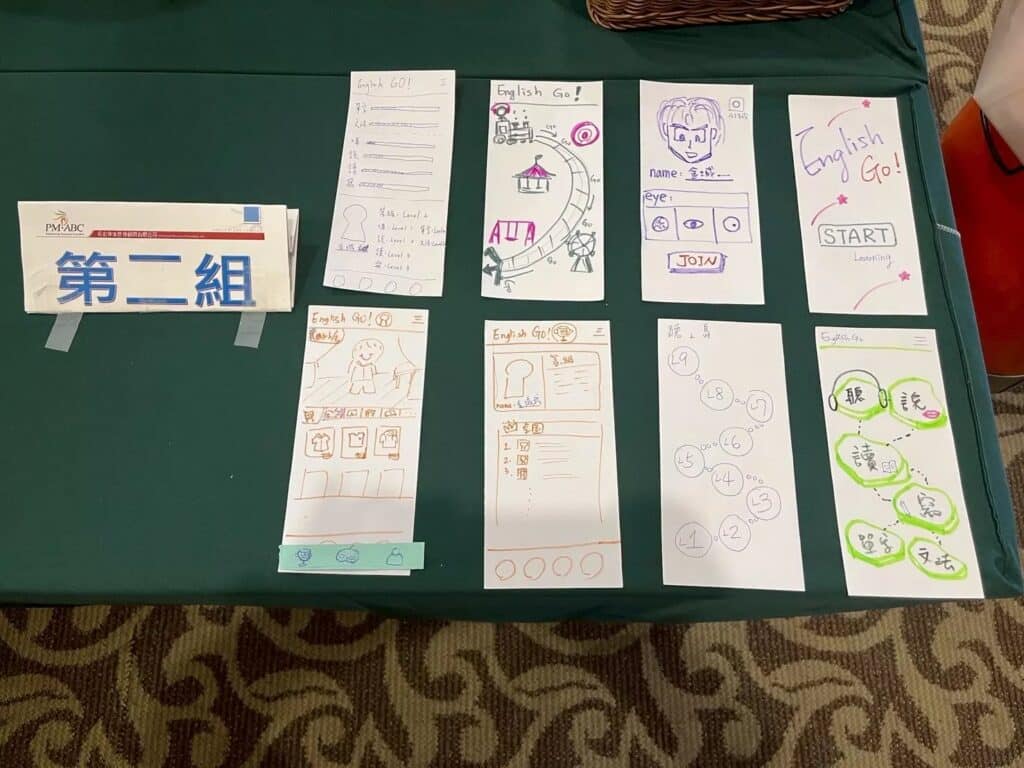
Over these two days, I gained a much deeper understanding of Scrum. What made the experience especially valuable was that the course wasn’t limited to theory—we also worked through activities and hands-on exercises, including building an app prototype.
This allowed us to truly experience the value Scrum brings to team collaboration.
For me, the most important outcome is that the team has begun to develop a shared understanding of Scrum. That’s extremely important for the Learning 360 initiative currently underway.
If we can bring the agile mindset back into our daily work, it won’t just make projects run more smoothly—it could also help Learning 360 grow into a truly influential platform, perhaps even one of Taiwan’s most representative learning platforms in the future.
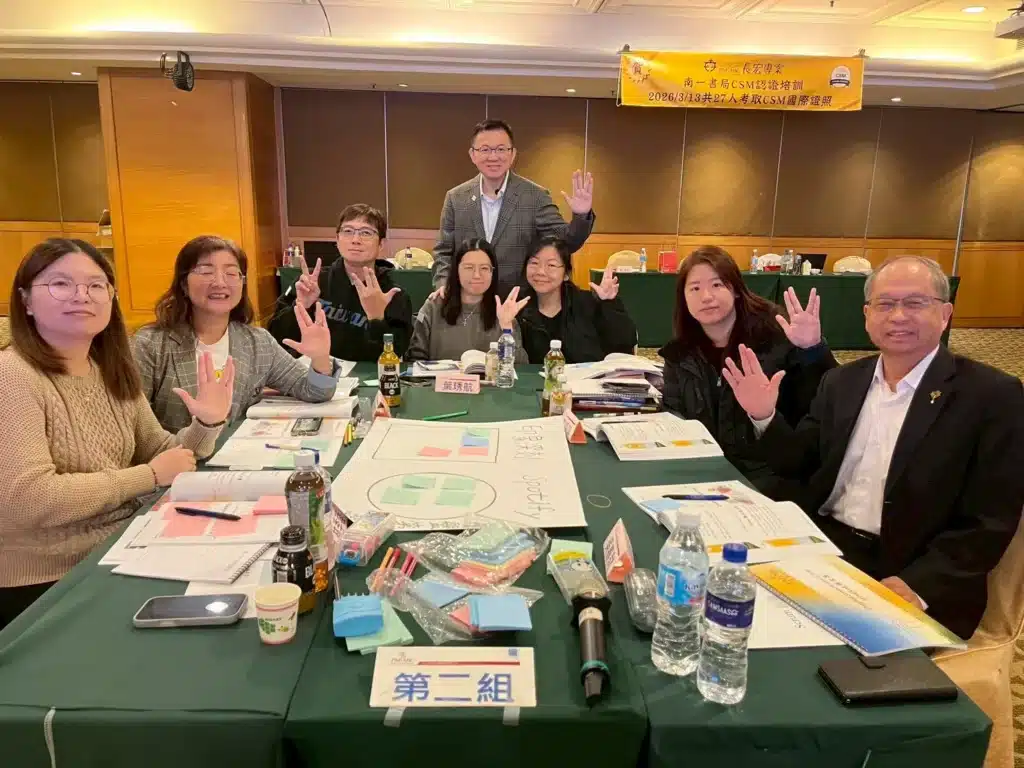
Group 3 — Lin O-Yi, Vice President
The biggest impact this course had on me was a shift in my management mindset.
In traditional organizations, decision-making usually flows from the top down. But if a company truly wants to transform, leaders themselves must change first.
I’ve reminded myself that going forward, I should speak less and allow team members to express their ideas more.
The pace of transformation will only accelerate. If we continue to rely on a purely top-down management style, it will be difficult to keep up with market changes.
I also hope that capable people within the team will step forward and take on more responsibility, because the challenges ahead will only continue to grow.
Group 3 — Zou O-Mei
Before attending this class, I had participated in reading groups and read some materials about agile. But many of the terms still felt abstract to me, and I wasn’t sure how to apply them in my daily work.
What made these two days especially valuable was that the instructor didn’t just explain the theory. Through examples, activities, and interactive exercises, we gradually understood how Scrum works in practice.
Concepts that once felt unfamiliar started to become much clearer, and I could see how agile methods actually help teams collaborate.
Overall, this course gave me a much clearer understanding of Scrum, and I truly feel I gained a lot from the experience.
Group 3 — Chen O-Da
From CSPO to this CSM program, my biggest takeaway is that we are starting to build a shared language.
We are a traditional company, and every department works very hard. But in the past, projects sometimes stalled because we lacked a common way to communicate.
It wasn’t because people weren’t trying—it was because different teams had different interpretations of the same situation.
After these two courses, I feel that the team now shares a much more consistent understanding of key concepts.
This should help reduce unnecessary misunderstandings and conflicts during cross-department collaboration, and allow projects to move forward more smoothly.
For me, that’s a very meaningful step.
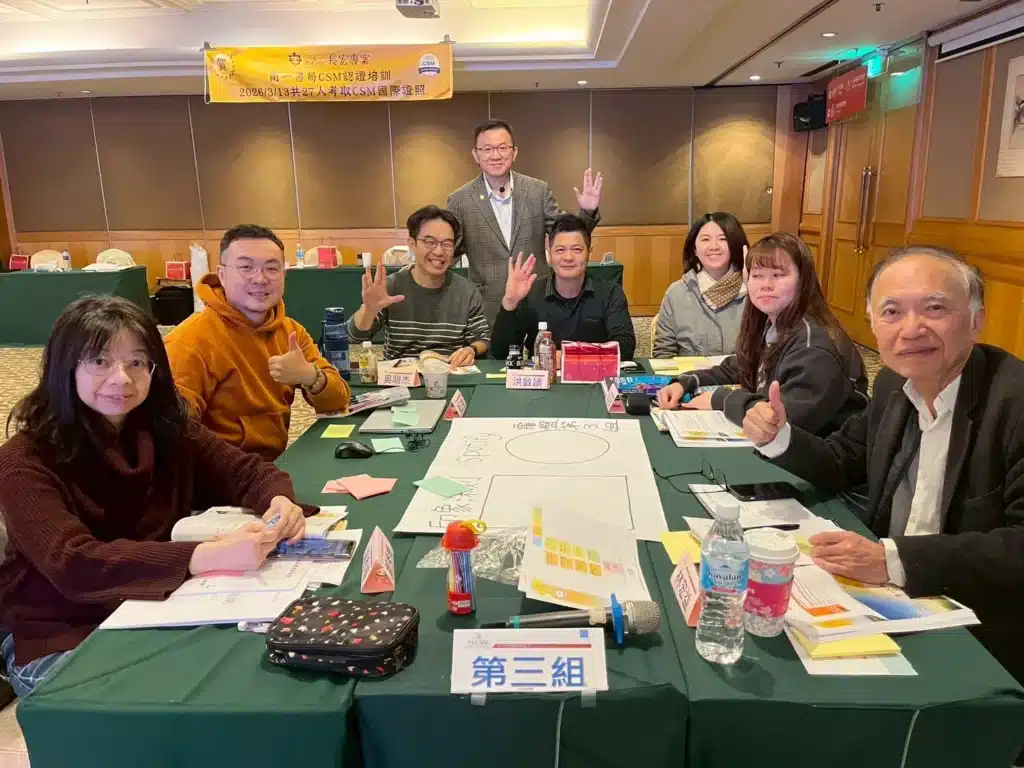
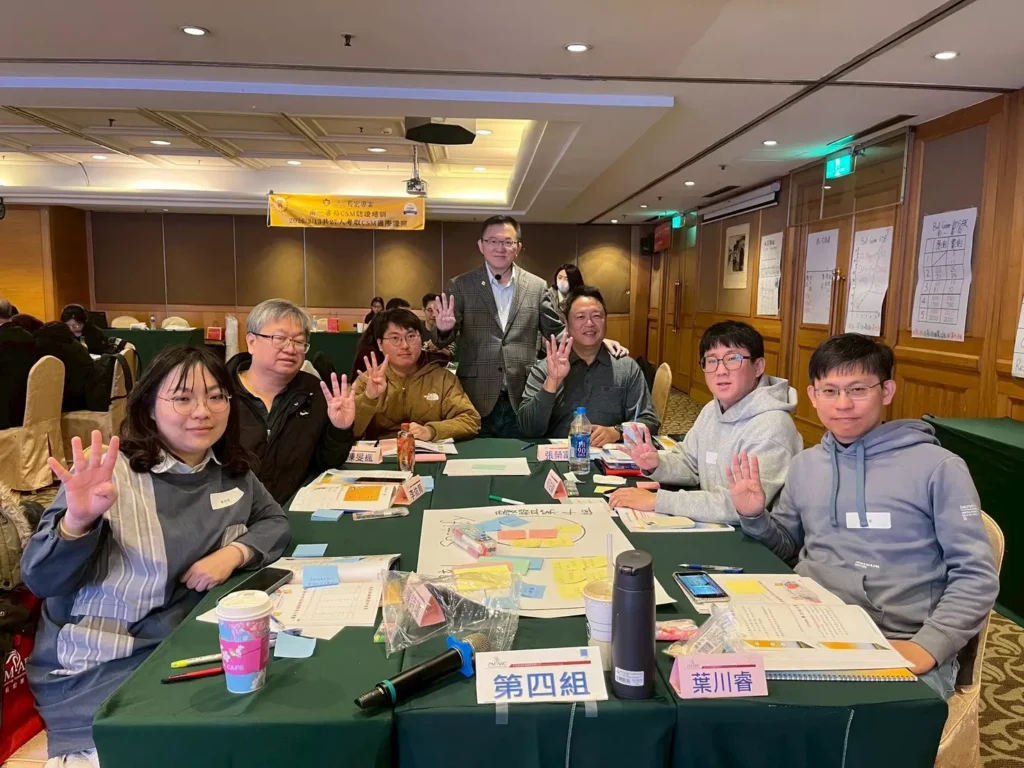
Group 4 — Chang O-Fu, Director
During one of the classroom simulations, I played the role of Product Owner, designing an app for high school students based on the Learning 360 concept.
Since I was the person most familiar with Learning 360 in the team, I spent a lot of time at the beginning explaining the product vision and goals.
That experience helped me realize something important: if the goal isn’t clearly communicated, teams can easily develop different interpretations when discussing features.
At one point, some team members challenged certain ideas. Instead of seeing that as a problem, I actually welcomed it—it pushed us to revisit the core value of the product.
My biggest takeaway from the exercise is that Scrum isn’t about getting everything perfect the first time. Instead, it’s about continually improving the product through discussion and reflection, step by step moving closer to real value.
Group 4 — Yeh O-Jui
The biggest value of this course for me was that it connected many management and agile concepts I had previously encountered in fragments.
Over the past few years, I’ve joined several reading groups and read books about agile, management, and organizational culture. But often I only understood the terminology without truly grasping how these ideas applied to real work.
This course helped me connect concepts like respect, psychological safety, and encouraging team members to speak up with real workplace scenarios.
For me, it felt a bit like something from a martial arts novel—you memorize the secret manual, but only during an actual duel do you suddenly understand how everything works.
This course gave me that moment of realization—the feeling that I finally understand it.