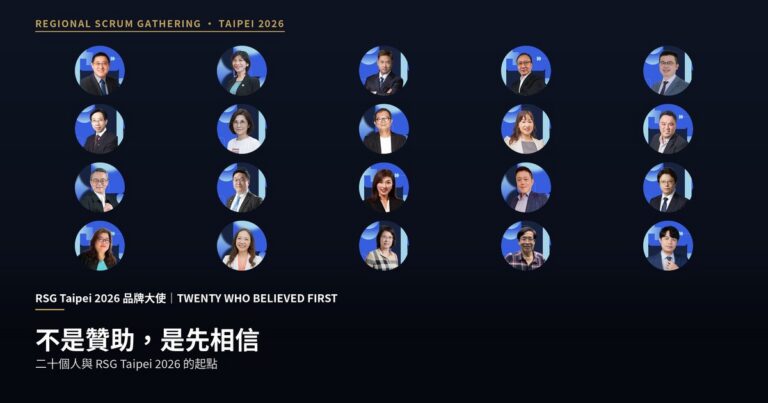
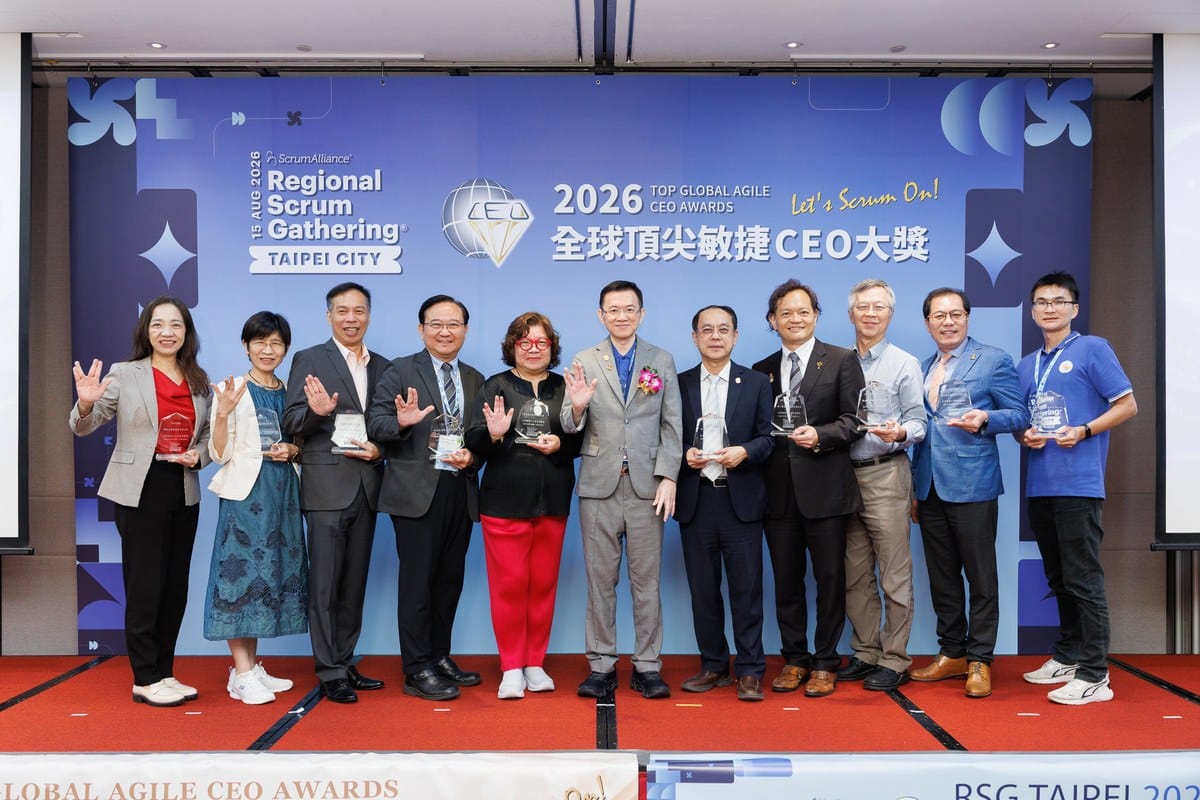
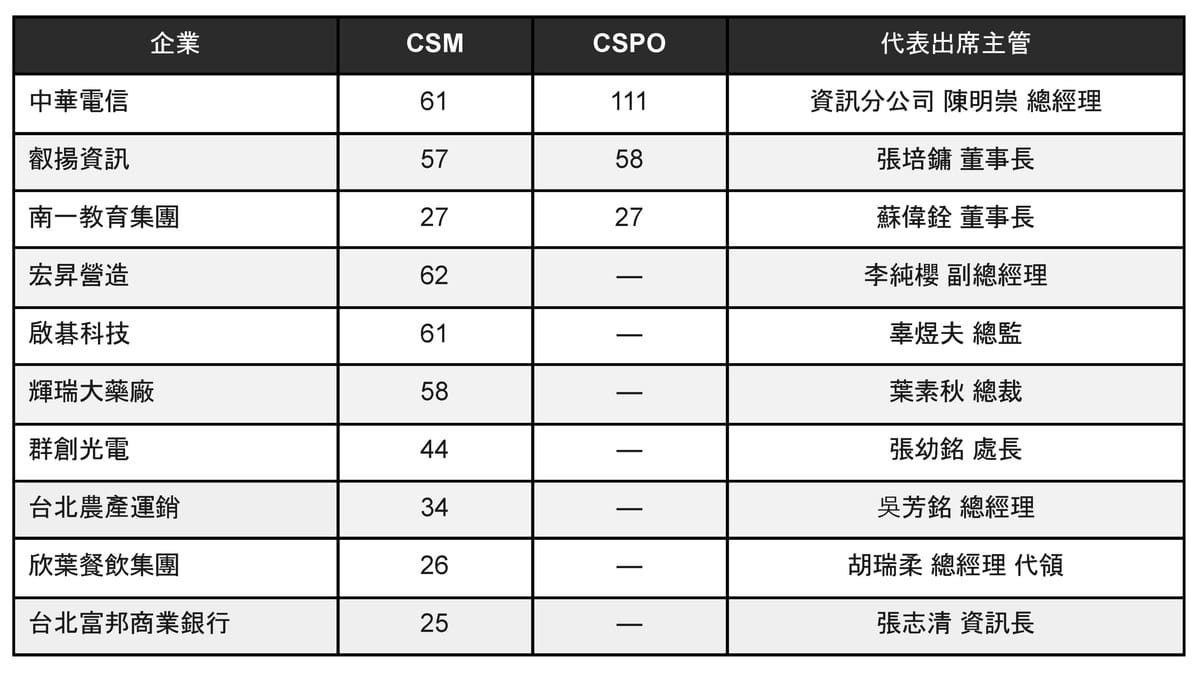
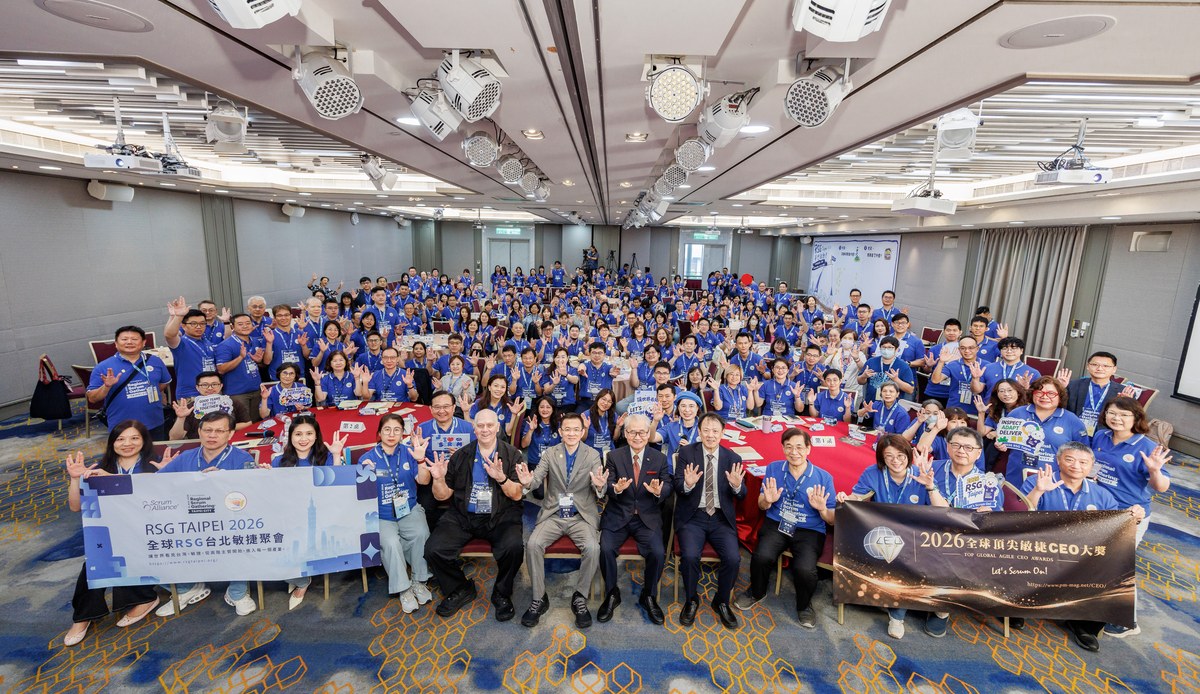
On August 15, 2026, at the RSG Taipei awards ceremony, representatives from ten companies stepped on stage together, holding the same trophy — the Top Global Agile CEO Award. Most people saw ten companies, 455 CSM certificates, 196 CSPO certificates. What’s actually worth pausing on isn’t the numbers — it’s who was standing there: the GM of Chunghwa Telecom, the chairman of Nan I, the president of Pfizer, the GM of Taiwan’s agricultural marketing corporation. Not one of them sent a deputy. Agile transformation was never about finding the right person to send to class. It’s about whether the decision-maker is willing to sit in that classroom first.
Ten CEOs, No Substitutes
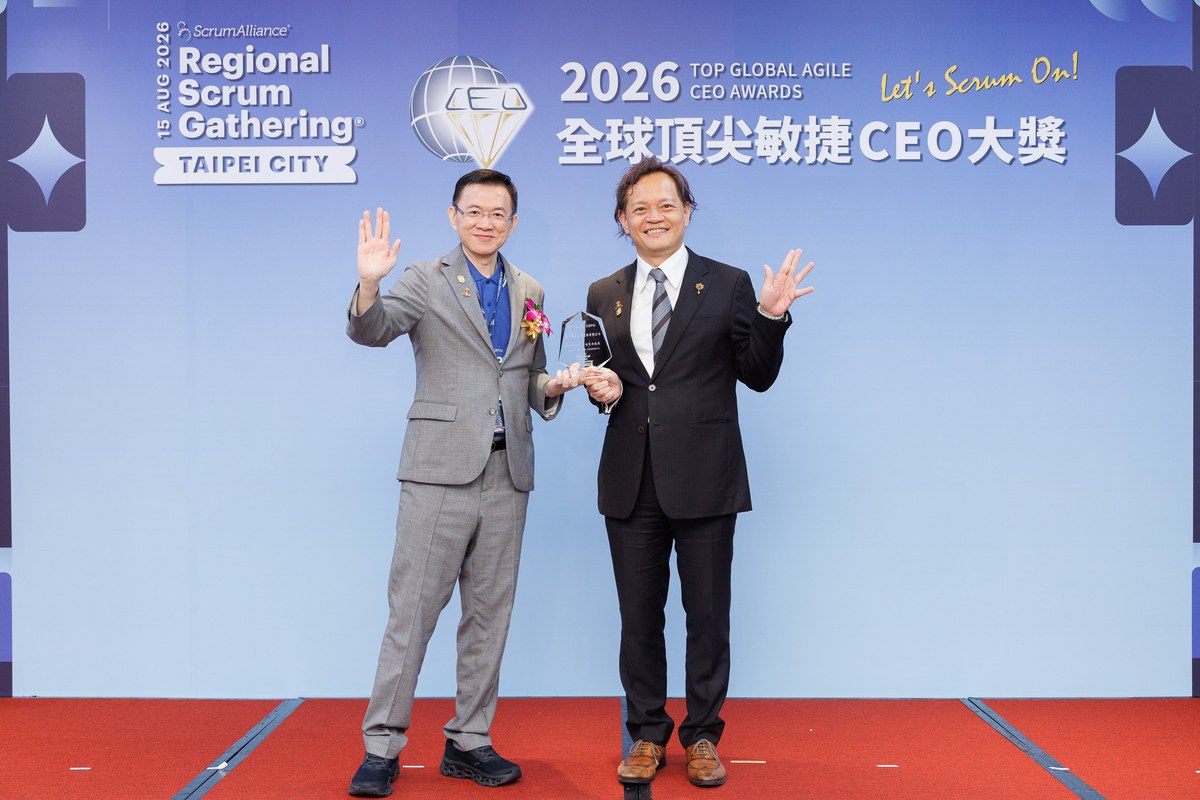
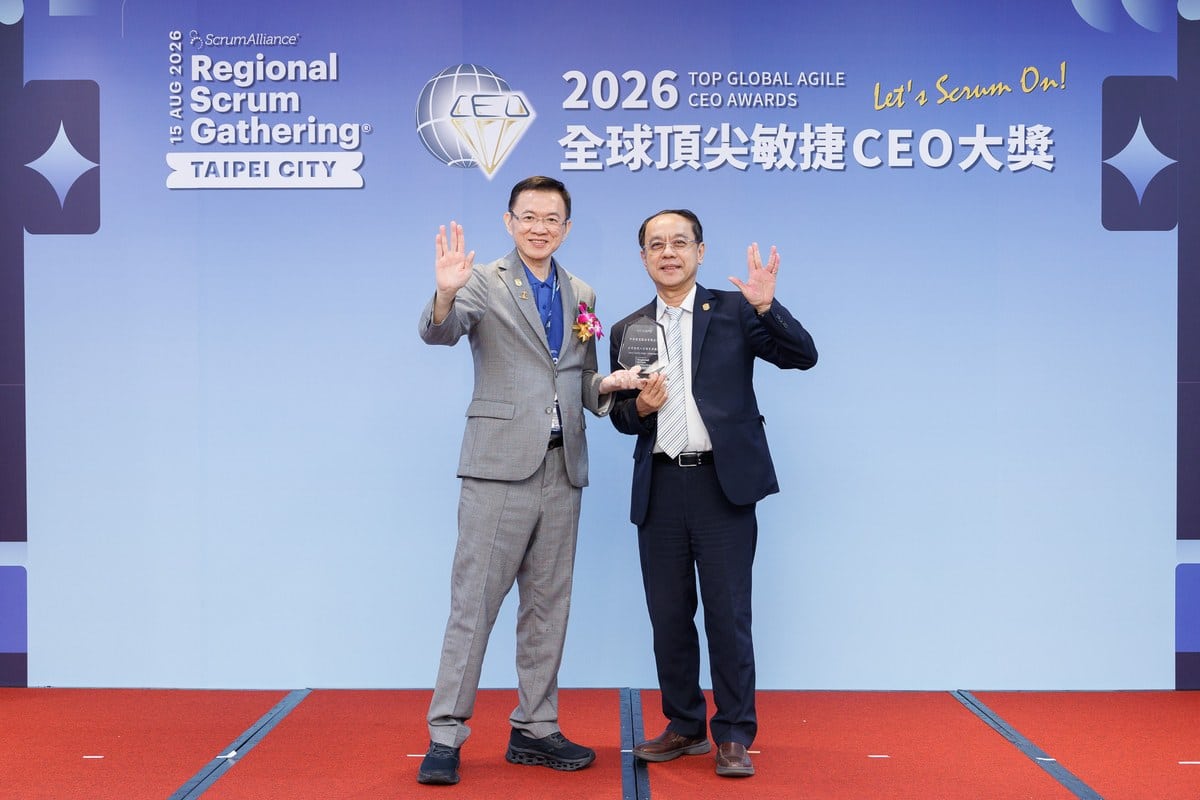
On August 15, 2026, eleven people stood on the stage at the RSG Taipei awards ceremony — and not one of them had sent a deputy in their place. The general manager of Chunghwa Telecom’s IT division, Chen Ming-chung. The chairman of Galaxy Software Services, Chang Pei-yung. The chairman of Nan I Education Group, Su Wei-chuan. The deputy general manager of Formosa Builders, Li Chun-ying. The director of WNC, Ku Yu-fu. The president of Pfizer Taiwan, Yeh Su-chiu. The division head of Innolux, Chang Yu-ming. The general manager of Taipei Agricultural Products Marketing Corporation, Wu Fang-ming. The general manager of Shin Yeh Restaurant Group, Hu Jui-jou, accepting on the company’s behalf. The CIO of Taipei Fubon Bank, Chang Chih-ching. And me.
Cameras went off across the room. Most people in the audience were photographing the trophies, or the backdrop that read “2026 Top Global Agile CEO Awards.” What caught my attention was something else: these ten companies’ decision-makers were willing to be photographed standing on stage having taken an exam themselves.
Most companies treat “adopting agile” as something you delegate: find the right person, send them to class, have them come back and teach everyone else. These ten companies did something different — they had their CEOs, chairmen, and presidents sit in the classroom themselves, take their own exams, stick their own Post-its on the board, and personally stack that tower of blocks to 72 centimeters.
In all my years coaching companies, what scares me isn’t executives who won’t learn — it’s executives who send a diligent subordinate to class and then go right back to running meetings the way they did ten years ago. No matter how many certificates that kind of company collects, nothing actually transforms.
Ten companies, over 650 certificates combined. Do the math: if each executive spent just two hours preparing for the exam, that’s more than 1,300 hours of leadership-level time, all invested in one thing — asking themselves whether they understand it, before asking anyone else to.
“I’ve Done This for 30 Years” Is What Nan I and TAPMC Really Had to Loosen
Taipei Agricultural Products Marketing Corporation, founded 52 years ago, first sent three section chiefs through CSM training under General Manager Wu Fang-ming. A month later, he brought 30 senior managers — most with over 30 years of tenure — into the same classroom. When asked in class about his managers’ average years of service, Wu didn’t dodge the question. “What really needs to loosen isn’t the system,” he said. “It’s the sentence nobody says out loud: ‘I’ve done this for 30 years — I know the right way to do it.'”
That line cuts deeper than any CSM certificate. A 52-year-old company’s greatest asset is its senior managers’ experience. Its greatest risk is the same group refusing to admit that experience might be out of date.
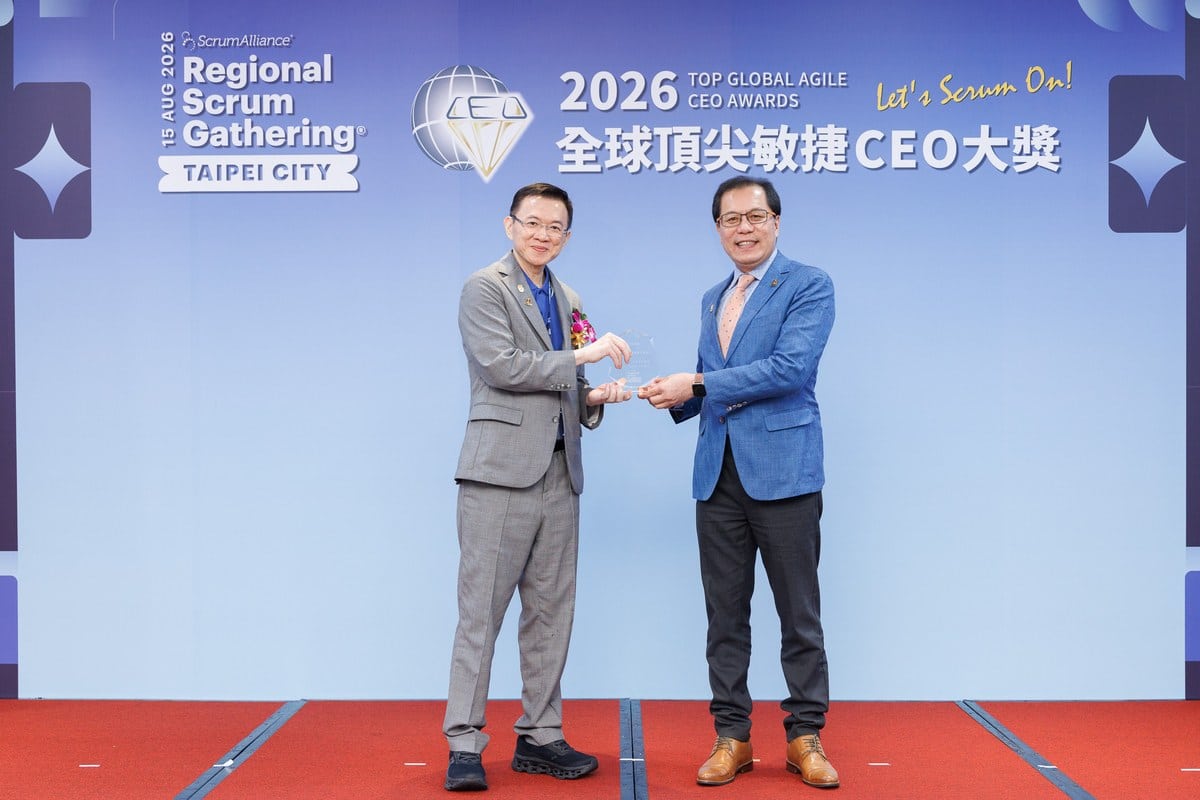
Nan I Education Group, a 70-year-old textbook publisher, wrestled with the same thing. Declining birth rates aren’t news. AI isn’t news either. What’s actually newsworthy is both happening to the same company at once. Chairman Su Wei-chuan led 27 core executives, including two vice presidents, through dual CSM and CSPO certification. He stuck his own Post-its on the board and prioritized his own backlog, experiencing firsthand how a Scrum board works. As he put it: “The real point of agile isn’t speed — it’s reducing risk. I can say the direction is right. I can’t promise the first step will be.”
A 70-year-old textbook company and a 52-year-old agricultural marketing company, in the same year, chose to make their most senior people become students again. That’s not a coincidence. It’s the same fear — of being the last person in the organization to realize the market has already changed.
From 61 to 111: Chunghwa Telecom’s Shared Language
If the first two companies show old brands questioning themselves, Chunghwa Telecom’s story is a problem of a different scale. In July 2026, Chunghwa Telecom completed its fourth cohort of executive CSPO certification, bringing the cumulative total to 111 certified managers — reportedly the largest known executive CSPO training program at any single company. Add the 61 CSM certificates, and Chunghwa Telecom alone accounts for 172 certificates.
Scale doesn’t make the problem simpler — it makes it harder. At a company with tens of thousands of employees, the real bottleneck was never whether to adopt agile. It’s whether different business units and different levels of management can agree on what matters most and what comes first. In the third cohort’s class, a section chief named Hsieh Wen-chieh used the historical story of Qin Shi Huang standardizing scripts and cart axles to explain what CSPO is meant to solve. General Manager Lin Jung-tzu later endorsed the analogy publicly: “Wen-chieh put it well, and it’s fitting — that’s exactly what this round of EDP and Level-400 training is meant to achieve.”
A section chief’s metaphor, picked up on the spot by the general manager — that moment says more about a shared leadership language than any slide deck could. The 111 certificates aren’t the point. What matters is whether anything actually changes on the ground over the next two or three months. That line came from Chunghwa Telecom itself, not something I added. But in my years coaching large enterprises, fewer than three in ten actually go back and check whether things changed. Chunghwa Telecom’s willingness to say that out loud is itself a bet — a bet that they’re willing to be checked.
AI Makes Execution Cheap. It Makes Judgment Expensive.
Galaxy Software Services, chaired by Chang Pei-yung: 57 CSM and 58 CSPO certificates — nearly even numbers. That means Galaxy wasn’t training frontline staff first and backfilling leadership later. Leadership and execution were learning the same language almost simultaneously.
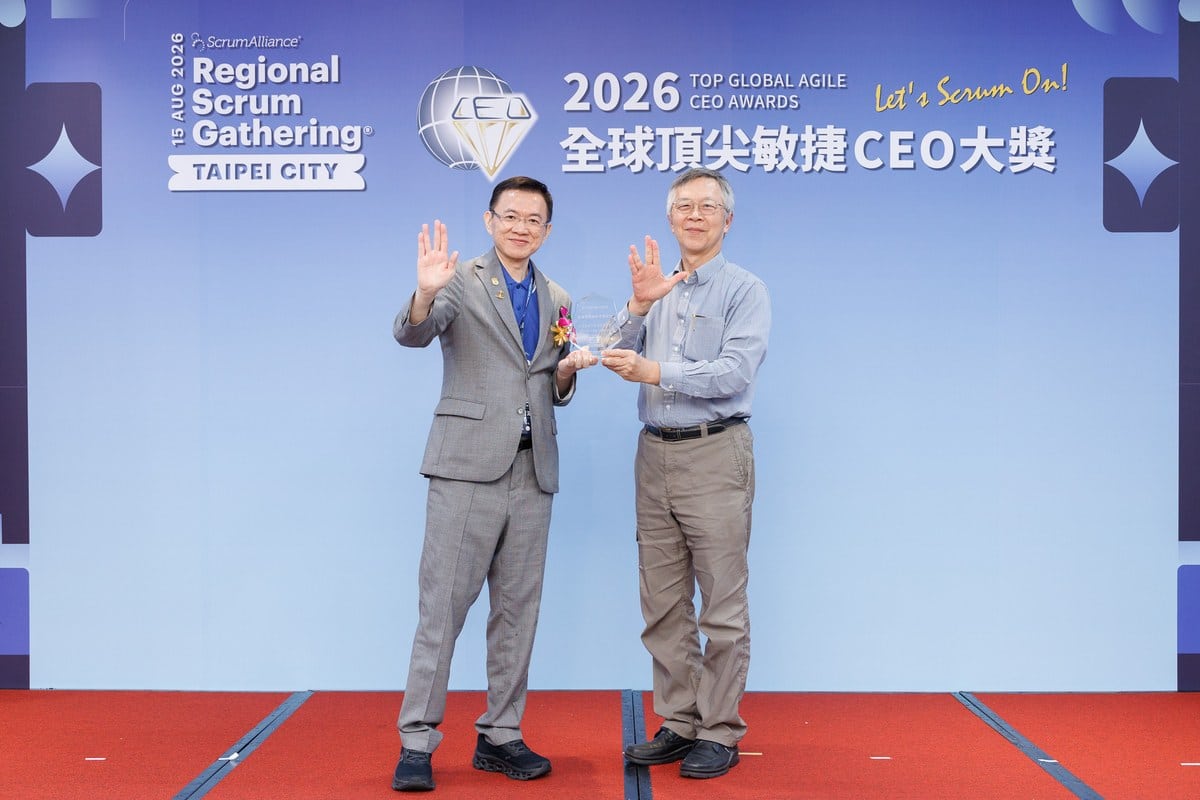
In Galaxy’s second CSPO cohort, there’s a moment I still remember. A division head laid out an urgent sales order, technical cost, and revenue targets on the table — then caught himself and asked a different question: “Let’s first confirm what the actual value to the customer is here.” In that moment, he wasn’t answering a question. He was learning to ask a different one. Four teams competed to build the tallest tower; the winning team reached 72 centimeters. That wasn’t just a game — it was a room full of executives standing on the same map for the first time.
AI makes execution cheap. It makes judgment expensive. That’s the reality I keep seeing while coaching Galaxy: AI can write the code, but it can’t rank your market priorities. As execution costs approach zero, what becomes scarce isn’t labor — it’s judgment. And judgment was never one person’s job; it requires a shared standard across the entire leadership team. The cost of insufficient judgment isn’t a little less revenue — it’s sales, engineering, and finance each speaking a different language until the market window closes, with nobody accountable for the decision that never got made.
Rebar and Kitchen Stoves Need Agile Too
Plenty of people assume agile is a software-industry thing. Formosa Builders and Shin Yeh Restaurant Group, with 62 and 26 CSM certificates respectively, prove otherwise.
Formosa Builders had only 80 employees 20 years ago; today it has 1,050. Deputy General Manager Li Chun-ying — I’ve known her for 18 years, since she was a student in my PMP class. Eighteen years later, she became a student again, in the third CEO CSM cohort. Sixty-one executives spent two days laying out five real organizational pain points, and by the end, the group had built a working app prototype addressing one of them, with Chairman Kuo Bei-hung watching the presentation from the audience. Among all ten companies, this construction firm sent the most people to get certified.
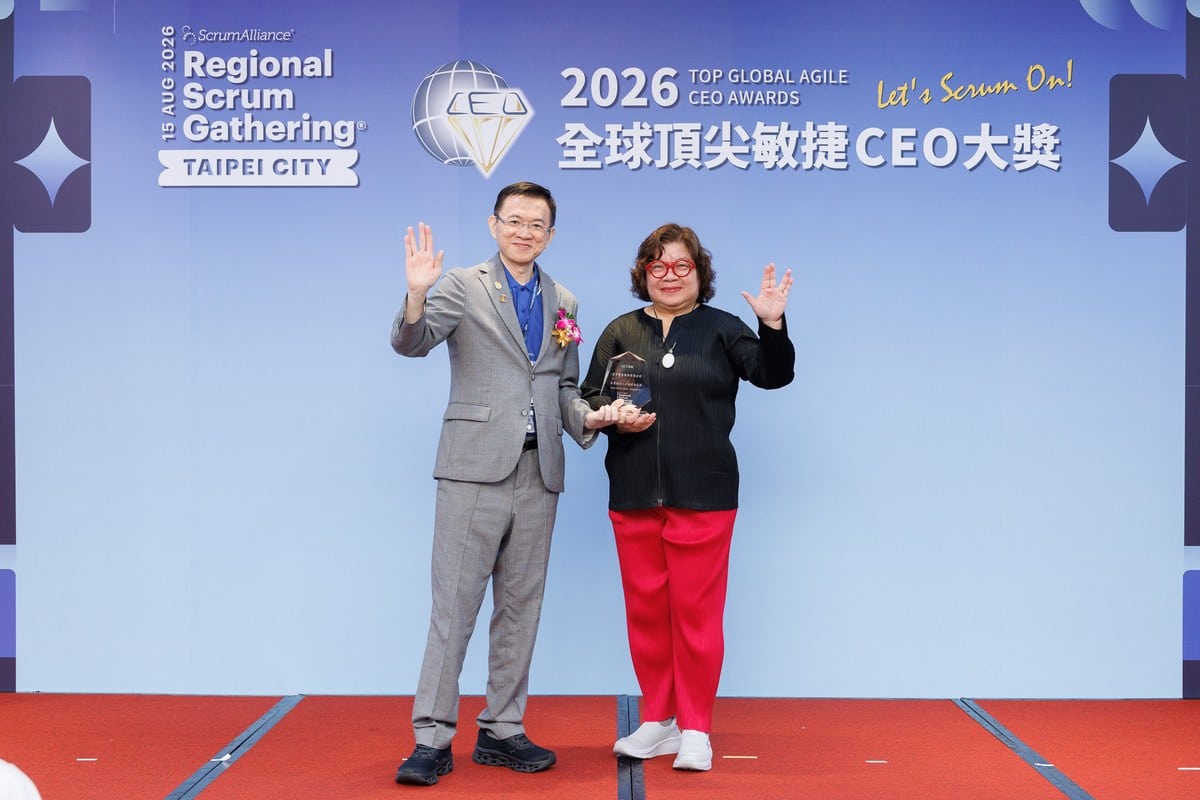
Shin Yeh Restaurant Group, a 48-year-old Taiwanese cuisine brand, loses 200 workers to understaffing and over 250 to turnover every year. Executive Director Li Hung-chun put it bluntly: “We’ve genuinely always lacked a shared way of doing things. We had a lot of internal friction, but what we called friction was really unclear roles and blurred responsibility.” The 26 managers, averaging 20 years of tenure and over 50 years old, mostly rose through hands-on experience and weren’t used to exams or certifications. Most failed the first practice test. The night the whole class finally passed, the classroom erupted in real applause. Executive Director Li Hung-chun said: “Watching everyone’s faces light up, bouncing ideas off each other in that room — I felt a kind of team energy and connection I hadn’t felt in a long time.”
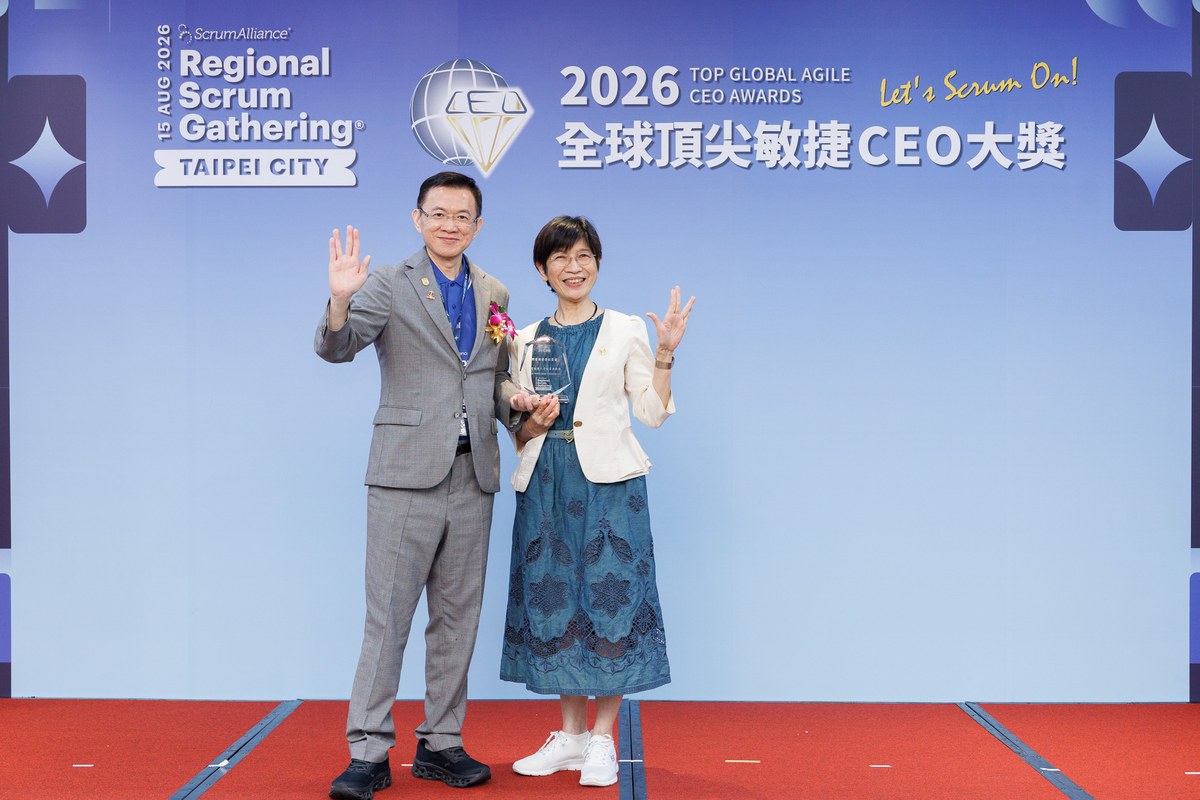
Honestly, I’ve lived through this one myself — getting managers at a company that’s been cooking the same food for nearly fifty years to sit for an exam is harder than getting them to open three new locations. But they did it.
Regulation Is the Head, Launch Is the Tail, Agile Goes in Between
Taipei Fubon Bank, CIO Chang Chih-ching, 25 CSM certificates — the fewest of the ten companies, though that doesn’t make it the least significant. Banking is one of Taiwan’s most heavily regulated industries. After coming to understand the CSM course, Chang arrived at a conclusion of his own: “Regulation is the head, product launch is the tail — agile goes in the middle.” One executive reflected afterward: “We thought agile was just a technical thing. We didn’t realize it was a fundamental shift in management logic.” Fubon didn’t wait for a problem to force the issue — it chose to get ahead of it while sitting at the top of its industry. For a bank, moving a step too slowly rarely just means a fine. It means that by the time regulators force the change, you no longer have a choice — you’re moving on their timeline.
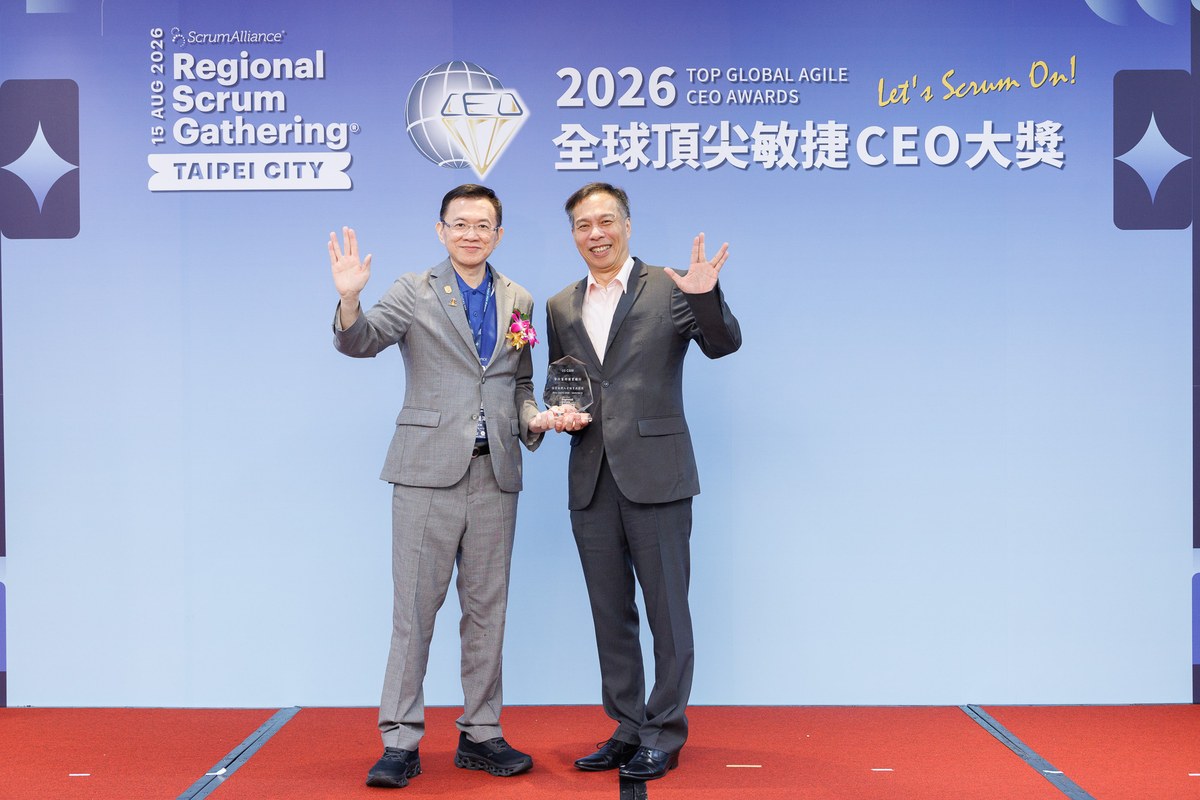
Pfizer’s Taiwan operation, led by President Yeh Su-chiu, earned her own CSM certification two years before this, and immediately applied agile methods to the Taiwan launch of the COVID oral treatment Paxlovid — completing the rollout in just 37 days. Of the company’s 300 employees, 58 earned CSM certification, including eight executives — 92% of them. During the two-day course, she cleared her own calendar and personally had lunch with the instructor.
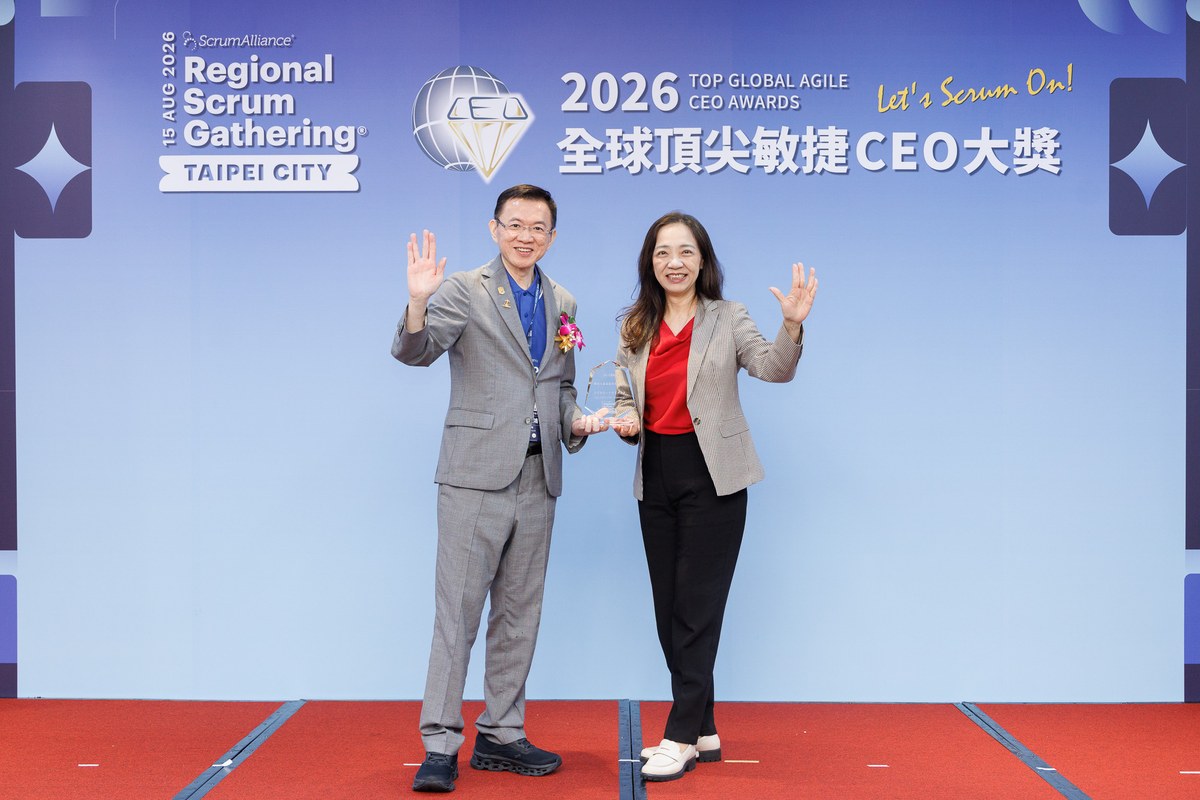
The cost here isn’t the price of training. It’s what happens if a pharmaceutical company takes six months longer to decide — the market window simply closes. Banking and pharma prove the same point: regulated industries aren’t incapable of moving fast. They just need to know exactly what can move fast and what can’t. And figuring that out is precisely what agile is built to solve.
Hardware Manufacturing’s Agile Story Doesn’t Need a Story
WNC (Wistron NeWeb Corporation), a global leader in networking equipment ODM, sent Director Ku Yu-fu to accept its award — 61 CSM certificates, tying with Chunghwa Telecom for the second-highest count. Innolux, one of the world’s major LCD panel manufacturers, sent Division Head Chang Yu-ming — 44 CSM certificates.
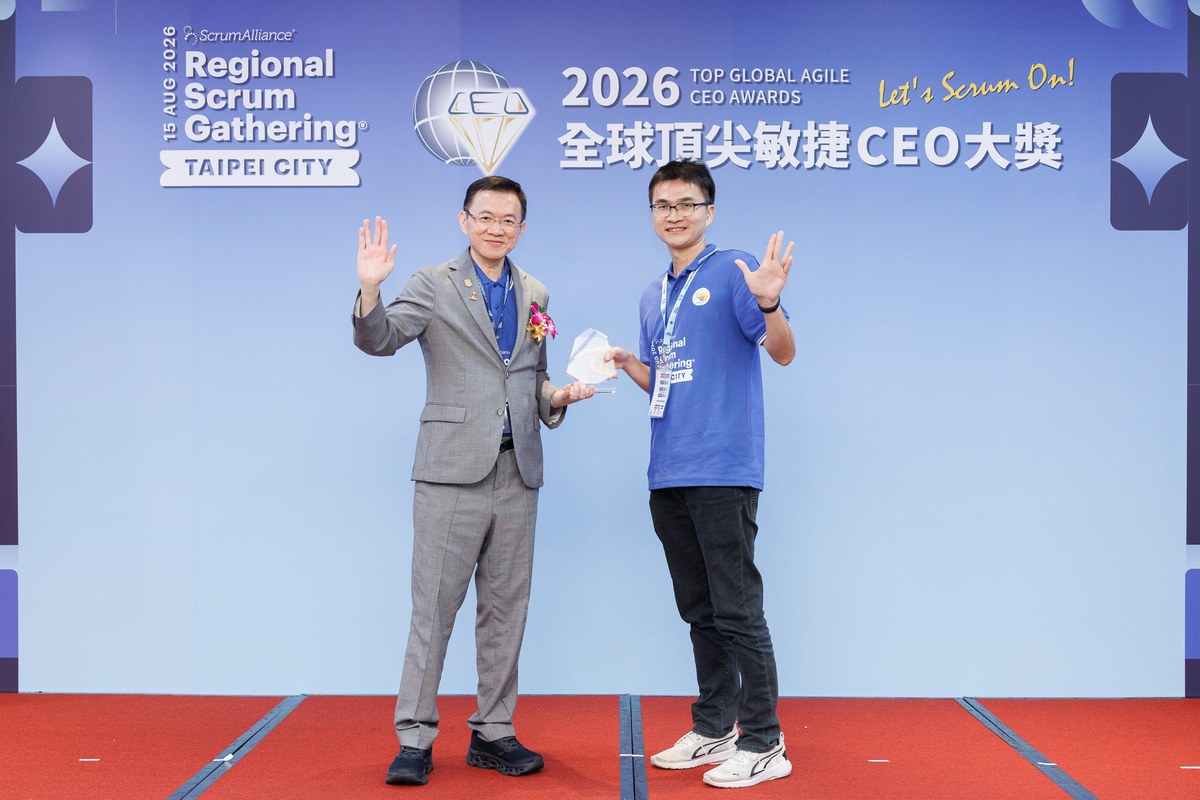
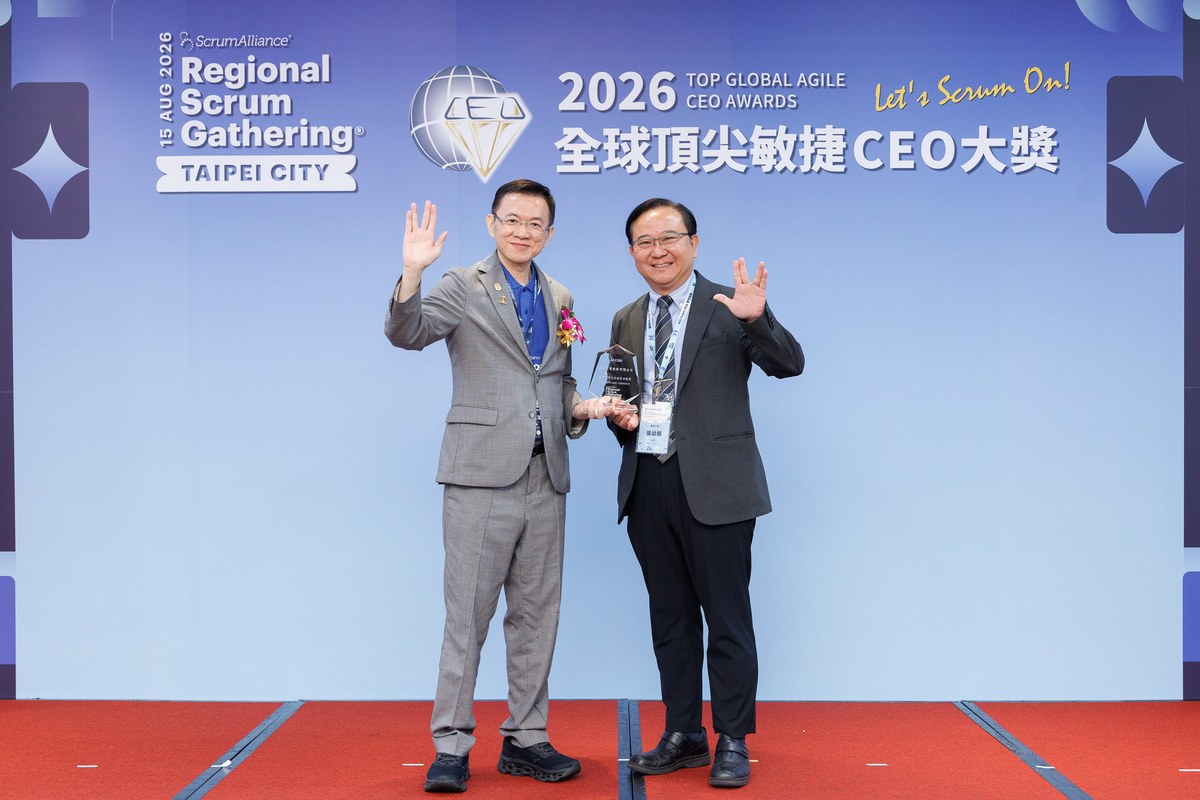
Neither company left behind many memorable quotes from the classroom, but the numbers speak for themselves. One makes networking modules, the other makes display panels — both industries where hardware thinking dominates: product cycles run in quarters, and yield is a matter of survival. In an industry where yield is life or death, what you fear most isn’t a yield drop — it’s the moment yield drops and leadership is still arguing over whether it’s a process problem or a design problem. That argument is, at its core, a lack of shared judgment. When a hardware giant puts more than 60 executives through the same framework, the bet isn’t on agile itself — it’s on losing three fewer days of arguing the next time yield goes sideways. Honestly, across the range of industries I’ve coached, from networking hardware to panel manufacturing, agile stopped being software’s exclusive territory a long time ago. It’s just a story the media rarely covers.
The Meaning of 455 Certificates Isn’t the Certificates — It’s Who Went First
Ten companies. Ten industries — telecom, software, education, construction, hardware manufacturing, pharmaceuticals, display panels, agricultural distribution, food service, banking. They share exactly one thing: the highest-ranking decision-maker chose to become a student first.
CEOs ask me all the time: Roger, why does our transformation always stall? My answer hasn’t changed much: it’s not that the method is insufficient. It’s whether you’re willing to be seen getting the answer wrong first.
If you’re a CEO or a chairman, the sentence in this article that should make you most uncomfortable isn’t “these companies collected a certain number of certificates.” It’s “when was the last time you sat in a classroom yourself?” If you’re a mid-level manager, the friction you’re feeling right now probably isn’t your problem — it’s that leadership hasn’t aligned on a shared language yet.
Who in your organization is currently making the call on market priorities, on what matters most, on what comes first? If the answer is “some very conscientious subordinate,” you haven’t actually started yet — somewhere among your competitors, a CEO or chairman is already sitting in a classroom.
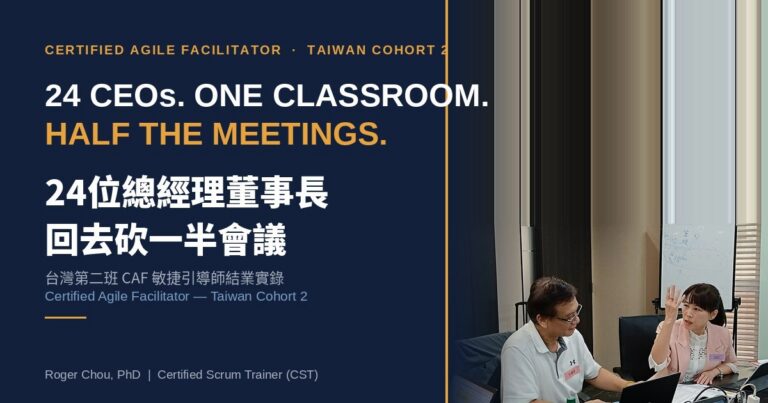
This is something you can actually design for. CSM gives teams a shared language for collaboration. CSPO gives leadership a shared language for judging value. CAF — what it solves isn’t “how do we run better meetings.” It’s whether a room full of people is willing to tell each other the truth.
That’s when it starts.