I still remember Christmas of 2014 — the day I proudly earned my very first CSM certification. My mentor at the time was none other than Bill, a Certified Scrum Trainer (CST). Yet even in that moment of celebration, one big question lingered in my mind:
“Why must we wait 18 months after earning the CSM before we’re allowed to renew it?”
This policy had never been questioned — let alone challenged. Coming from years of promoting the PMP certification, I knew that PMP holders could renew immediately after passing the exam. No one had to wait a year and a half. Yet for CSM, this delay had somehow solidified into an untouchable “rule.”
Over the past decade, there has been no formal proposal within the Scrum Alliance community to revise this policy. More often than not, we simply told one another:
“It’s just the way things are.”
But as a community built on agility and continuous improvement, isn’t it time we asked ourselves a hard question?
When a process no longer meets the needs of learners or the market — isn’t that our cue to spark change?
When learners’ efforts were being held back, I decided to stay silent no longer
In the past two years of promoting CSM, I encountered an incredibly proactive group of learners. They came from all over the country and gathered in Taipei with a clear goal: to learn how to accumulate SEUs and renew their certification successfully. They were fully prepared—yet were ultimately denied. The reason? They hadn’t reached the 18-month mark.
That moment struck a chord with me. I’m not someone who loudly complains about rules.
But I deeply believe this: We can change the system to make it more supportive and human-centered.
So I took action. I wrote a letter—to Tristan, the CEO of Scrum Alliance.
Dear Tristan,
I’ve carefully reviewed the Scrum Alliance FAQ regarding certification renewal, particularly this page.It clearly states:
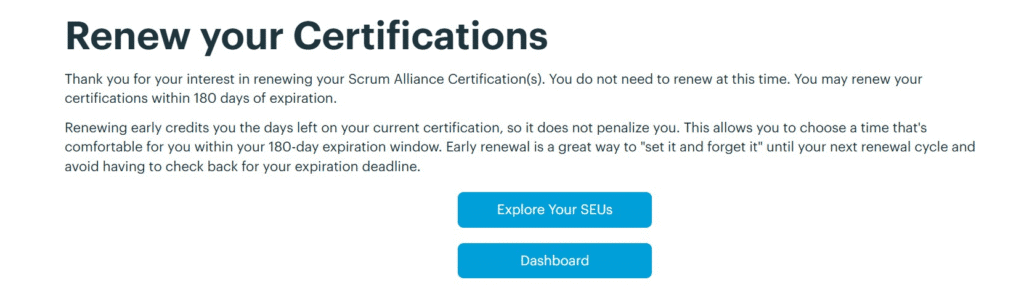
“You may renew your certifications within 180 days of expiration. Renewing early credits you the days left on your current certification, so it does not penalize you.”Currently, after obtaining the CSM certification, the learners are able to claim SEUs immediately. However, they are not yet able to proceed with the actual renewal process. For your reference, I have also recorded a short video of my current experience attempting the renewal.
250326 CSM renewal limitation policy demo Video:
https://youtu.be/rEQ8T8vVlp0This behavior seems different from other certification systems like the PMP, where as long as the learner completes 60 PDUs, they can renew the certification even just after obtaining it.
The Change That Began with a Letter: The Mindset That Moved an International CEO
I first met Tristan in person during my initial attempt at the CST exam in Portugal. He was warm, approachable, and full of energy. Later, he even supported me by speaking on my behalf at two RSG Taipei events. That encouragement gave me the confidence to voice my suggestion.
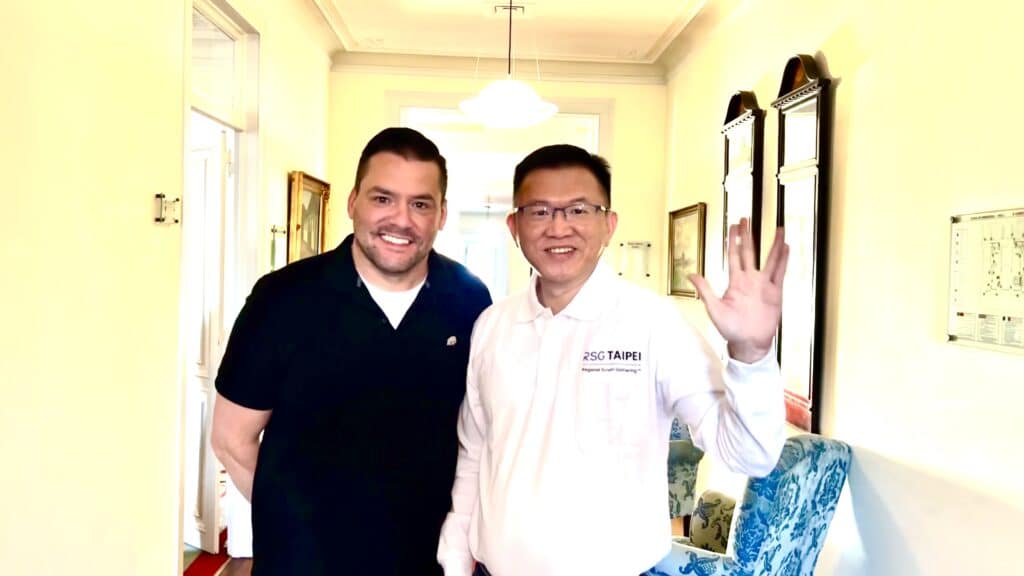
In my letter, I wrote:“This 18-month waiting policy isn’t just unreasonable — it’s actively discouraging CSM holders from pursuing further learning like the CSPO. Once their motivation fades, they might never return to continue their journey.”
To my surprise, Tristan’s initial response was:“Really? That does sound unreasonable!”
He immediately asked his team to investigate, only to discover the root issue:
Learners could submit SEUs, but they couldn’t complete the renewal process.
I didn’t stop at pointing out the problem — I went a step further.I created a video using a real learner’s dashboard, showing exactly how they could see the renewal option, but weren’t allowed to act on it.
It’s not enough to raise the issue — I made sure to consistently follow up and track the progress of the change.
Although Tristan didn’t reply right away, I chose to take the initiative and follow up. The next month, I wrote him again to check on the progress. He responded:“Roger, I actually made the decision to change it the moment I saw your video. Our team has already started working on it.”
He even brought in three key leaders within Scrum Alliance to drive this change forward and committed to implementing the update between Q2 and Q3 of 2025.
From the initial proposal on March 26 to the official rollout on July 25, this reform broke through a decade-old international policy — in just four months.
Witnessing a Historic Moment: The First Account Eligible for Early Renewal Has Arrived!
On the evening of Friday, July 25th, I received an email from Rob, the head of Scrum Alliance’s support team, as shown in the renewal link on the official website, informing me that the new policy had officially gone live. I was thrilled.
The very next morning, I couldn’t wait — I logged in using the account of a learner who had just earned their CSPO less than two months prior.
And there it was — the legendary “Renew” button shining on the screen.
I was genuinely moved.This wasn’t just a policy change — it was a powerful moment of being heard and making an impact.
Learners no longer have to wait. They can now renew their certification in less than two months after completing their CSPO, immediately unlocking the next stage of their learning journey.
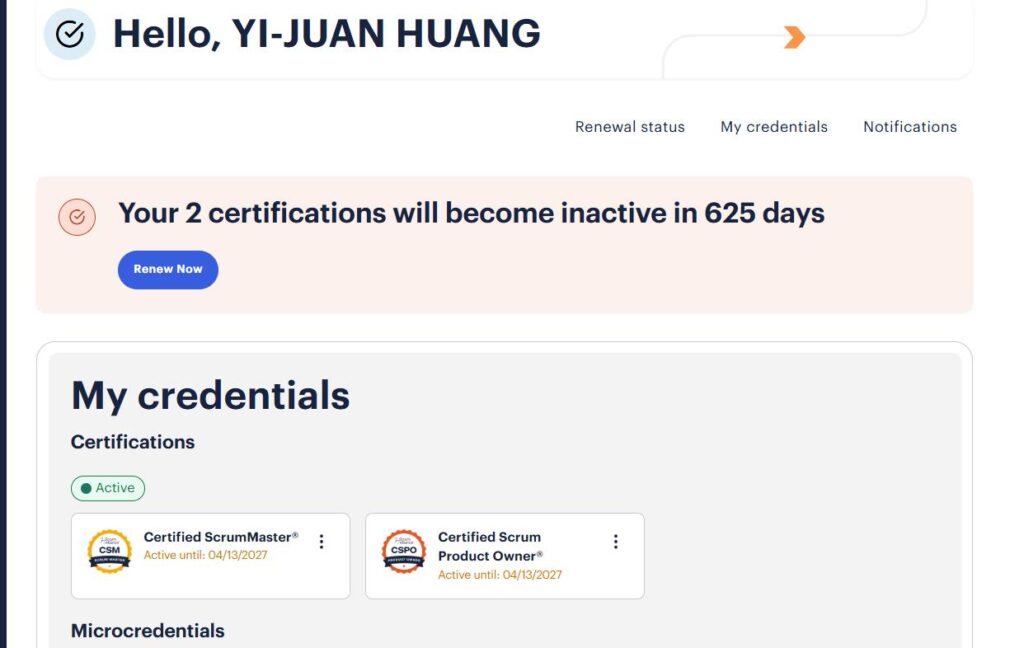
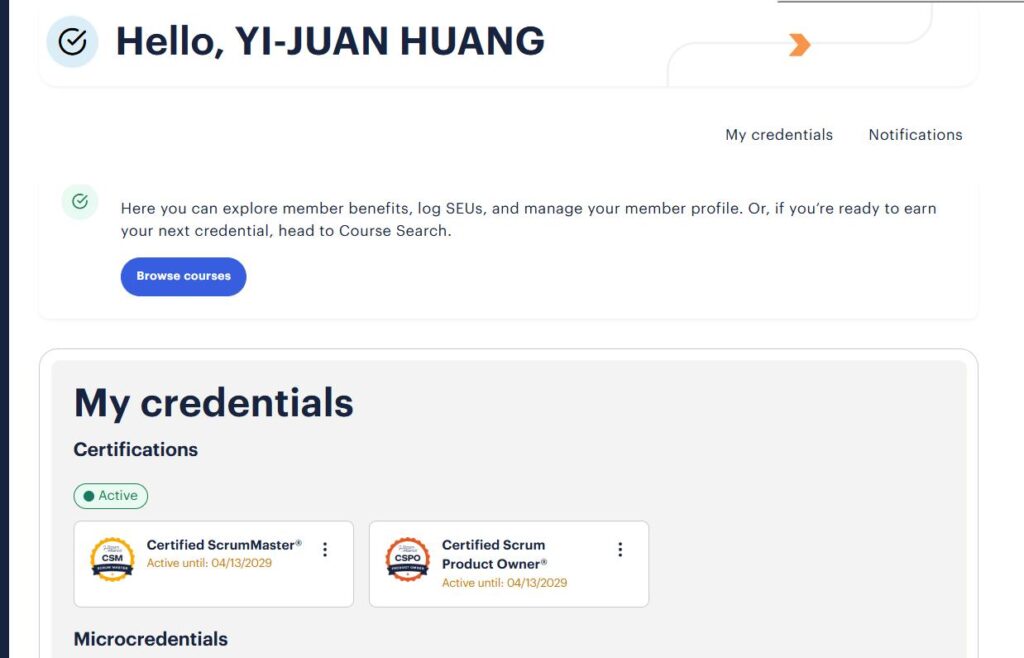
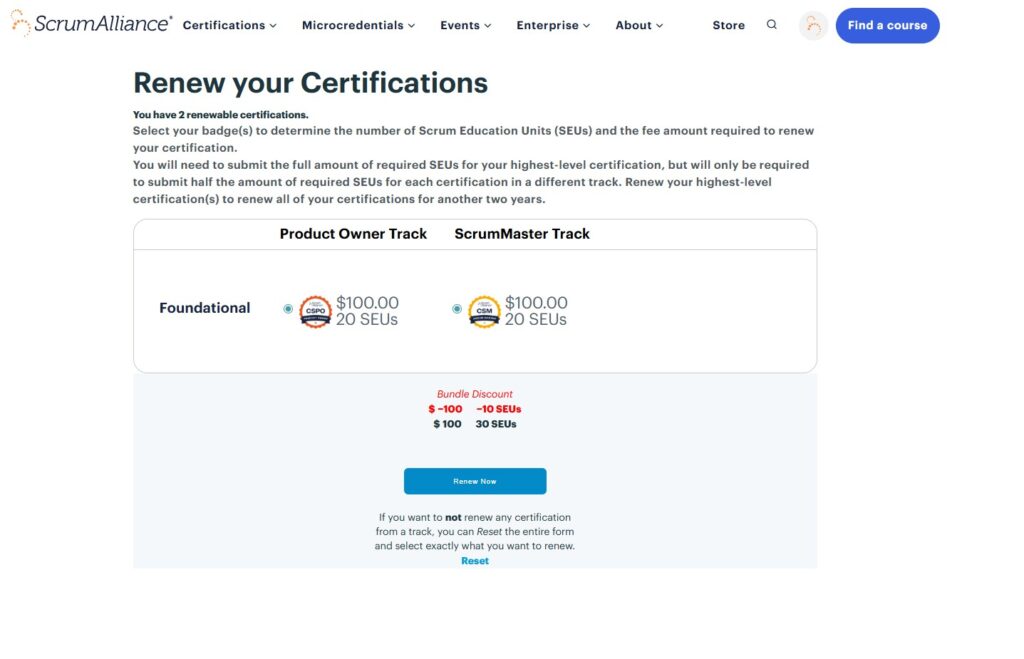
So with a total of 30 SEUs and $100 USD, learners can now renew both certifications at once
The Wisdom Behind the Proposal:
Only by seeing from the other side’s perspective can we truly drive meaningful change
I firmly believe that an effective proposal shouldn’t be driven solely by personal interest.
That’s why, in my letter, I also outlined the benefits of early renewal from Scrum Alliance’s perspective:
If the 18-month rule remained, many learners would lose momentum after earning their CSM and never move forward to pursue a CSPO.
But if, like the PMP, learners could renew immediately after certification, they would be empowered to plan their next learning step without delay.
This was a win–win strategy — and a true embodiment of Empiricism and Stakeholder Collaboration, both core to the Scrum spirit.
Today, whether you’re someone who hasn’t taken the CSM yet or someone who already has, you will benefit from this policy change.
- For beginners: No more stress about the renewal timeline.
- For existing certificate holders: Greater flexibility in planning advanced courses.
- For educators and advocates: A powerful new story that proves —
Agility can truly change reality.
Conclusion: You, Too, Can Be a Changemaker — Not Just a Complainer
This story isn’t about my personal success — it’s about a message I hope every Agile learner will remember: When you encounter an unreasonable system, don’t just complain — be the one who offers a solution.
One of Scrum’s core values is Courage —The courage to reveal reality with transparency,
The courage to speak up with ideas,And the courage to drive change.
My greatest hope is that every CSM and CSPO I’ve trained will go on to be such changemakers within their own organizations —Starting with small steps, improving systems bit by bit,And ultimately making the world a better place — because of you.