1-Minute Video Recap
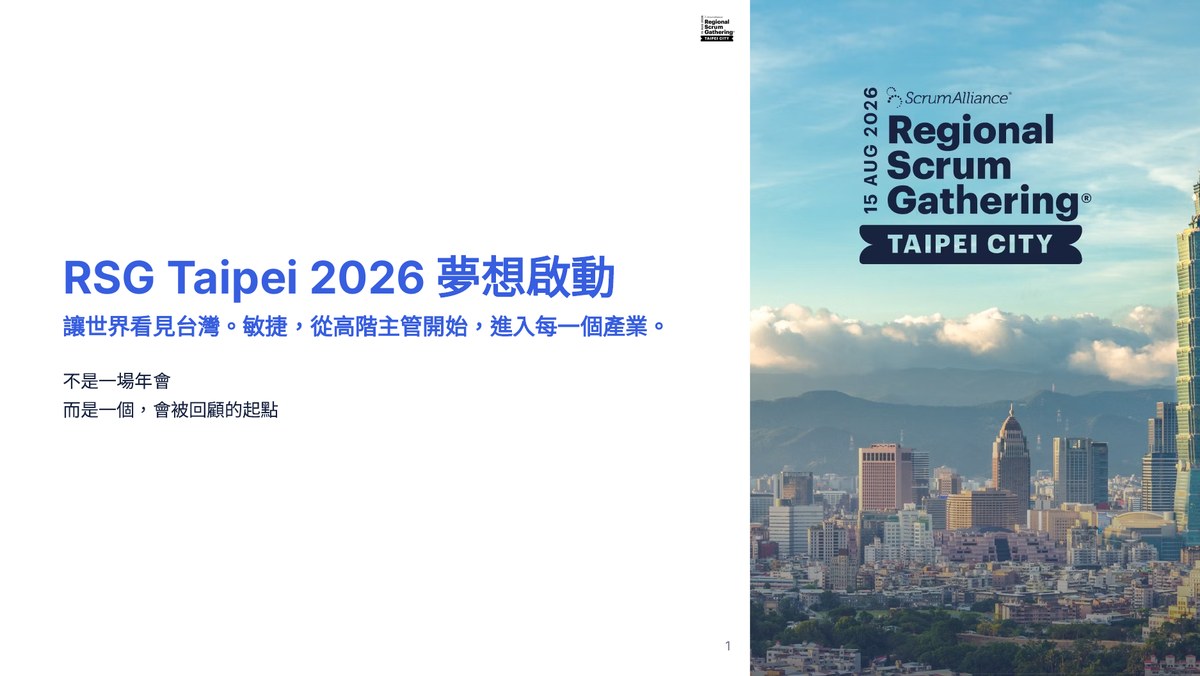
At noon on January 16, 2026, I sent out a slide deck. There wasn’t a single photo from the event in it, not one registration number, not even a signed venue contract yet. That deck was called “RSG Taipei 2026: The Dream Launch.” Within three business days, eighteen executives had read it and each pulled NT$20,000 out of their own pocket to become our first brand ambassadors. Two more joined later, bringing the total to twenty people and NT$400,000 — all of it converted into sponsored tickets for the audience. This isn’t a fundraising wrap-up report, and it isn’t a list of brand ambassadors. It’s the story of twenty people who chose to believe before anything had happened yet.
A Slide Deck With Nothing to Show For It
That deck was only nineteen pages long. The first page said: “Not a conference — a beginning people will look back on.” A few pages later came a line that even I thought sounded a little crazy: “Let the world see Taiwan. Let agile start with the C-suite and reach every industry.”
No list of award winners. No satisfaction scores. No confirmation that former Premier Mao Chi-kuo or Chairman Stan Shih would even agree to speak. I remember thinking at the time that if I’d taken this deck to a typical sponsor, it probably wouldn’t survive past page two — you’re asking someone to pay for an event that doesn’t exist yet, a model with no precedent. That’s not sponsorship. That’s a bet.
No Budget, Just One Rule That Didn’t Look Like It Would Work
From day one, RSG Taipei 2026 decided not to sell tickets. That wasn’t a marketing gimmick — it was the design: the entire event ran on referrals. No open registration. Every attendee had to be personally recommended by a brand ambassador to get in. Which meant I first had to find a group of people willing to put their own names behind it, and cover the cost of the tickets up front, so that everyone they recommended could walk in without paying a cent.
Honestly, the design looked great on paper. In practice, it handed me a problem before I’d even started: no ticket sales, no commission, no precedent to point to. I wasn’t asking people to “come hear a talk.” I was asking them to believe in a scene that hadn’t happened yet.
Three Business Days, Eighteen Yeses
The proposal went out at noon on January 16. Within three business days, word had spread further than I expected, and eighteen executives all wrote back with the same thing: I’m in.
Hung-Chun Lee, Executive Director of Yeh’s International Catering, is a second-generation leader in a traditional family business who has spent recent years bringing standardized operations and data management into it; Jui-Jou Hu, Group General Manager at Gaia Information, worked her way up from a frontline engineer to the top of the group; Chih-Hsien Shih, Chairman of Union Fusion, holds both his CSM and CSPO certifications himself and is one of the rare business owners who took the course before backing the event; Hsueh-Chien Teng, CEO of Rui Feng Consulting, trained as a soil and water conservation engineer, yet applies Scrum methods to government projects. These four, along with fourteen others, never once asked me how many people the event was expected to draw. What they saw wasn’t the size of an event — it was whether agile had a real shot at reaching Taiwan’s decision-makers.
Twenty People, Twenty Times NT$20,000
The story didn’t end once eighteen were in. On February 11, Wei-Chuan Yeh, who has spent his career in public-sector workforce development and civil service governance, joined as our nineteenth brand ambassador. Two days later, Chi-Tsung Chang, General Manager of Jethong Information, became the twentieth — the 2024 winner of the “Top Global Agile CEO Award,” who had seen what the previous year produced and this time chose to go from award recipient to the one paying it forward.
Twenty people, NT$20,000 each, NT$400,000 total. Not one dollar of it went into my pocket — all of it became sponsored tickets for the audience. Tickets that would have cost NT$2,000 each were covered in full by the ambassadors, so that every invited guest could walk in for free. That’s not a NT$400,000 PR budget. That’s two hundred seats nobody had claimed yet.
Not Sponsorship — Twenty People Carrying the Risk First
From the outside, it’s easy to read this as just another sponsor list, the kind you see at any conference. But rewind the clock to that afternoon of January 16, and you’ll see a very different picture: the moment these twenty people signed on, the venue hadn’t been fully announced, only part of the speaker lineup was public, and I myself didn’t know how many people would end up being recommended in.
This isn’t sponsorship. It’s twenty people carrying the risk before any result existed. A sponsor wants exposure. A Giver wants to make something they believe should happen actually happen. That difference shapes everything that follows.
One NT$2,000 Ticket, Turned Into One Hundred Fifty Chances
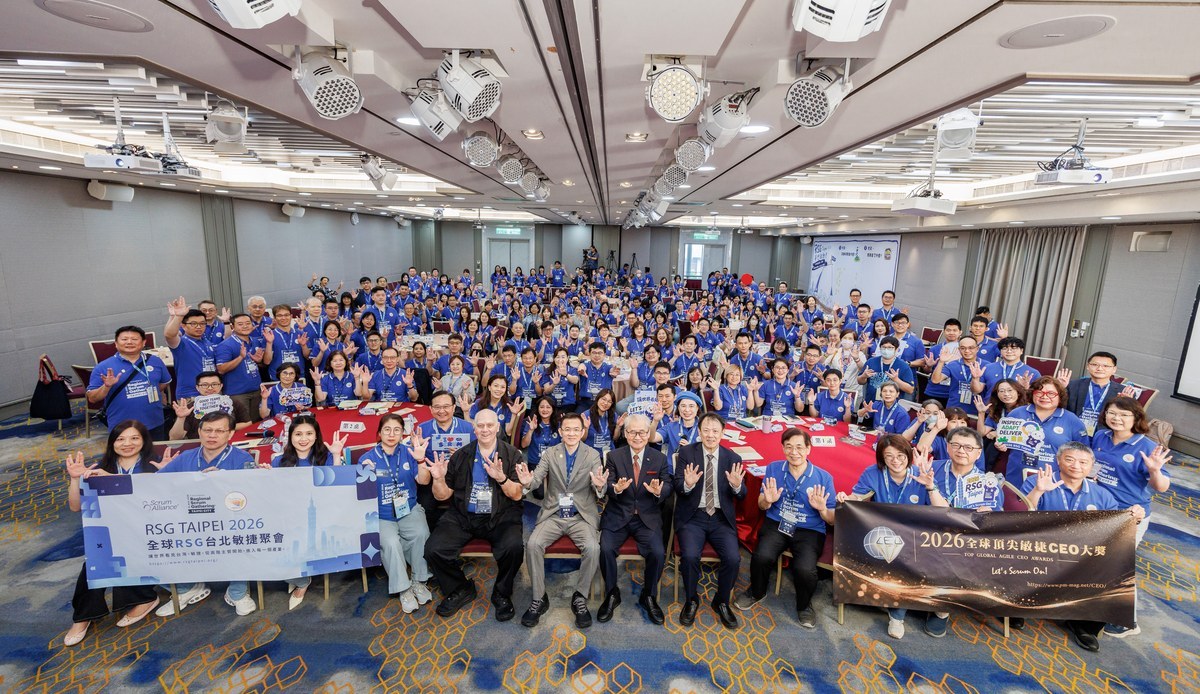
Once the money was in place, the tickets started moving. All one hundred fifty seats were claimed within six days — not through discounts, but through twenty brand ambassadors each personally inviting people they trusted. On August 15, at the National Taiwan University Hospital Convention Center, 233 attendees ultimately claimed tickets, and 221 actually showed up — an attendance rate above 95%.
The next day’s survey drew 174 valid responses, with an overall satisfaction score of 9.27 out of 10 — translating to a Net Promoter Score around 72, a number that beats most international-caliber business events. Those numbers matter, but what matters more is the question they answer: twenty times NT$20,000 never bought a ticket’s face value. It bought a hundred and fifty — later more than two hundred — people who couldn’t have been part of this conversation walking into the room.
The Day the Dream Had an Address
On August 15, former Premier Mao Chi-kuo spoke on systems thinking, Chairman Stan Shih shared his philosophy of “kingly way” leadership, and Hsueh-Chien Teng, as founding chair, passed the sash to the next term — scenes that never appeared anywhere in that original deck, coming to life one by one on the stage at National Taiwan University Hospital Convention Center.
Before the event ended, I wrote a letter to these twenty brand ambassadors. There’s a line in it I’m still thinking about: you proved that real leadership isn’t speaking from a stage — it’s carrying risk and putting in resources before anyone else can see the value. If anything, that line says less about them and more about a lesson I relearned myself — I thought I was running an event. I came to understand I was the one being carried forward by the trust of twenty people.
Someone Believes First, Then the Outcome Can Happen
On the last page of that original deck, I’d written: “Some events are a lesson. Some events become history.” Looking back now, the reason RSG Taipei 2026 made it from a slide deck to 221 filled seats isn’t that it was destined to succeed. It’s that twenty people chose to believe before there was any result to see.
For years, when I’ve taught CSPO (Certified Scrum Product Owner) classes, I’ve often shared a motto of my own: “Where there’s a vision, there’s power. The bigger the vision, the greater the power it draws.” At the time, most of the room heard it as a nice line to stay motivated by. It wasn’t until these twenty brand ambassadors acted it out with NT$400,000 that I truly understood: that’s not a slogan. It’s the most basic form of the CSPO spirit — a Product Owner’s real job isn’t to start with resources. It’s to start with a vision big enough that someone else is willing to risk believing in it. The resources always come because of the vision, never the other way around.
If you’ve ever stood at a starting point where no one had said yes yet — holding nothing but a slide deck, with no photo to prove it would ever work — this article is for you: you don’t have to wait until you see the outcome to have the right to ask someone else to believe.
Thank you to Hung-Chun Lee, Jui-Jou Hu, Chun Chiang, Chih-Hsien Shih, Hsueh-Chien Teng, Hsien-Tang Wang, Shu-Chuan Chen, Ming-Lung Chu, Chun-Ju Chou, Wei-Chung Lin, Chia-Yen Lu, Ko-Fan Wang, Ling-Ching Wang, Kung-Ping Lin, Cheng-Ting Shih, Chun-Ying Lee, Su-Chiu Yeh, Li-Hsiu Chen, Wei-Chuan Yeh, and Chi-Tsung Chang — our twenty brand ambassadors. What you sponsored was never just a ticket. It was the possibility of Taiwan being seen by the world, and of agile reaching the highest levels of decision-making. Belief didn’t come after the results. Someone believed first, so the results could happen at all. See you at the next one.
Honoring the Twenty Brand Ambassadors of RSG Taipei 2026
(Listed in order of joining. Bios adapted from the RSG Taipei 2026 official website)
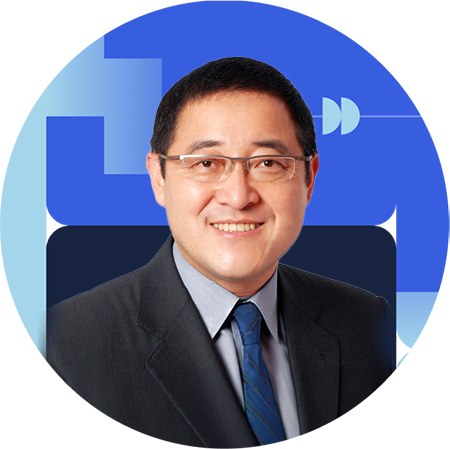
As the second-generation leader of the Yeh’s Group, Hung-Chun Lee brought standardized operating procedures and data management into a traditional Chinese restaurant business, successfully expanding into Japanese cuisine and franchise partnerships, and earning Michelin recognition along the way.
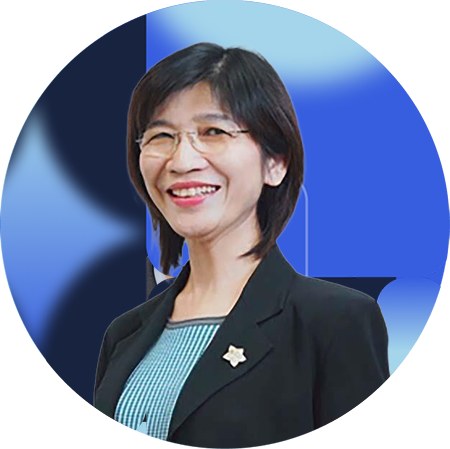
Jui-Jou Hu rose from a frontline engineer to Group General Manager at Gaia Information. She drove the company’s early CMMI certification and later led its shift toward agile, cloud-based services, guided by her belief that happy employees are what create satisfied customers.
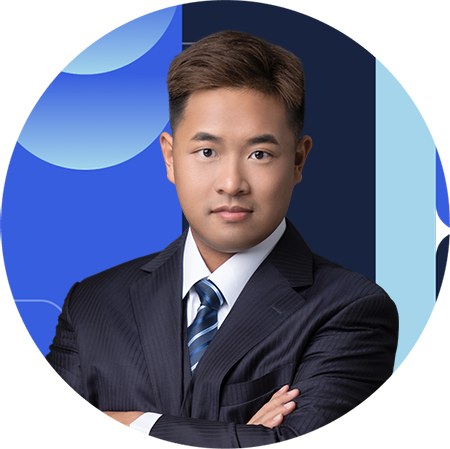
Chun Chiang holds dual master’s degrees from Cambridge and National Taiwan University in civil engineering, yet is equally at home operating heavy machinery on-site — closing the gap between management and the construction floor while pushing ESG governance and smart-building technology into the industry.
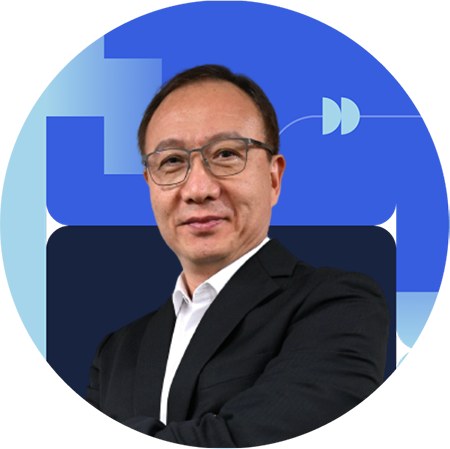
Chairman Chih-Hsien Shih is steering Union Fusion toward becoming a world-class seal-less pump company, implementing ISO 9000 management systems while balancing innovation with environmental responsibility — work that has earned him recognition as one of the world’s top agile CEOs.
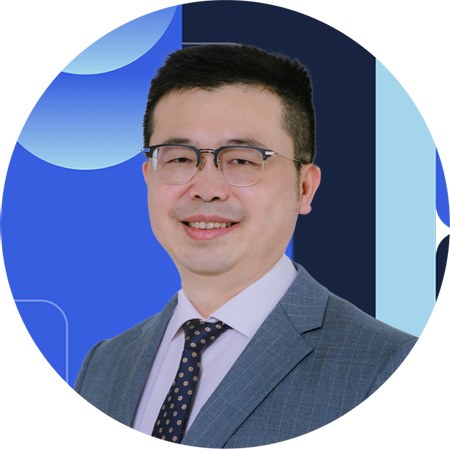
Trained as a soil and water conservation engineer, Hsueh-Chien Teng has applied Scrum methods to government projects, becoming a key force behind bringing agile thinking into rural regeneration — work recognized with a Top Ten Global Agile CEO Award and PMI’s Eric Jenett Award.
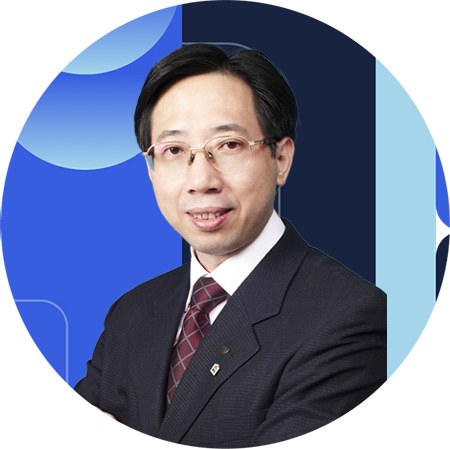
Hsien-Tang Wang has spent years deep in building physics and energy verification, advocating for scientific simulation from the earliest design stages. A senior LEED- and WELL-certified expert, he champions “green BIM” to solve health, safety, and energy problems at the source.
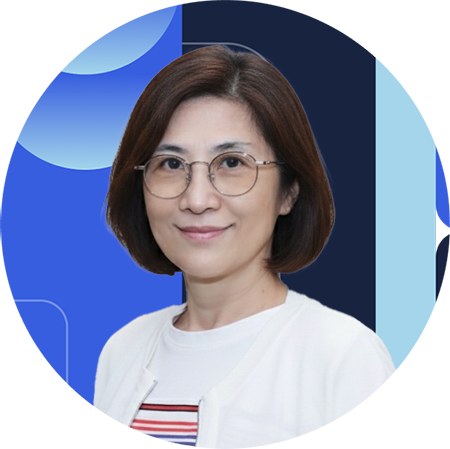
Shu-Chuan Chen brings extensive consulting experience across Greater China and holds B-Corp consultant credentials. Believing that “management can actually be easy,” she shares practical frameworks through her own podcast and is known for her facilitative approach to leading teams.
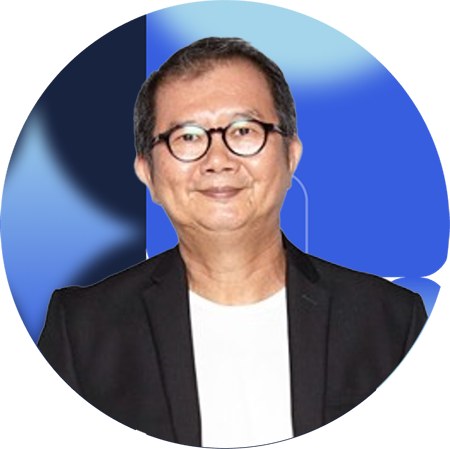
With over two decades building data centers, Ming-Lung Chu has watched Taiwan’s server rooms evolve from traditional racks to cloud computing. He champions a “best-fit” design philosophy over chasing specs for their own sake, specializing in solving space and cooling constraints in retrofitted office buildings.
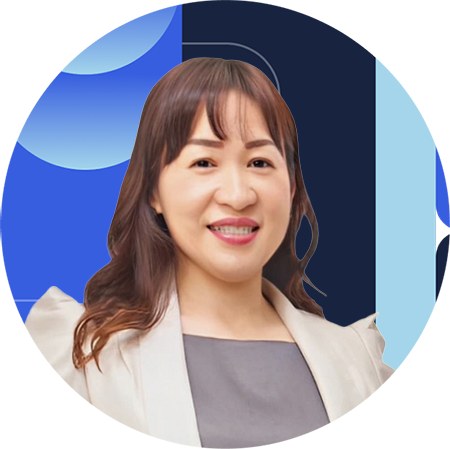
As the inaugural recipient of the “Top Ten Agile CEO” award, Chun-Ju Chou has worked to overturn the stereotype that administrative work is merely clerical, helping professionals in her field become strategic partners — and has repeatedly led Taiwan’s delegation to the Asia-Pacific Secretaries Congress.
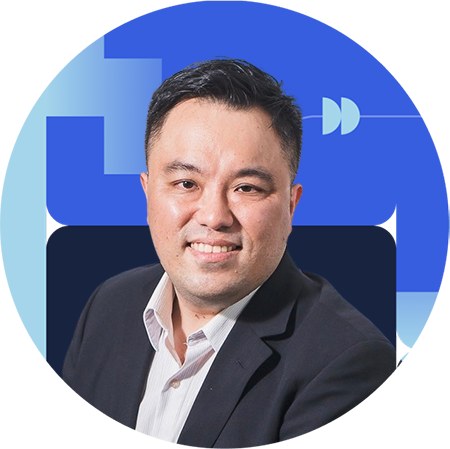
Wei-Chung Lin combines a background in sustainability strategy and finance, having worked at Foxconn and a Big Four accounting firm on billion-dollar overseas IPOs. He now applies Scrum methods to ESG consulting, helping small and mid-sized businesses break through transformation bottlenecks.
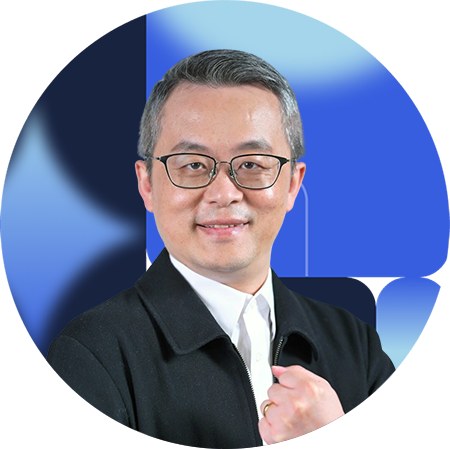
Chia-Yen Lu has spent his career in information security, cryptography, and AI security research, focused on how emerging technologies land in practice and governance. He serves as supervisor of the ISC2 Taipei Chapter and has taken part in government and academic quantum-security projects.
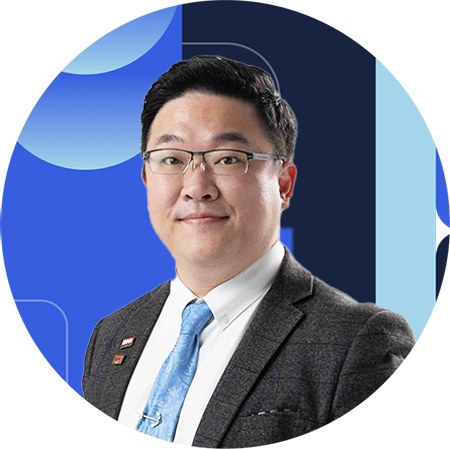
Ko-Fan Wang moved the catering industry away from relying purely on experience, introducing PMP project management and Scrum-based standard operating procedures to solve quality problems across chains — work honored with Agile Evangelist and Agile Change Leader awards.
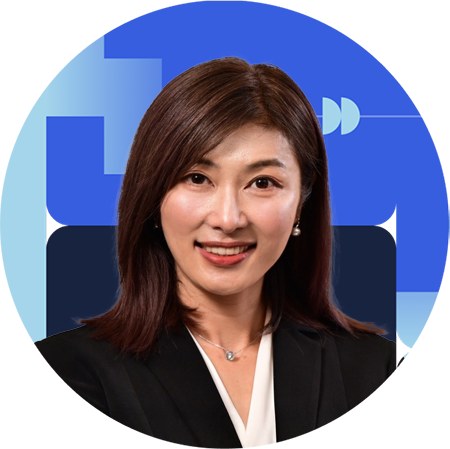
Ling-Ching Wang, a fifth-generation leader at Wang Dai Fu Yi Tiao Gen and an NTU EMBA graduate, has guided the 170-year-old family brand through digital transformation and B-Corp certification. An avid athlete, she has taken on the Gobi Challenge and hundred-kilometer ultramarathons.
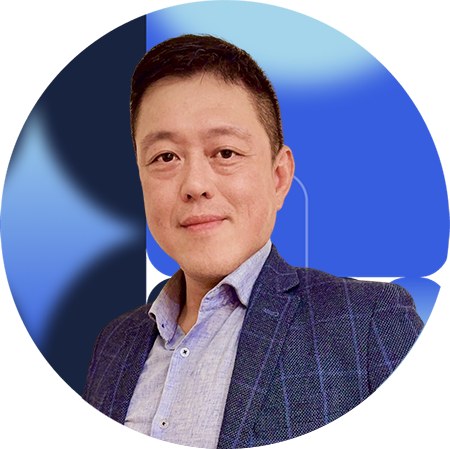
Kung-Ping Lin holds degrees in mechanical engineering from NTU and an EMBA from NCCU, and has brought information and communications technology into traditional engineering, leading Ke Jin WSP’s Taiwan and East Asia teams through digital transformation and ESG implementation.
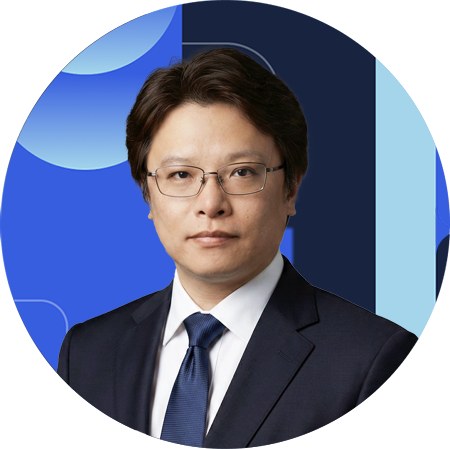
With a strong project management background, Cheng-Ting Shih has been a key force in bringing Scrum thinking into retail e-commerce, using data to optimize supply chains and product launches and sharply improving his team’s ability to respond to change.
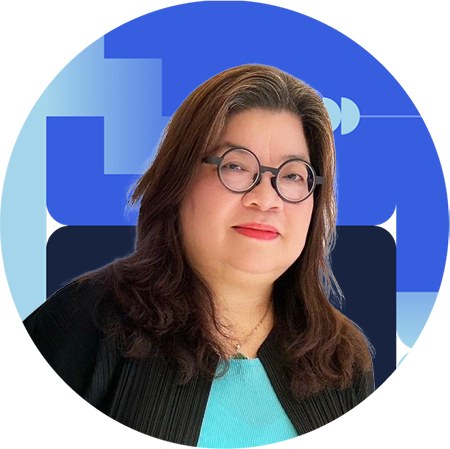
One of the rare female executives in construction holding three master’s degrees and multiple international certifications, Chun-Ying Lee is known for using careful communication to smooth over the industry’s harder engineering interfaces, and currently manages external affairs for the company’s largest cross-border joint-venture project.
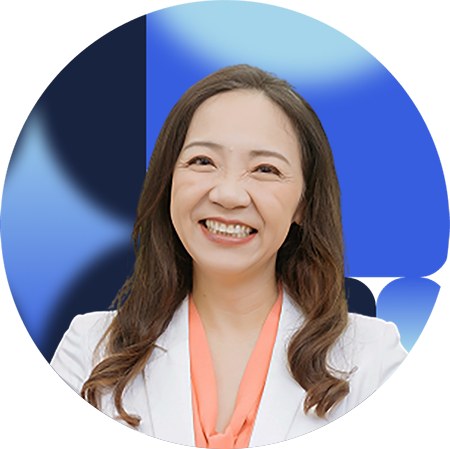
Su-Chiu Yeh is the first locally grown woman to lead Pfizer Taiwan in the company’s sixty-year history. With a finance background, she leads through transparency and trust, champions DEI, and helped keep drug supply stable — and brought in critical vaccines — during the pandemic.
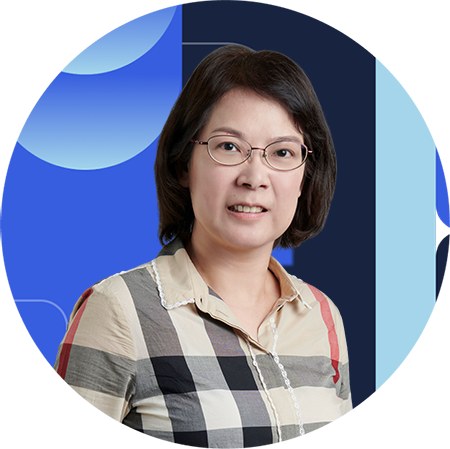
Li-Hsiu Chen serves as Associate Director at Chang Hong Project Management and as president of the Taiwan Agile Tribe. As the founder’s chief strategic partner, she blends the rigor of PMP with the flexibility of agile, and served as chief organizer of this year’s RSG Taipei conference.
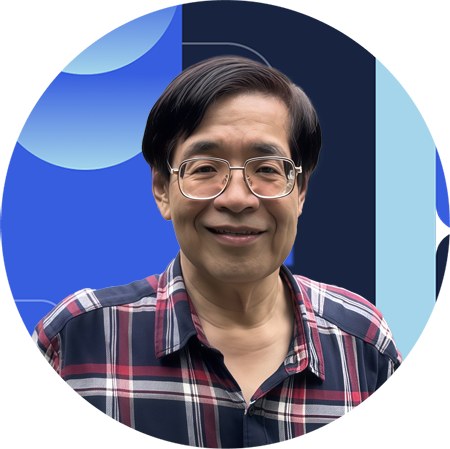
Wei-Chuan Yeh built a long career in public-sector workforce development, training systems, and civil service governance, working to strengthen civil servants’ professional capacity and leadership. Since retiring, he has stayed engaged with public governance and talent development.
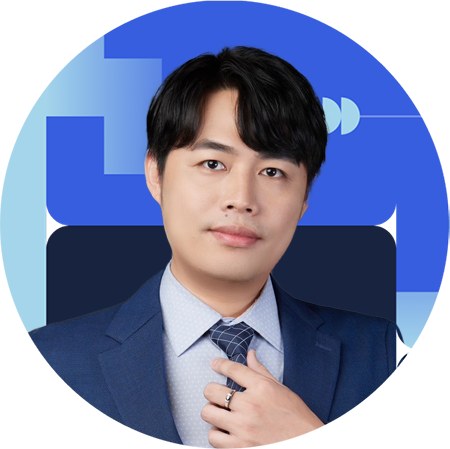
Chi-Tsung Chang has spent his career deep in information services and regulatory technology, helping government agencies and highly regulated industries build governance that can be trusted and verified, and driving the digital transformation of audit and review systems.