Most corporate Agile transformations halt at the team level. Chunghwa Telecom did not stop.
Cohort 1: 29 leaders; Cohort 2: 24 leaders; Cohort 3: 30 leaders; Cohort 4: 28 leaders.
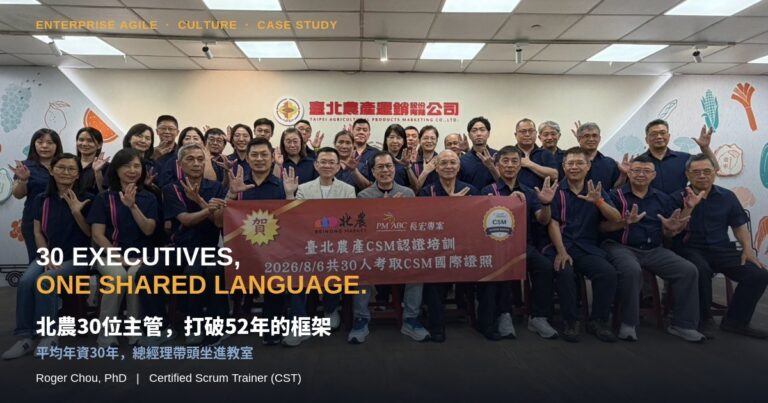
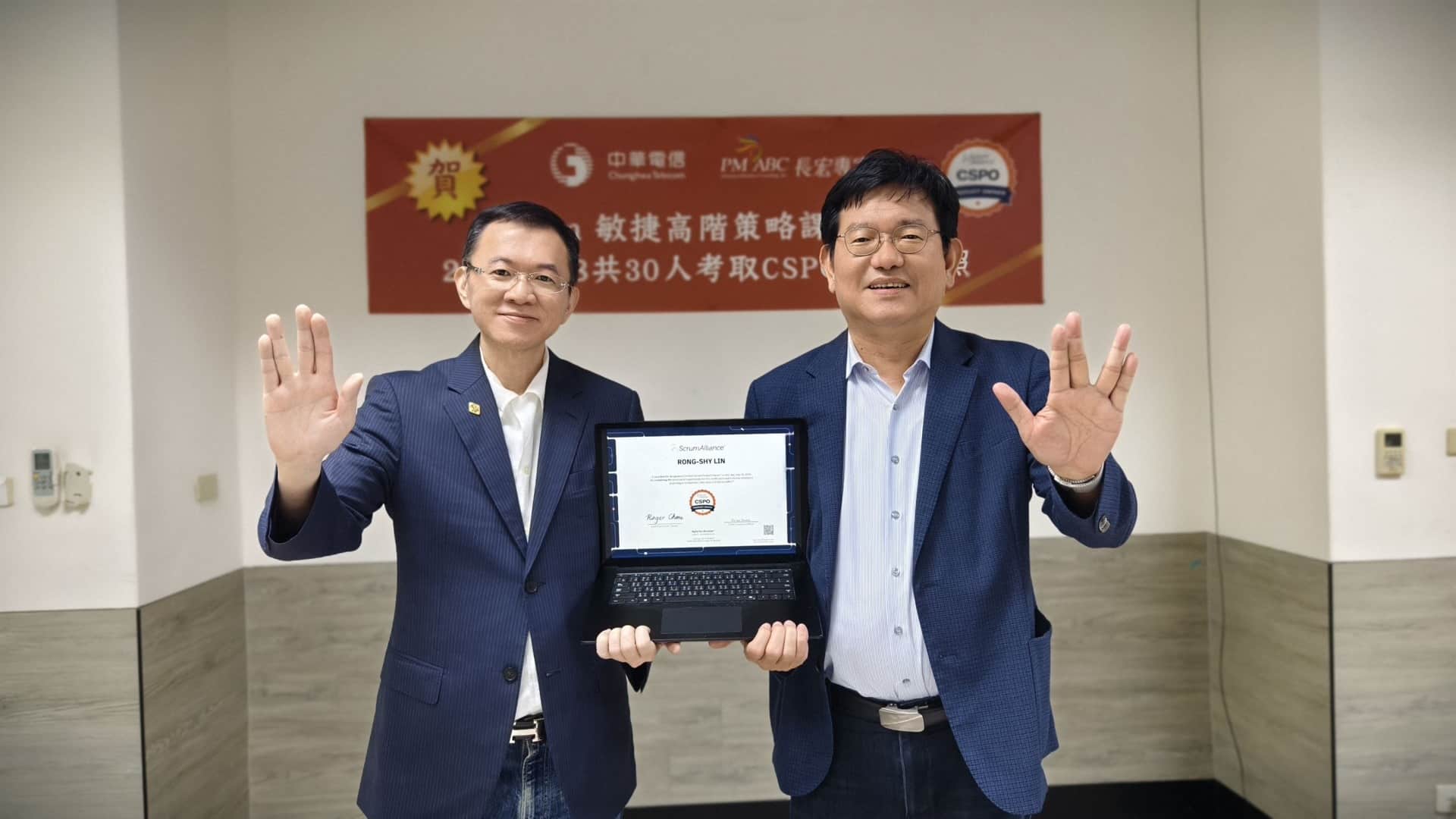
On July 24, 2026, Chunghwa Telecom completed its fourth executive CSPO training cohort, accumulating a total of 111 executives across four cohorts who earned Certified Scrum Product Owner credentials.
In terms of a single enterprise, the seniority of participating executives, and cross-unit scale, this has the potential to be one of the largest corporate executive CSPO development programs known globally. Whether this constitutes an official world record remains to be confirmed by Scrum Alliance based on global certification data.
However, what this article truly seeks to document is not the number 111.
Because having 111 managers complete training proves the scale of enterprise investment, but cannot directly prove that corporate transformation has succeeded.
What deserves more attention from the global Scrum community is this: A major telecommunications enterprise is advancing Product Ownership from a technical competency of product teams into a leadership capability collectively learned by the President, Vice Presidents, senior executives, and successor pipelines.
This is not merely a certification program. It is an experiment in enterprise product governance and leadership succession.

What large enterprises truly lack is seldom effort
Chunghwa Telecom’s business encompasses mobile communications, fixed-network services, enterprise solutions, network technologies, digital platforms, and emerging tech services.
In such a large-scale enterprise, products and services can rarely be delivered independently by a single department. A major decision often simultaneously involves market dynamics, customers, technology, operations, platforms, legal affairs, resource allocation, and overall corporate strategy.
Consequently, the organization does not lack exceptional talent, nor does it lack systems, processes, or project management capabilities. The real challenge is that different business groups, specialized units, and management tiers may interpret requirements, evaluate value, and prioritize tasks using different approaches.
Every unit works hard, but if there is a lack of shared understanding regarding “what matters most,” “what should be prioritized,” and “what constitutes true value creation,” local optimization may overshadow global optimization.
Product delivery issues appear to be about execution speed on the surface, but the root cause often occurs before execution begins: Did we choose the right things to do in the first place? Where should limited budget, talent, and time be invested among various product opportunities? When demands between business groups conflict, what criteria should executives rely on to make choices?
What Chunghwa Telecom addresses by driving executive CSPO training is precisely this question: Establishing a product decision-making language that transcends departments, hierarchy, and generations.
A Section Director’s Insight Speaks Directly to the President’s Original Intent
After the second cohort concluded, Section Director Wen-Jie Hsieh of Chunghwa Telecom used the historical analogy of Qin Shi Huang enforcing “unified script and standardized track gauge” to articulate his understanding of CSPO and enterprise Agile transformation.
He observed that differing operational processes, requirement, management styles, and quality audit standards across units created variations in the height, depth, and breadth of service and product deliverables.
Therefore, if an enterprise wishes to scale Agile, it cannot simply demand faster execution from teams; it must first establish a shared vision, a shared language, shared standards, and shared goals. A Product Owner is not just a requirement manager, but the helmsman of product value who must guide the team toward a unified direction.
After class, I forwarded this reflection to Mr. Rong-Shy Lin, President of Chunghwa Telecom (affectionately referred to as “Da-Zong”), asking if this understanding aligned with his original intention in driving EDP and training 400 tiers of managers.
President Lin replied: “Wen-Jie expressed it wonderfully and accurately; this is precisely the goal we aim to achieve with this EDP and the 400-tier executive training.”
This statement is one of the most vital pieces of evidence for this program. It proves that this is not merely a class arranged by HR, nor a one-sided learning objective set by trainers. Top-down leadership expectations and bottom-up participant understanding met seamlessly within the same product language.
Many corporate transformations consist solely of top-level slogans, while others rely purely on frontline enthusiasm. What is truly difficult is building a shared alignment between both levels regarding “why change” and “what constitutes true value”.

“Unified Script” Does Not Mean Forcing All Units to Become Identical
When applied to modern corporate governance, “unified script and standardized tracks” does not mean forcing every unit to adopt identical methods, nor does it mean using central mandates to eliminate domain-specific differences.
The true meaning is: Establishing a shared language for discussing value, risk, prioritization, and outcomes while preserving the autonomy and market responsiveness of each business group. It pursues alignment without conformity.
Different units can still adopt the approach best suited to them in response to varying customer, market, and technology environments. However, when executives collectively discuss product investments and resource trade-offs, they should at least be able to answer: What problem does this product solve for which customer segment? What customer outcome do we truly hope to change? What criteria dictate prioritization among competing needs? Which critical assumptions should be validated first? What evidence must emerge before we decide to expand, pivot, or terminate investment?
Lacking a common language, product meetings easily devolve into battles over departmental positions and resources. Guided by a shared language, diverse opinions can be laid out, evaluated, and converted into transparent, evidence-based decisions at the same table.
Significance of the 3rd Cohort: Current Decision-Makers Learning Alongside Future Successors
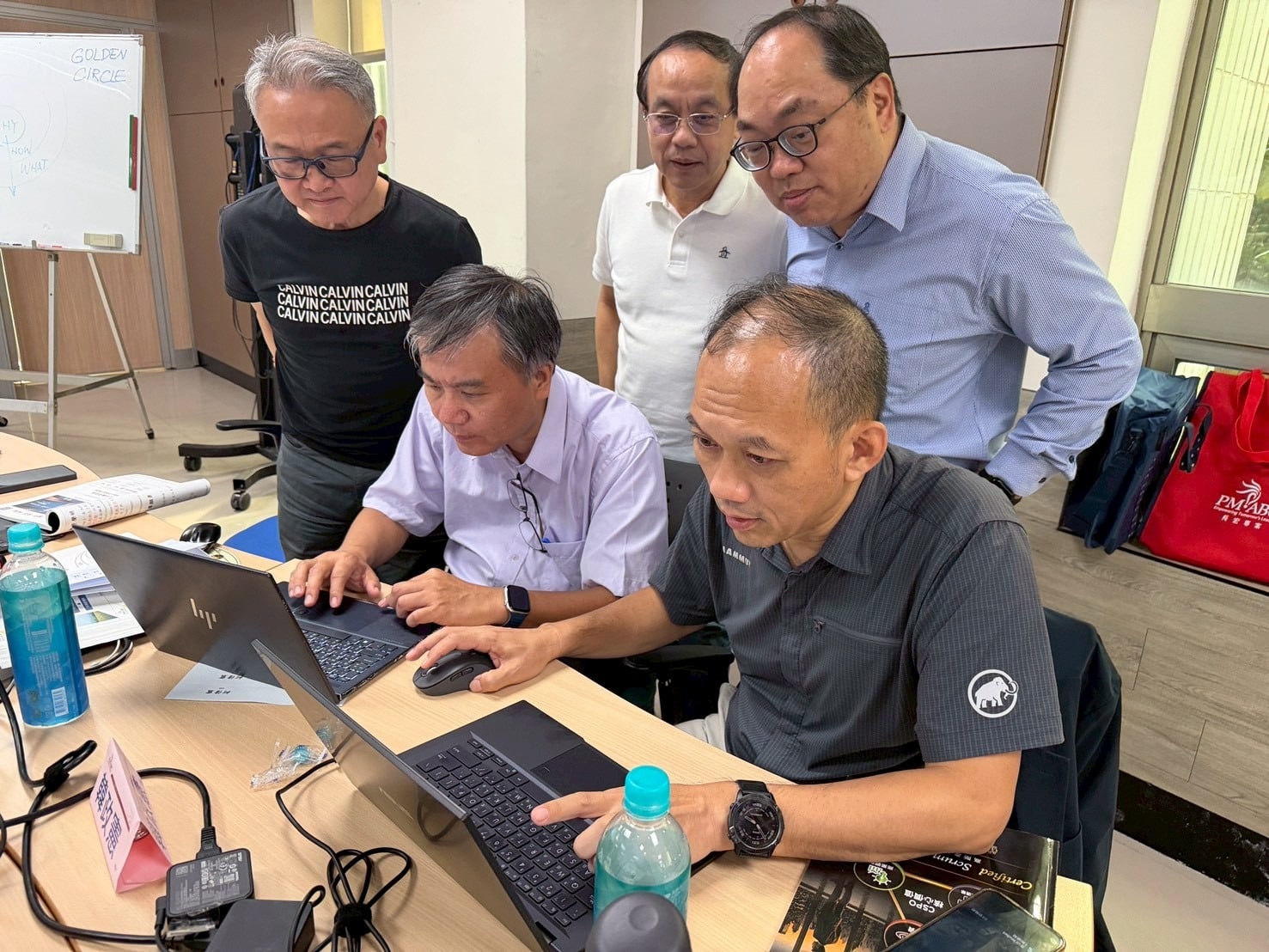
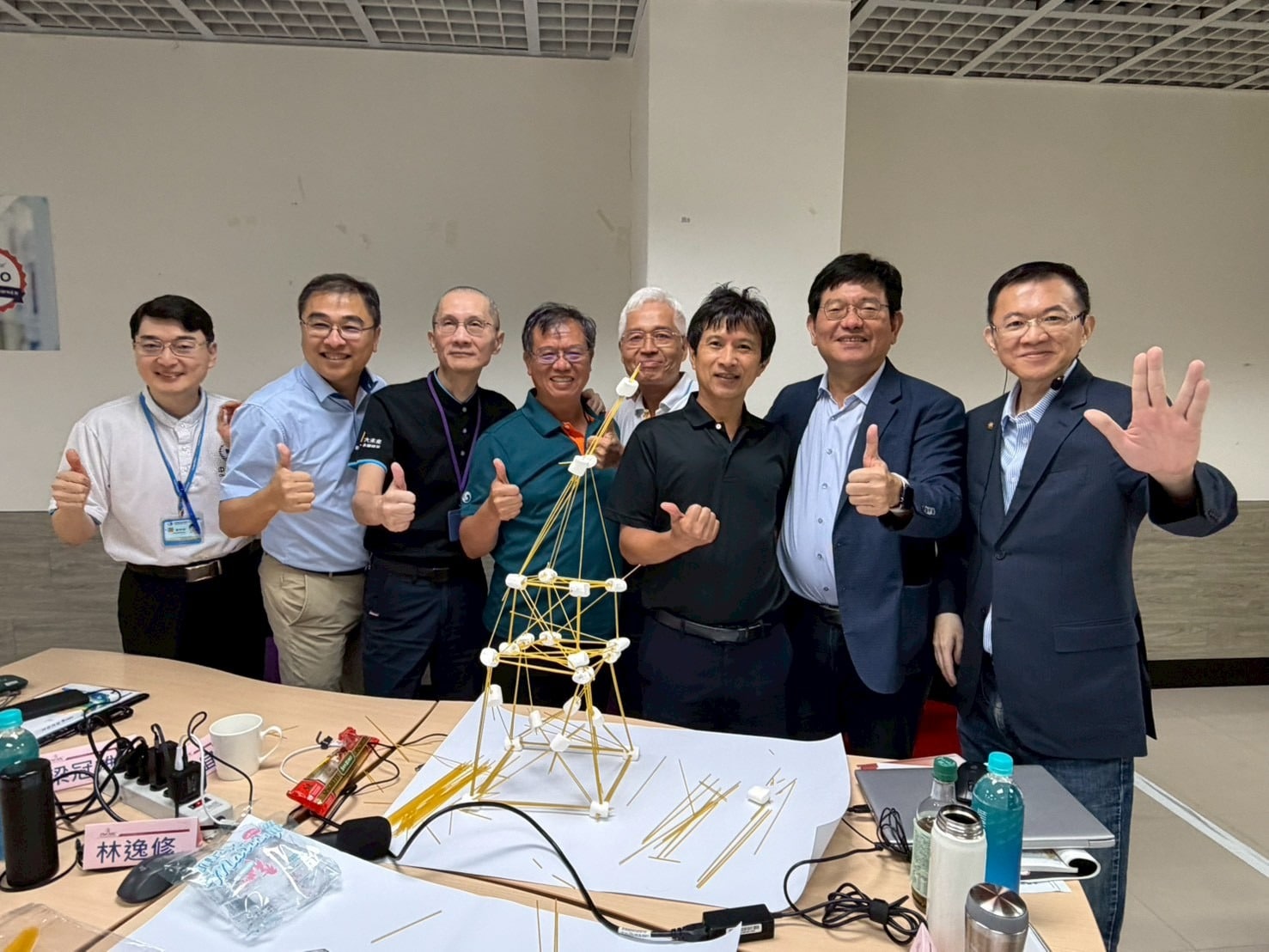
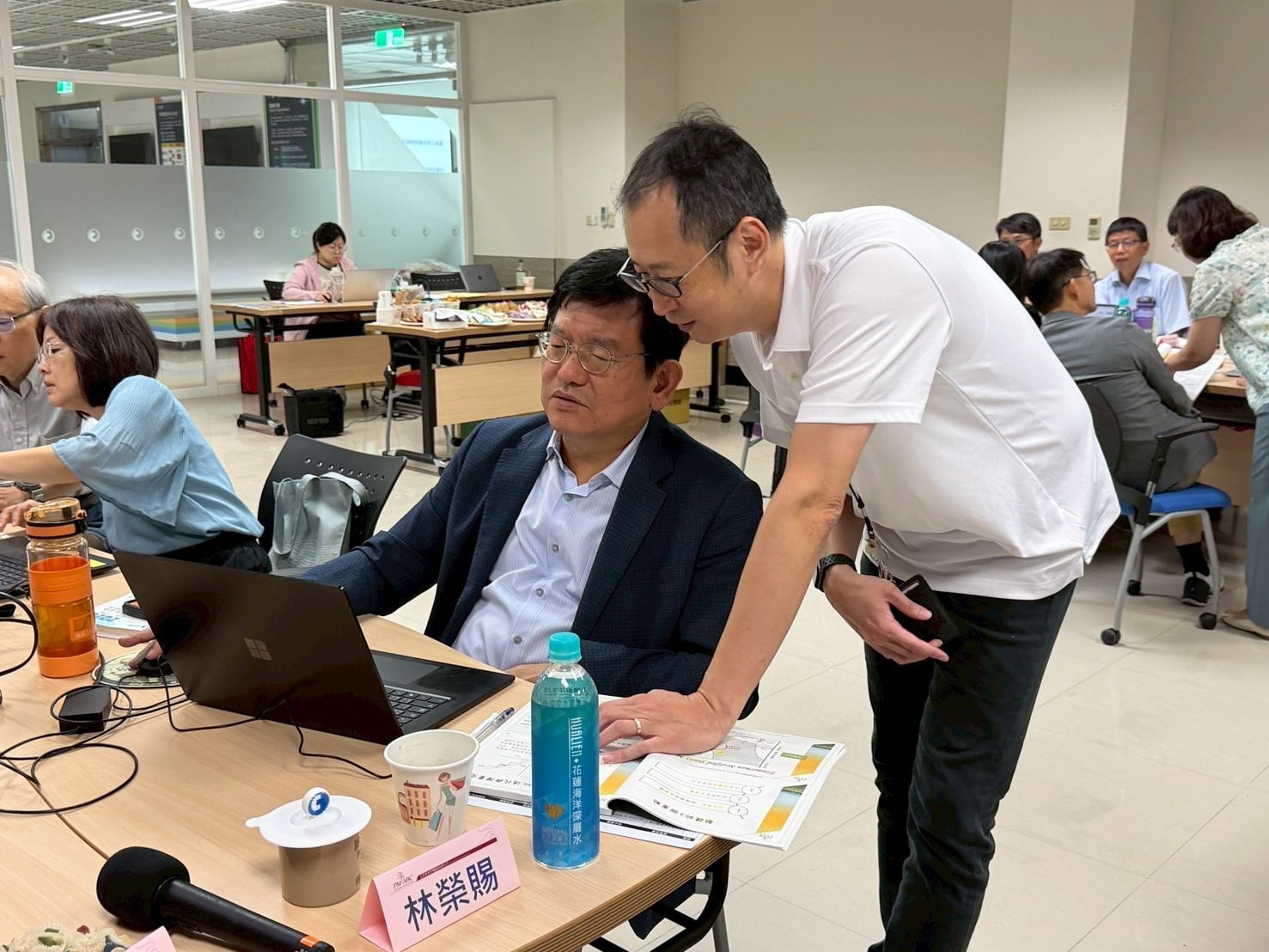
A total of 30 leaders—including Presidents, Vice Presidents, senior executives, and successor pipelines—participated in the third cohort. When current decision-makers and future successors sit in the same classroom, the significance of this program transcends individual skills training and steps into leadership inheritance.
What is hardest to pass down in large enterprises is rarely documentation or standard operating procedures. What is truly difficult to pass down is: How do leaders exercise judgment amidst uncertainty? How do they make trade-offs when multiple options seem viable? How do they arrive at transparent, adaptable decisions when data is incomplete, departmental interests diverge, and time is scarce?
These capabilities cannot be transferred through simple job handovers alone. They must be forged through real-world discussions, debates, choices, validations, and reflections.
Thus, executives learning CSPO is not about turning them into hands-on Product Owners within frontline Scrum Teams, but cultivating higher-level Product Ownership: Taking responsibility for product direction, resource trade-offs, customer value, and courageously terminating low-value initiatives.
Why CSPO instead of other management courses? Because the core training of CSPO—Prioritization, Stakeholder Management, Product Goal, and Outcome orientation—aligns precisely with what executives do daily: Deciding priorities, managing stakeholder expectations, articulating expected outcomes, and being accountable for final impact. CSPO does not assign them new work; it simply provides a disciplined, cross-departmental language for the decisions they already make every day.
Courses as Decision Stress-Testing, Not Mere Knowledge Lecturing
Executives do not need more Scrum jargon. If a course merely introduces terms like Product Backlog, Sprint, Stakeholder, and User Story, the governance value generated is extremely limited.
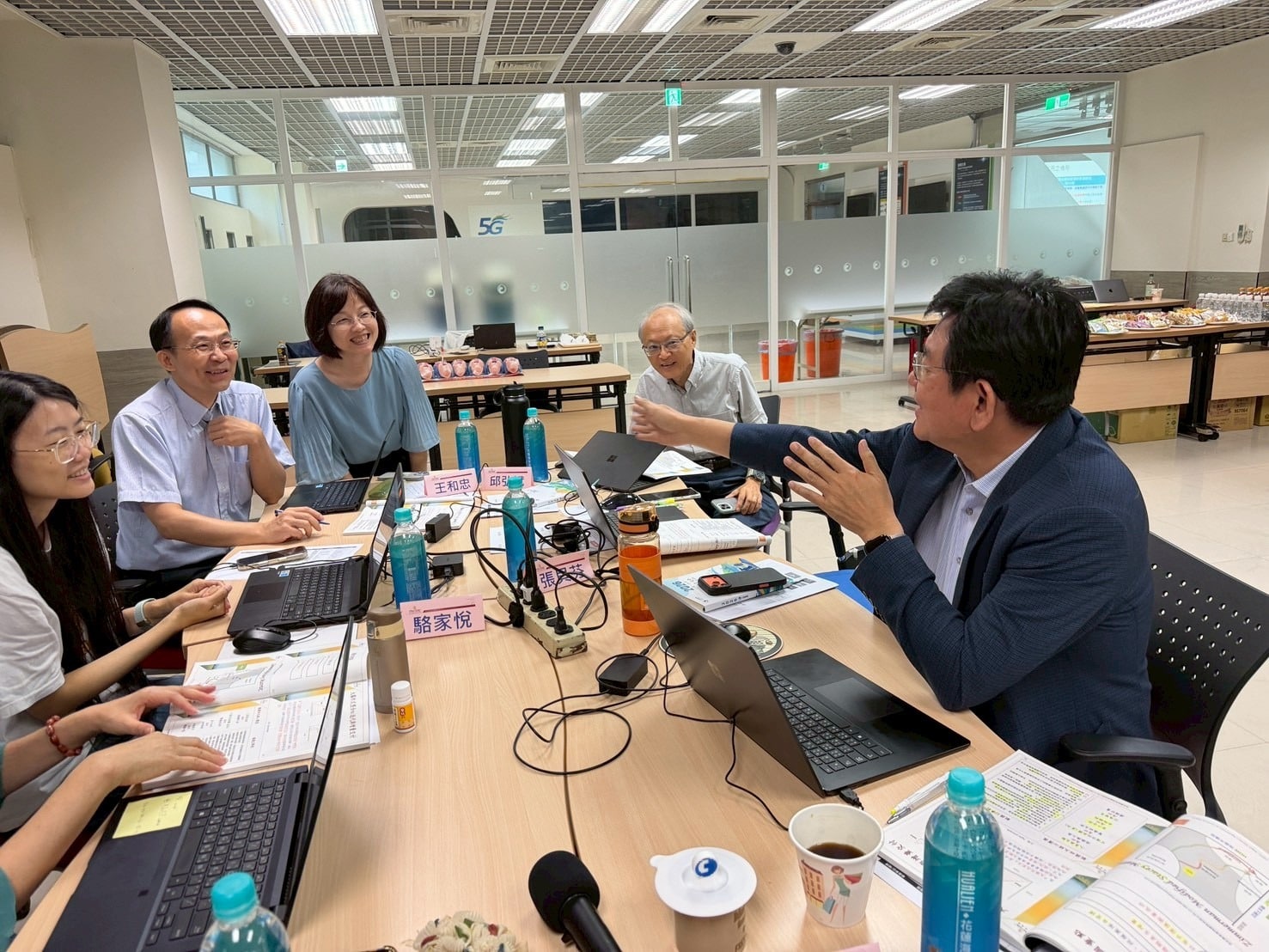
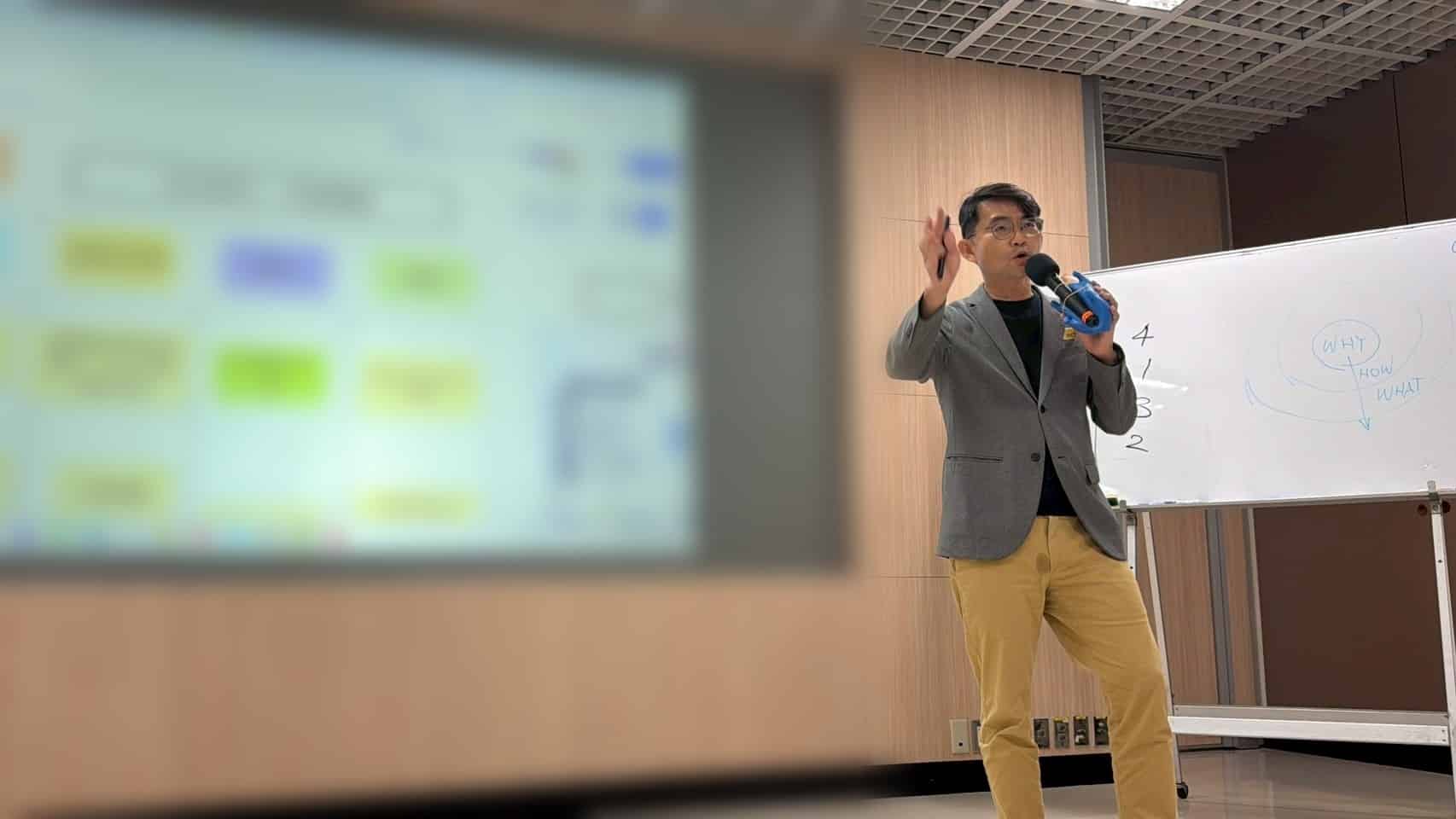
Therefore, the core of Chunghwa Telecom’s executive CSPO program is not knowledge input, but product decision stress-testing. The course brought authentic cross-business group scenarios—such as rewards ecosystems, enterprise pricing, international network services, mobile services, and computing power services—into the classroom. Executives had to grapple with tension between varying customer segments, business models, technical constraints, KPIs, and stakeholder interests.
Instead of debating which features to add, they practiced answering: Which customer problem is most worth solving first? Which requirement comes first, and which can be deferred? Can a massive solution be sliced into a smaller, testable increment? What evidence dictates whether to persevere, pivot, or halt investment?

For instance, when dealing with cross-departmental topics like points ecosystems or computing services, executives cannot act solely from their own unit’s KPIs; they must re-evaluate target segments, value propositions, investment sequences, and overall corporate interests.
Currently, these case studies remain classroom decision exercises and should not be framed as already delivered workplace results. However, it allowed executives for the first time to practice transforming departmental stances into product value discussions in a safe, near-real environment.
In this setting, CSPO is no longer just a certificate. It serves as a decision lab for executives to practice value judgment, resource allocation, and cross-departmental collaboration.
What Has Been Proven So Far?
When evaluated against global corporate case study standards, the evidence can be categorized into three levels.
Level 1: Scale and Organizational Context
Accumulating 111 leaders across four cohorts: Cohort 1 (29), Cohort 2 (24), Cohort 3 (30), Cohort 4 (28). Participants came not from a single product or IT team, but across Headquarters, Business Branches, Technical divisions, Operations, Product, Legal, Digital Development, Corporate Communications, and other key functional units.
This proves Chunghwa Telecom is executing an enterprise-wide product governance initiative rather than localized team training. However, a clear distinction must be made: 111 certified leaders is evidence of scale, not proof of ultimate success.
Level 2: Preliminary Signals of Behavioral Change
Observed across classroom discussions, reflections, and cross-unit exercises are tracking signals: Executives shift from “how much work was done” to “what value was created”; requirements discussions start with customer outcomes, product goals, and prioritization rules rather than feature lists; large projects are sliced into testable increments for early feedback; and trade-offs are discussed rather than demanding everything advance simultaneously.
These signal the emergence of Product Ownership. However, most evidence currently stems from classroom observations and participant reflections, awaiting before-and-after workplace verification.
Level 3: Customer and Business Outcomes Await Verification
As of now, it cannot be claimed that CSPO training has directly reduced product time-to-market, cut costs, boosted revenue, or increased customer satisfaction for Chunghwa Telecom. A two-day course should never be exaggerated as the sole catalyst for enterprise transformation.
A more credible statement is: CSPO builds a common product decision-making language for executives; real-world exercises and ongoing coaching help cascade this language into the workplace. Whether customer and business results are achieved must ultimately be verified through auditable data.
To be honest, I hesitated at first: Does being this conservative make the results look less shining? Then I realized: Explicitly defining the boundaries of evidence does not weaken this case—it makes it far more trustworthy.
The Next 2 to 3 Months Are Where True Validation Begins
Completing all four cohorts is not the conclusion of this initiative, but the starting line for workplace verification. What needs tracking next is not how many terms executives memorize, but whether observable, sustainable behavioral changes emerge across units.
For example: Are cross-unit decision cycles shortening? Are transparent prioritization rules being used? Are large plans sliced into smaller, testable increments? Is time-to-first-user-feedback reduced? Is rework from misaligned expectations dropping? Are cross-departmental escalations decreasing? Are product meetings shifting from status reporting to reviewing value, risk, and next steps?
For a credible global case study, ten sets of flashy metrics are unnecessary. One flagship cross-business group case, observable behavioral shifts in three units, and one verifiable before-and-after difference are far more compelling.
For instance, a cross-unit decision cycle reduced from months to weeks; a massive project pivoted to test market response via a single increment first; or a team adjusting its Product Backlog based on evidence after every Sprint Review rather than quarterly.
Real impact must take place on the job and withstand cross-validation across stakeholders.
How Can Other Large Enterprises Replicate This Model?
If this program becomes a Scrum Alliance global case study, its most valuable aspect will not be the 111executives, but how Chunghwa Telecom systematically built this capability. It can be synthesized into six steps:
Executive Alignment: The top executive defines the training purpose: Not to hoard certificates, but to establish a common language for product governance and value decisions.
Phased Cohort Cascading: Build governance density progressively across cohorts, allowing the common language to spread across units and tiers.
Real Decision Case Studies: Move beyond textbook exercises by bringing authentic product and cross-business group challenges into the classroom.
Cross-Hierarchical Learning: Involve the President, Vice Presidents, active managers, and successor pipelines together so product thinking permeates all levels.
Post-Course Coaching & Practice: Coach teams on real product/transformation initiatives, helping leaders apply product vision, goals, backlog prioritization, and incremental validation to actual operations.
Outcome Validation: Track decision cycles, feedback loops, incremental delivery, rework ratios, and customer outcomes to verify if the common language translates into corporate value.
These six steps represent the most valuable blueprint for telecommunications peers, state-owned enterprises, and complex organizations.
A World Record Is Supporting Evidence, Not the Core Claim
Having 111 executives certified as CSPO carries high global recognition. However, a “world record” should not be the central claim of this case. Records can eventually be surpassed by other organizations. What is far harder to surpass is Chunghwa Telecom’s new positioning: Product Ownership as an Executive Leadership and Succession Capability—developing product ownership thinking into senior leadership and succession capabilities.
The global value of this case is not just training more Product Owners, but proving that Product Ownership can integrate into executive leadership development, corporate succession pipelines, cross-business group governance, enterprise resource allocation, and value decision-making.
This is more than a numerical milestone. It may establish a new enterprise training category and open a broader global market for CSPO.
The Next Frontier of Scrum Lies in the Leadership Pipeline
Historically, Scrum’s primary domain was software development and team collaboration. Later, it expanded into product management, service innovation, and enterprise transformation. Chunghwa Telecom poses a provocative question for the global Scrum community: Can CSPO also serve as a core component of executive succession and leadership development?
The answer is not requiring every executive to manage Product Backlogs directly, nor converting all management meetings into Scrum events. The true answer is equipping the next generation of leaders with a new underlying logic: Prioritizing based on customer value rather than departmental output; measuring progress by product outcomes rather than activity volume. When facing large solutions, validating hypotheses with short incremental cycles rather than waiting until full rollout; laying out transparent prioritization rules when business groups conflict rather than letting loudest voices win. And the hardest of all—having the courage to terminate long-standing initiatives that no longer create value. In my years of corporate coaching, the greatest friction has never been encouraging leaders to start new projects, but guiding an executive to willingly stop a project they personally initiated.
In an era where AI rapidly reshapes market boundaries and tech competition, executives cannot rely solely on managing certainty; they must lead organizations through uncertainty. They must not only ensure tasks are completed, but continuously confirm whether completed tasks remain worth doing.
111 Executives Is Neither the Destination Nor the Final Answer
Spanning 29 leaders in Cohort 1, 24 in Cohort 2, 30 in Cohort 3, to 28 in Cohort 4, a cumulative total of 111 executives completed CSPO; Chunghwa Telecom is building far more than a certified headcount. It is constructing a shared product governance language across levels, units, and generations.
President Rong-Shy Lin’s vision for EDP and 400-tier executive development was echoed through Section Director Wen-Jie Hsieh’s reflection across organizational tiers: Shared vision, shared standards, shared language, and shared goals. First establish a “unified script” across the organization; only then can decision-making operate on “standardized tracks”.
Yet this does not demand every unit walk an identical path. It ensures that even when navigating different customers, markets, and technical challenges, everyone understands the common destination and discusses next steps in a unified language of value.
True success is not 111 executives sitting in a classroom. It is this shared language crossing tiers and departments to consistently make critical decisions faster, more transparent, and closely aligned with customer value.
When Chunghwa Telecom can present one flagship cross-business group case, three departmental behavioral shifts, and at least one verifiable before-and-after outcome, this initiative will transition from an executive learning journey into a worldwide enterprise success story.
At that point, Chunghwa Telecom will not only prove it accomplished a record-scale training program, but will demonstrate to the global Scrum community for the first time: CSPO can cultivate not just Product Owners, but serve as a shared executive language for leadership succession and product governance.
Having 111 certified executives brings this topic to light. The genuine changes taking place in the workplace over the coming months will be Chunghwa Telecom’s answer to the world.
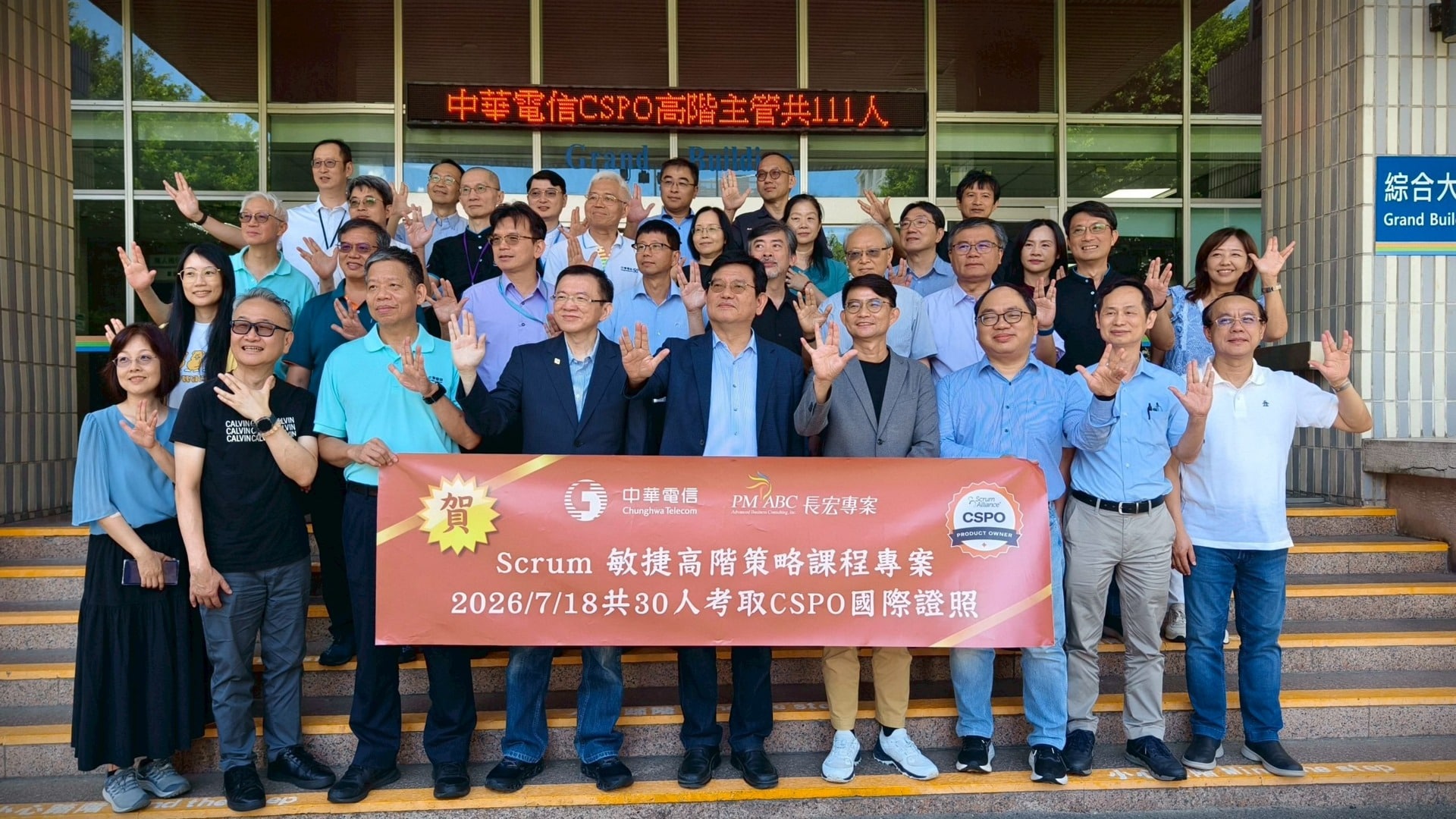
Appendix: Executive Reflections
Rong-Shy Lin / President, Chunghwa Telecom Co., Ltd.
Participating in the CSPO course was not merely completing a learning module for me, but more importantly, opening a new starting point for driving Agile and product thinking across the organization.
Engaging directly in this coursework deepened my appreciation for the strategic importance of PO thinking in organizational growth. Agile is not just a skill required by a specific team or role, but a mindset that more managers and key talents must build together.
Sincere thanks to Teacher Roger and the entire team for their thoughtful arrangements; the two days of learning provided immense inspiration, delivering not just knowledge but establishing a spirit and methodology we can put into practice back in the workplace.
Let me read my Vision Card to everyone: ‘Wishing that all Chunghwa Telecom executives possess the mindset and vision of CSPO to jointly shape a new Chunghwa Telecom with a broader vision.’
In the future, I hope everyone brings this Agile mindset back to your respective positions—sharing, executing, and promoting it with your teams so that CSPO’s true value empowers organizational growth and teamwork.
Mr. Chen / President, Data Communication Business Group, Chunghwa Telecom
These two days of CSPO gave me a deeper understanding of the Product Owner role. At work we often ask: should we do the easy things first, or take on the hard problems first? My first takeaway was that, where risk is controllable, we should not be overly cautious—we should tackle the truly important, difficult, high-value work first. The earlier you handle the hard problems, the earlier you see risks, constraints, and cross-department obstacles, instead of discovering them too late to fix.
I have a PMP background, and I found much shared spirit between the two. But CSPO is leaner, more focused on product value, prioritization, stakeholder communication, and accountability for the final outcome. To me the core of a PO is accountability. A truly accountable person does not wait to be told, nor stays within their own remit; they proactively surface problems, own risk, report progress, coordinate resources, and make sure the team reaches the goal.
This made me think of the organizational challenge Chunghwa Telecom faces. The company is large and finely divided; the clearer the boundaries, the more gray zones between them. Many cross-unit efforts look well-staffed, yet no one truly owns the overall result. With AI, for instance, several units may invest at once, but without a clear overall owner it easily becomes islands each doing their own thing.
So the real challenge of agility is not understanding the method but how the organization lands it. If, layer by layer from President to vice president to division head to section chief, we build a sense of accountability and encourage managers to cross department boundaries, agility will not stay in the classroom but gradually become organizational culture.
Mr. Tsai / President, New Taipei Branch, Chunghwa Telecom
Participating in this CSPO course, my greatest takeaway was not merely acquiring a product management tool, but reconstructing a mindset for facing rapidly shifting environments. In a market fraught with uncertainty, the values advocated by Agile and the practical frameworks provided by Scrum made me realize that only through continuous learning and swift responsiveness can we generate true competitive value.
Sincere thanks to Teacher Roger for guiding us to understand the core spirit and practical applications of Scrum in a systematic, structured, and accessible manner, transforming abstract concepts into concrete, actionable methods through rich case study sharing. The entire course pace was fast-packed yet well-organized, paired with extensive group discussions and hands-on exercises that enabled team members to quickly build consensus and learn from one another in a short time, inspiring creativity through competition and growing together through collaboration.
What impressed me most was the McDonald’s case study. On the surface, food service maintains only roughly a 3% gross margin, but the key to driving massive enterprise value lies in store real estate layout and long-term asset appreciation strategies. This case made me deeply realize that the true value of a product does not necessarily come from surface revenue, but rather in whether it can uncover higher-value business models and ecosystems. Extending this thinking to enterprise customer ICT bidding projects—such as prison CCTV deployment projects—beyond providing surveillance equipment and system integration services, if we can integrate de-identified image data, AI analytics, and tech enforcement applications in the future, we might develop more innovative services, further boosting project added value and gross margins to open new blue ocean markets for the company.
Special thanks to President Lin for participating throughout the course despite his busy schedule, raising many sharp, practical, and thought-provoking questions during case discussions, which guided us to think more deeply on how to swiftly grasp market opportunities and respond to customer needs in real-time within a rapidly changing market environment, truly anchoring on customer value to solve customer pain points. What is even more commendable is that over the two-day course, 30 managers learned from one another, engaged in healthy competition, worked hand-in-hand, and willingly shared experiences, fully demonstrating the unified, mutually beneficial, and co-prosperous team spirit of ‘One CHT.
In addition, we fully experienced the dedication of the PM-ABC training team in course design details; adopting the Miro co-editing platform throughout for interaction and collaboration significantly boosted team discussion and practical exercise efficiency. These two days of coursework were not merely a learning session on Scrum, but a profound baptism in Agile thinking and product value.
Mr. Tseng / President, Taipei Branch, Chunghwa Telecom
After participating in this course, my primary takeaway is that ‘hands-on practice is truly important.’ The instructor did not merely explain concepts, but guided everyone step-by-step through cases, discussions, and drills to transform the PO mindset into practical methodologies, allowing me to understand more clearly how product development teams should collaborate and how to prioritize when facing numerous demands, rather than making decisions based on intuition or past experience.
These methods showed me that product development and project management actually have a clear set of thinking logic to follow. Whether managing requirements, scheduling work, or allocating resources, clearer decision-making criteria can be established through Product Owner concepts, helping teams concentrate time and resources on what matters most.
Mr. Ko / President, Kaohsiung Branch, Chunghwa Telecom
First, I would like to express my sincere thanks to Teacher Roger, the organizing team, and all the learning partners in the course for making these two days so fruitful and inspiring.
The greatest takeaway this time was not just learning PO methods and tools, but more importantly, establishing a complete and systematic thinking framework. I believe the greatest value of this mindset lies in its ability to be put into practical execution. Whether leading teams, driving projects, or planning product and business directions, issues can be approached through a more systematic mindset, guiding the team forward toward a shared goal rather than working individually without a unified direction.
In the future, I hope to bring the framework and product thinking learned over these two days back to the workplace, implementing them in team management and business promotion to make work more efficient and create greater value for the team.
Mr. Lee / Vice President, Telecommunication Laboratories, Chunghwa Telecom
After participating in the CSPO course, my primary realization was that the core spirit behind this methodology helps us refocus on what truly matters.
In past work, when faced with numerous tasks and demands, it was sometimes easy to try handling many things at once, ultimately risking losing sight of the most critical objectives. Through these two days of learning, I re-understood the value of the Product Owner mindset—which is helping the team clarify direction and focus on priorities, allowing everyone to concentrate resources on what matters most rather than dispersing them across tasks without clear value.
Additionally, members of my team have previously earned CSM credentials; therefore, completing CSPO makes me even more eager to partner with them back at the company to truly implement Agile thinking, making Agile not just classroom knowledge, but a method genuinely integrated into organizational operations to help the team continuously grow.
Mr. Chiang / Vice President, International Business Group, Chunghwa Telecom
First of all, sincere thanks to the instructor, organizers, and all learning partners for giving me the opportunity to participate in these two days of training.
Busy with routine work and facing various challenges and decisions daily, it is rarely possible to calm down and systematically learn product management and Agile methods. However, these two days of training made me deeply feel that stepping back briefly from routine work to rebuild a product mindset is an investment truly worth making.
Most classmates learning together this time were managers from various units or departments. Exchanging experiences across different domains in class also showed me that the Agile mindset actually applies to a wide variety of work scenarios. As managers, we carry the responsibility of leading teams and driving continuous organizational growth; therefore, we even more so hope to bring the methods and concepts learned over these two days back to the workplace, practically applying them to team management, product planning, and project execution.
Mr. Pai / Vice President, International Business Group, Chunghwa Telecom
In the past, learning much knowledge might have remained at personal capability enhancement, but CSPO made me feel that what truly matters is how to convert what is learned into the strength of the team and organization. In the future, upon returning to the International Business Group, I hope to become a seed champion for driving Agile thinking, sharing the methods and concepts learned in the course with more colleagues so that more people understand the role and value of a Product Owner.
The instructor’s passion and dedication demonstrated in class also left a deep impression on me. He does not merely share knowledge, but hopes through education and promotion to enable more people to come into contact with and understand Agile, thereby creating change in their own work environments.
I believe that any change needs to start with a vision. Only with clear goals will people be willing to commit to action, and only then is there a chance for ideas to gradually materialize. What CSPO brought me is not just product management knowledge, but a mindset capable of influencing teams and driving organizational growth.
Mr. Lin / Assistant Vice President, Network Technology Group, Chunghwa Telecom
Sincere thanks for arranging this course, and thank you to Teacher Roger for attentively leading our learning over these two days.
Although the course lasted only a brief two days, the overall arrangement was very compact and fulfilling, yielding rich takeaways at every step. From core PO concepts and Agile thinking to the application of practical cases and methods, it provided me with a more comprehensive understanding of product management, alongside many actionable workplace techniques to bring back.
Beyond the instructor’s brilliant teaching, I feel that classroom interactions and exchanges were also a major highlight of this course. Through group discussions, Workshop exercises, and sharing experiences with partners across different domains, it not only sparked many new ideas, but also allowed me to see various possibilities for practical application. Every brainstorming session ensured that theory was no longer just textbook knowledge, but could be genuinely converted into solutions for work.
Mr. Lin / Assistant Vice President, Chunghwa Telecom
After participating in the CSPO course, my greatest takeaway is establishing a clearer set of concepts and a common language.
In fact, in past work, everyone had more or less been exposed to some related concepts and had their own understanding, but individual interpretations might not have been completely identical. The greatest value of this course lies in helping everyone align standards through systematic learning, enabling communication in a single language across different roles, boosting collaboration efficiency, and unifying strategic direction when teams face decision-making and execution.
I believe that when more key roles across the organization share the same Agile mindset, future promotion of products and projects will reduce communication overhead, enabling teams to advance toward common goals more efficiently. What is truly important is not just completing immediate tasks, but leaving behind methodologies and a culture within the organization that continue to exert lasting influence.
Mr. Keng / Assistant Vice President, Corporate Planning Department, Chunghwa Telecom Co., Ltd.
Coming from a management background myself, I initially assumed that the CSPO course might focus heavily on product development or technical execution; however, after actually participating in the two-day course, my primary feeling is that I gained immensely, and many of the core principles apply not only to product management, but also directly to daily work and managerial thinking.
Among them, the concept that impressed me most was ‘iteration.’ In the past when planning initiatives, it was easy to design a complete scheme upfront based on one’s own assumptions; however, through this course, I gained a deeper understanding that Agile emphasizes rapid validation, continuous feedback collection, and rolling adjustments based on actual results.
During the course, we also happened to have the opportunity to practically apply this mindset to our own topics. When we treated the other party as a customer and conducted direct interviews to gather feedback, we discovered tangible gaps between our initial assumptions and true operational needs.